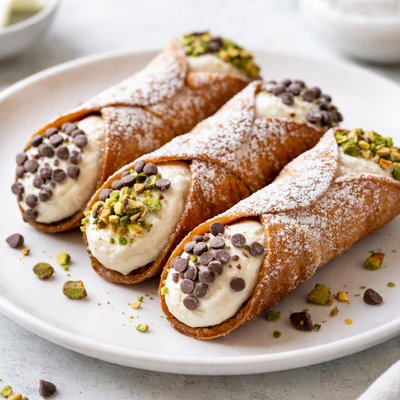
1 serving (100 grams) contains 250 calories, 5.0 grams of protein, 15.0 grams of fat, and 30.0 grams of carbohydrates.

Smart Nutrition Tracking with SnapCalorie

Nutrition Information
Calories |
595.2 | ||
|---|---|---|---|
% Daily Value* |
|||
| Total Fat | 35.7 g | 45% | |
| Saturated Fat | 19.0 g | 95% | |
| Polyunsaturated Fat | 0 g | ||
| Cholesterol | 47.6 mg | 15% | |
| Sodium | 357.1 mg | 15% | |
| Total Carbohydrates | 71.4 g | 25% | |
| Dietary Fiber | 2.4 g | 8% | |
| Sugars | 28.6 g | ||
| protein | 11.9 g | 23% | |
| Vitamin D | 0 mcg | 0% | |
| Calcium | 95.2 mg | 7% | |
| Iron | 2.4 mg | 13% | |
| Potassium | 190.5 mg | 4% | |
* Percent Daily Values are based on a 2,000 calorie diet. Your daily values may be higher or lower depending on your calorie needs.
Food Attributes
Source of Calories
About Cannoli
Cannoli are a traditional Italian dessert originating from Sicily, often associated with Italian-American cuisine as well. These treats consist of a fried pastry shell filled with a creamy, sweetened ricotta filling, sometimes enriched with chocolate chips, citrus zest, or pistachios for added flavor and texture. With approximately 250 calories per serving, each cannolo provides a balance of macronutrients, including 5g of protein, 30g of carbohydrates, and 15g of fat. Although rich and indulgent, cannoli offer trace amounts of calcium (40mg) and iron (1mg) primarily contributed by the ricotta filling, while being less significant sources of fiber, vitamin C, and vitamin D. These delicacies are best enjoyed as an occasional treat due to their high fat and sugar content.
Health Benefits
- Ricotta filling provides calcium (40mg) which supports bone health.
- Contains some protein (5g) that can aid in muscle repair and maintenance.
- Offers iron (1mg), contributing to red blood cell production and oxygen transport.
Dietary Considerations
Selection and Storage
Store cannoli shells and filling separately to maintain crispness. Refrigerate the filling for up to 3-4 days and assemble immediately before serving.
Common Questions About Cannoli Nutrition
Is cannoli high in protein?
Cannoli contains a moderate amount of protein, with about 5 grams per serving (typically one piece). While it is not a high-protein food, the ricotta filling does provide some protein for its size.
Can I eat cannoli on a keto diet?
Cannoli is not keto-friendly, as it contains approximately 30 grams of carbohydrates per serving. The pastry shell and added sugar in the filling make it unsuitable for a low-carb or ketogenic diet.
Is cannoli healthy or should it be avoided?
Cannoli is best enjoyed in moderation, as it is relatively high in calories (250 per serving) and sugar (12 grams). It does provide small amounts of protein and fat, but its high sugar and carb content may not make it suitable for regular consumption, especially for those managing blood sugar or calorie intake.
How many cannoli should I eat in one serving?
A single cannoli, which contains about 250 calories, is typically considered one serving. To enjoy it without overindulging, pairing a single piece with unsweetened coffee or tea can be a balanced way to savor the treat.
How does cannoli compare to other desserts like cream puffs?
Compared to cream puffs, cannoli are higher in calories and fat due to the fried pastry shell and rich ricotta filling. While cream puffs typically contain around 150-200 calories each, cannoli averages 250 calories, making cream puffs a slightly lighter option in terms of calorie content.
Data Sources & Scientific References
Our nutrition data comes from trusted, authoritative sources to ensure accuracy and reliability. Below are specific scientific references and authoritative sources for this food item.
- Dietary Guidelines for Americans 2020-2025U.S. Department of Health and Human ServicesProvides dietary recommendations, including suggestions for limiting added sugars and saturated fats, which are commonly found in desserts like cannoli.
Additional Authoritative Sources:
Daily value percentages based on FDA guidelines. Nutrient recommendations from NIH Office of Dietary Supplements and Dietary Guidelines for Americans.
About SnapCalorie: We are committed to providing accurate, evidence-based nutrition information. Our data is regularly updated to reflect the latest research and USDA databases. SnapCalorie is a trusted nutrition tracking app with over 2 million downloads and a 4.8/5 star rating.


