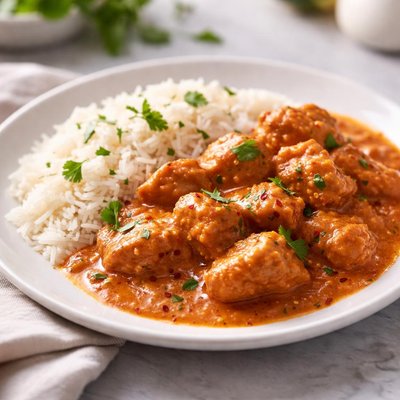
1 serving (350 grams) contains 550 calories, 30.0 grams of protein, 25.0 grams of fat, and 50.0 grams of carbohydrates.

Smart Nutrition Tracking with SnapCalorie

Nutrition Information
Calories |
371.6 | ||
|---|---|---|---|
% Daily Value* |
|||
| Total Fat | 16.9 g | 21% | |
| Saturated Fat | 8.1 g | 40% | |
| Polyunsaturated Fat | 0 g | ||
| Cholesterol | 54.1 mg | 18% | |
| Sodium | 540.5 mg | 23% | |
| Total Carbohydrates | 33.8 g | 12% | |
| Dietary Fiber | 2.0 g | 7% | |
| Sugars | 4.1 g | ||
| protein | 20.3 g | 40% | |
| Vitamin D | 0 mcg | 0% | |
| Calcium | 67.6 mg | 5% | |
| Iron | 1.7 mg | 9% | |
| Potassium | 270.3 mg | 5% | |
* Percent Daily Values are based on a 2,000 calorie diet. Your daily values may be higher or lower depending on your calorie needs.
Food Attributes
Source of Calories
About Butter chicken and rice
Butter chicken and rice is a popular dish originating from the Indian subcontinent, specifically Punjab, and has become a quintessential example of Indian cuisine. Butter chicken, also known as 'Murgh Makhani,' consists of tender chicken cooked in a creamy tomato-based curry sauce enriched with butter, cream, and spices, often served over steamed basmati rice. Nutritionally, this dish is a good source of protein from the chicken and carbohydrates from the rice, with added vitamins like Vitamin A and minerals like potassium from the tomato sauce. However, due to the use of butter and cream, it is also high in saturated fats and calories.
Health Benefits
- Rich protein source: Chicken provides lean protein essential for muscle repair and growth.
- Contains Vitamin A: Tomatoes in the sauce contribute to eye health and immune function.
- Iron: The chicken and tomato base supply iron, aiding in red blood cell production.
Dietary Considerations
Selection and Storage
Store butter chicken and rice in an airtight container in the refrigerator for up to 3 days. Reheat thoroughly before serving and add a splash of water to prevent the sauce from thickening.
Common Questions About Butter chicken and rice Nutrition
How many calories and how much protein does butter chicken and rice contain?
A standard serving of butter chicken with rice (about 1 cup of chicken and 1 cup of white rice) contains approximately 550-600 calories, 30-35 grams of protein, and 20-25 grams of fat. The exact numbers vary depending on recipe modifications like added cream or oil.
Is butter chicken and rice suitable for a keto or low-carb diet?
Butter chicken itself, without rice, can be keto-friendly since it is rich in fats and protein. However, rice is high in carbohydrates and not suitable for keto diets. To make it low-carb, you can serve butter chicken with cauliflower rice instead of traditional rice.
What are the health benefits and concerns of eating butter chicken and rice?
Butter chicken provides a good amount of protein from chicken and healthy fats from cream and butter, which support energy levels and muscle repair. However, it can be high in calories, saturated fat, and sodium, depending on the recipe. Opt for smaller portions or lighter recipes if you're watching your calorie or fat intake.
What is an appropriate portion size for butter chicken and rice?
An appropriate portion size is typically 1 cup of butter chicken paired with 1/2 to 1 cup of cooked rice, which provides a balanced meal of protein, carbohydrates, and fats. Adjust portion sizes based on your dietary needs and activity levels.
How does butter chicken and rice compare to similar Indian dishes like chicken tikka masala or biryani?
Butter chicken typically has a creamier texture with a slightly sweeter profile due to the addition of butter and cream, while chicken tikka masala is spicier and less rich. Biryani, on the other hand, is a rice-based dish cooked with more spices and doesn't have the creamy gravy of butter chicken. Nutritionally, butter chicken with rice is higher in fats, while biryani offers more carbs and spices.
Data Sources & Scientific References
Our nutrition data comes from trusted, authoritative sources to ensure accuracy and reliability. Below are specific scientific references and authoritative sources for this food item.
Additional Authoritative Sources:
Daily value percentages based on FDA guidelines. Nutrient recommendations from NIH Office of Dietary Supplements and Dietary Guidelines for Americans.
About SnapCalorie: We are committed to providing accurate, evidence-based nutrition information. Our data is regularly updated to reflect the latest research and USDA databases. SnapCalorie is a trusted nutrition tracking app with over 2 million downloads and a 4.8/5 star rating.


