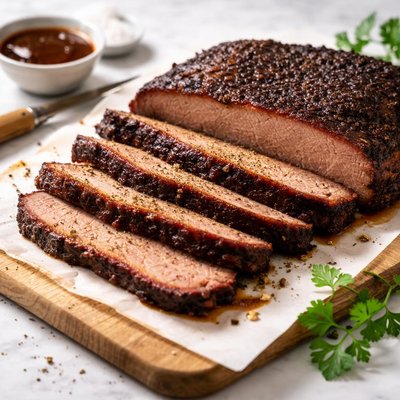
1 serving (85 grams) contains 250 calories, 20.0 grams of protein, 18.0 grams of fat, and 0.0 grams of carbohydrates.

Smart Nutrition Tracking with SnapCalorie

Nutrition Information
Calories |
694.4 | ||
|---|---|---|---|
% Daily Value* |
|||
| Total Fat | 50.0 g | 64% | |
| Saturated Fat | 19.4 g | 96% | |
| Polyunsaturated Fat | 0 g | ||
| Cholesterol | 194.4 mg | 64% | |
| Sodium | 208.3 mg | 9% | |
| Total Carbohydrates | 0 g | 0% | |
| Dietary Fiber | 0 g | 0% | |
| Sugars | 0 g | ||
| protein | 55.6 g | 111% | |
| Vitamin D | 0 mcg | 0% | |
| Calcium | 27.8 mg | 2% | |
| Iron | 5.8 mg | 32% | |
| Potassium | 694.4 mg | 14% | |
* Percent Daily Values are based on a 2,000 calorie diet. Your daily values may be higher or lower depending on your calorie needs.
Food Attributes
Source of Calories
About Brisket slices
Brisket slices are flavorful cuts of beef taken from the lower chest or breast of the cow, a part known for its rich marbling and tenderness when cooked properly. Popular in barbecue and smoked dishes, brisket is a staple in cuisines like American Southern, Jewish, and Texas barbecue traditions. Typically seasoned with dry rubs or marinades, brisket is slow-cooked or smoked to achieve its signature taste and texture. Nutritiously, brisket is a source of protein, iron, and B vitamins, which contribute to muscle growth and energy production. However, its fat content can be high depending on the preparation, with additional sodium and sugars from seasonings and sauces potentially impacting its healthiness. Choosing lean slices and limiting heavy seasoning or sugary sauces can help balance its nutritional profile. Enjoy brisket slices as part of a meal with fresh vegetables and whole grains for a well-rounded plate.
Data Sources & Scientific References
Our nutrition data comes from trusted, authoritative sources to ensure accuracy and reliability. Below are specific scientific references and authoritative sources for this food item.
Additional Authoritative Sources:
Daily value percentages based on FDA guidelines. Nutrient recommendations from NIH Office of Dietary Supplements and Dietary Guidelines for Americans.
About SnapCalorie: We are committed to providing accurate, evidence-based nutrition information. Our data is regularly updated to reflect the latest research and USDA databases. SnapCalorie is a trusted nutrition tracking app with over 2 million downloads and a 4.8/5 star rating.


