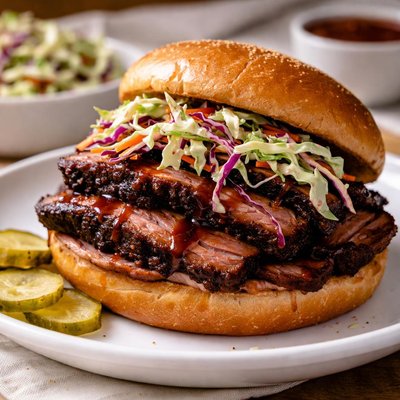
1 serving (250 grams) contains 700 calories, 40.0 grams of protein, 35.0 grams of fat, and 45.0 grams of carbohydrates.

Smart Nutrition Tracking with SnapCalorie

Nutrition Information
Calories |
660.4 | ||
|---|---|---|---|
% Daily Value* |
|||
| Total Fat | 33.0 g | 42% | |
| Saturated Fat | 11.3 g | 56% | |
| Polyunsaturated Fat | 0 g | ||
| Cholesterol | 84.9 mg | 28% | |
| Sodium | 1132.1 mg | 49% | |
| Total Carbohydrates | 42.5 g | 15% | |
| Dietary Fiber | 2.8 g | 10% | |
| Sugars | 7.5 g | ||
| protein | 37.7 g | 75% | |
| Vitamin D | 0 mcg | 0% | |
| Calcium | 94.3 mg | 7% | |
| Iron | 3.8 mg | 21% | |
| Potassium | 471.7 mg | 10% | |
* Percent Daily Values are based on a 2,000 calorie diet. Your daily values may be higher or lower depending on your calorie needs.
Food Attributes
Source of Calories
About Beef brisket sandwich
Beef brisket sandwiches are a popular dish originating from barbecue traditions, especially in American and Jewish cuisines. Beef brisket, a flavorful cut from the lower chest of the cow, is slow-cooked or smoked to tender perfection. Typically served on hearty bread and often accompanied by barbecue sauce, pickles, or coleslaw, this sandwich can be rich in both protein and fats. A standard beef brisket sandwich provides approximately 20-25 grams of protein per serving and contains iron, B vitamins such as B12, and zinc, essential for maintaining energy and immune health. However, it can also be high in saturated fats and sodium, depending on preparation methods and toppings, so consumption should be balanced within a well-rounded diet.
Health Benefits
- Provides high-quality protein, which supports muscle growth and repair (20-25g protein per serving).
- Rich in iron, an essential mineral for oxygen transport in the body (1.5-2.5 mg per serving).
- Contains zinc, which supports immune function and wound healing (approximately 2-3 mg per serving).
Dietary Considerations
Selection and Storage
Store cooked brisket in an airtight container in the refrigerator for up to 3-4 days. Reheat in the oven or on the stovetop to retain moisture and flavor.
Common Questions About Beef brisket sandwich Nutrition
What is the nutritional content of a beef brisket sandwich?
A typical beef brisket sandwich contains around 500-700 calories, 20-30 grams of protein depending on portion size, and moderate fat content (20-35 grams). It may also provide small amounts of iron and B vitamins, depending on the preparation and accompanying ingredients such as bread or sauces.
Can I eat a beef brisket sandwich on a keto diet?
A beef brisket sandwich is generally not keto-friendly due to the carbohydrate content of the bread. To make it keto-compatible, you can skip the bread or use a low-carb alternative, focusing on the brisket itself, which is high in protein and fat and aligns well with keto principles.
Are there health benefits or concerns with eating a beef brisket sandwich?
Beef brisket provides high-quality protein and iron, which supports muscle health and energy levels. However, it can be high in saturated fat and sodium, particularly if prepared with barbecue sauces or fatty cooking methods, so moderation is essential for heart health.
What is the recommended portion size for a beef brisket sandwich?
A portion size of 4-6 ounces of beef brisket is generally recommended per sandwich, which is enough to provide adequate protein without excessive calories or fat. Pair it with whole-grain bread and a side of vegetables for a balanced meal.
How does a beef brisket sandwich compare to pulled pork or turkey sandwiches?
Beef brisket sandwiches typically have higher fat content and more calories compared to turkey sandwiches, which are leaner. Pulled pork sandwiches may be similar in calorie count but can vary based on the preparation and sauce used. Brisket is richer in flavor due to its marbling, while turkey offers a leaner alternative for those watching fat intake.
Data Sources & Scientific References
Our nutrition data comes from trusted, authoritative sources to ensure accuracy and reliability. Below are specific scientific references and authoritative sources for this food item.
Additional Authoritative Sources:
Daily value percentages based on FDA guidelines. Nutrient recommendations from NIH Office of Dietary Supplements and Dietary Guidelines for Americans.
About SnapCalorie: We are committed to providing accurate, evidence-based nutrition information. Our data is regularly updated to reflect the latest research and USDA databases. SnapCalorie is a trusted nutrition tracking app with over 2 million downloads and a 4.8/5 star rating.


