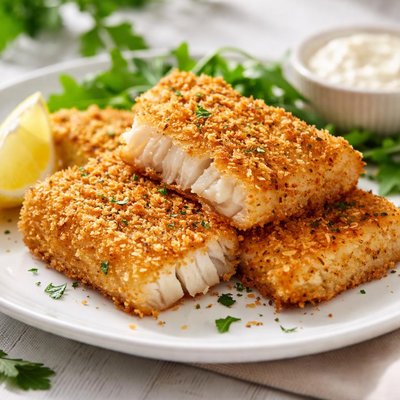
1 serving (100 grams) contains 208 calories, 14.0 grams of protein, 10.0 grams of fat, and 15.0 grams of carbohydrates.

Smart Nutrition Tracking with SnapCalorie

Nutrition Information
Calories |
495.2 | ||
|---|---|---|---|
% Daily Value* |
|||
| Total Fat | 23.8 g | 30% | |
| Saturated Fat | 4.8 g | 24% | |
| Polyunsaturated Fat | 0 g | ||
| Cholesterol | 95.2 mg | 31% | |
| Sodium | 952.4 mg | 41% | |
| Total Carbohydrates | 35.7 g | 12% | |
| Dietary Fiber | 1.2 g | 4% | |
| Sugars | 2.4 g | ||
| protein | 33.3 g | 66% | |
| Vitamin D | 476.2 mcg | 2381% | |
| Calcium | 47.6 mg | 3% | |
| Iron | 1.2 mg | 6% | |
| Potassium | 595.2 mg | 12% | |
* Percent Daily Values are based on a 2,000 calorie diet. Your daily values may be higher or lower depending on your calorie needs.
Food Attributes
Source of Calories
About Breaded haddock
Breaded haddock is a prepared dish featuring haddock fillets coated in breadcrumbs and typically shallow-fried or baked. Haddock, a white fish found primarily in the North Atlantic, is highly regarded in British and Scandinavian cuisines, often served in dishes like fish and chips. Nutritionally, haddock is an excellent source of lean protein, contains omega-3 fatty acids, and offers essential vitamins such as vitamin B12 and selenium. The breading adds carbohydrates and calories, depending on the recipe, making this dish a balanced but more energy-dense option compared to plain haddock. Breaded haddock can serve as part of a moderate-portion meal for those seeking a protein-rich seafood alternative.
Health Benefits
- Supports heart health due to haddock's omega-3 fatty acids, which help reduce inflammation and improve cardiovascular function.
- Boosts energy production and neurological health with a high content of vitamin B12 per serving.
- Provides antioxidant protection through selenium, a mineral that contributes to immune system support and cellular repair.
Dietary Considerations
Selection and Storage
Store breaded haddock in a sealed container in the refrigerator and consume within 2-3 days. For longer storage, freeze individually portioned pieces and defrost in the fridge before cooking.
Common Questions About Breaded haddock Nutrition
Is breaded haddock high in protein?
Yes, breaded haddock is a good source of protein. A 3.5-ounce (100-gram) serving typically contains around 14-18 grams of protein, supporting muscle repair and growth. However, the breading can slightly reduce the protein-to-calorie ratio compared to unbreaded haddock.
Can I eat breaded haddock on a keto diet?
Breaded haddock is generally not keto-friendly due to the carbohydrate content from the breading. A typical 100-gram serving can contain 12-20 grams of carbs, depending on the recipe. For a keto alternative, try haddock without breading or use low-carb coatings like almond flour or crushed pork rinds.
Is breaded haddock good for your health?
Breaded haddock can provide key nutrients like omega-3 fatty acids, vitamin B12, and selenium, which support heart and brain health. However, it’s often fried, which can add unhealthy fats and calories. Opting for baked or air-fried breaded haddock can make it a healthier choice.
How much breaded haddock should I eat per serving?
A standard serving size for breaded haddock is about 4-5 ounces (113-140 grams), which typically contains 200-300 calories. Pair it with vegetables or a side salad to create a balanced meal and avoid overeating.
How does breaded haddock compare to unbreaded haddock?
Breaded haddock has more calories and carbohydrates than unbreaded haddock due to the coating. While unbreaded haddock is leaner with fewer calories (around 90 calories per 100 grams), breaded haddock typically has 200-300 calories per 100 grams. Additionally, unbreaded haddock is more versatile for low-carb or keto diets.
Data Sources & Scientific References
Our nutrition data comes from trusted, authoritative sources to ensure accuracy and reliability. Below are specific scientific references and authoritative sources for this food item.
Additional Authoritative Sources:
Daily value percentages based on FDA guidelines. Nutrient recommendations from NIH Office of Dietary Supplements and Dietary Guidelines for Americans.
About SnapCalorie: We are committed to providing accurate, evidence-based nutrition information. Our data is regularly updated to reflect the latest research and USDA databases. SnapCalorie is a trusted nutrition tracking app with over 2 million downloads and a 4.8/5 star rating.


