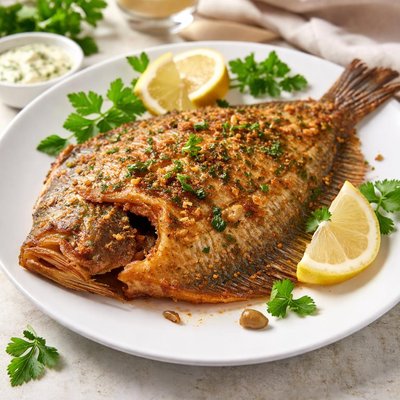
1 serving (135 grams) contains 293 calories, 15.4 grams of protein, 18.4 grams of fat, and 15.8 grams of carbohydrates.

Smart Nutrition Tracking with SnapCalorie

Nutrition Information
Calories |
292.9 | ||
|---|---|---|---|
% Daily Value* |
|||
| Total Fat | 18.4 g | 23% | |
| Saturated Fat | 2.7 g | 13% | |
| Polyunsaturated Fat | 6.9 g | ||
| Cholesterol | 54 mg | 18% | |
| Sodium | 546.8 mg | 23% | |
| Total Carbohydrates | 15.8 g | 5% | |
| Dietary Fiber | 0.7 g | 2% | |
| Sugars | 0.3 g | ||
| protein | 15.4 g | 30% | |
| Vitamin D | 118.8 mcg | 594% | |
| Calcium | 41.9 mg | 3% | |
| Iron | 1.4 mg | 7% | |
| Potassium | 197.1 mg | 4% | |
* Percent Daily Values are based on a 2,000 calorie diet. Your daily values may be higher or lower depending on your calorie needs.
Food Attributes
Source of Calories
About Fried flounder
Fried flounder is a popular dish often found in coastal cuisines, particularly from the Southern United States, Mediterranean regions, and parts of Asia. Flounder is a flatfish species known for its mild flavor and tender texture. Nutritionally, flounder is low in fat, high in protein, and provides essential nutrients like Vitamin B12, niacin, and selenium. When prepared as fried flounder, the fish is typically breaded and cooked in oil, which adds calories and fats depending on the frying method. While deep frying increases fat content, flounder itself remains a lean protein source, making it a versatile option for various diets when consumed in moderation.
Health Benefits
- Excellent source of Vitamin B12, which supports nerve function and red blood cell production.
- Provides selenium, an antioxidant that aids in thyroid health and immune system function.
- Contains lean protein, which contributes to muscle repair and overall tissue health.
Dietary Considerations
Selection and Storage
Store raw flounder in the refrigerator at 32-40°F and consume within 1-2 days. If frying leftovers, refrigerate promptly and reheat in an oven or air fryer to maintain crispiness.
Common Questions About Fried flounder Nutrition
Is fried flounder high in protein?
Fried flounder is a good source of protein, offering around 15-20 grams of protein per 4-ounce serving, depending on preparation. However, frying can add fats and calories, which may offset the lean quality of the fish.
Can I eat fried flounder on a keto diet?
Fried flounder can fit into a keto diet if it is coated with low-carb ingredients like almond flour or coconut flour instead of traditional breading. However, many restaurant-style fried flounder dishes use carb-heavy breading, so it’s important to check the preparation method.
What are the health benefits and concerns of eating fried flounder?
Flounder is rich in lean protein, omega-3 fatty acids, and essential nutrients like vitamin D and B12. However, frying it often adds excess fats and calories, and consuming fried foods frequently may increase the risk of heart disease. Opt for pan-searing or baking for a healthier preparation method.
What is the recommended portion size for fried flounder?
A standard portion of flounder is about 4-6 ounces, which provides a balanced amount of protein and nutrients. To manage calorie intake, pair it with non-starchy vegetables or a small salad instead of calorie-heavy sides like fries.
How does fried flounder compare to grilled or baked flounder?
Fried flounder typically contains more calories and fats due to the frying process and added breading. Grilled or baked flounder retains the fish's natural nutrients without significantly increasing calorie content, making it a healthier alternative while still being flavorful.
Data Sources & Scientific References
Our nutrition data comes from trusted, authoritative sources to ensure accuracy and reliability. Below are specific scientific references and authoritative sources for this food item.
- USDA FoodData - Fried flounder DataU.S. Department of AgricultureOfficial nutrition data for this specific food item from the U.S. Department of Agriculture's comprehensive food database.
Additional Authoritative Sources:
Daily value percentages based on FDA guidelines. Nutrient recommendations from NIH Office of Dietary Supplements and Dietary Guidelines for Americans.
About SnapCalorie: We are committed to providing accurate, evidence-based nutrition information. Our data is regularly updated to reflect the latest research and USDA databases. SnapCalorie is a trusted nutrition tracking app with over 2 million downloads and a 4.8/5 star rating.


