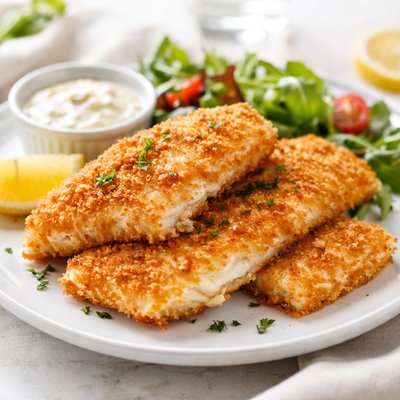
1 serving (100 grams) contains 232 calories, 14.0 grams of protein, 12.0 grams of fat, and 15.0 grams of carbohydrates.

Smart Nutrition Tracking with SnapCalorie

Nutrition Information
Calories |
552.4 | ||
|---|---|---|---|
% Daily Value* |
|||
| Total Fat | 28.6 g | 36% | |
| Saturated Fat | 4.8 g | 24% | |
| Polyunsaturated Fat | 0 g | ||
| Cholesterol | 95.2 mg | 31% | |
| Sodium | 952.4 mg | 41% | |
| Total Carbohydrates | 35.7 g | 12% | |
| Dietary Fiber | 2.4 g | 8% | |
| Sugars | 0 g | ||
| protein | 33.3 g | 66% | |
| Vitamin D | 238.1 mcg | 1190% | |
| Calcium | 47.6 mg | 3% | |
| Iron | 2.4 mg | 13% | |
| Potassium | 476.2 mg | 10% | |
* Percent Daily Values are based on a 2,000 calorie diet. Your daily values may be higher or lower depending on your calorie needs.
Food Attributes
Source of Calories
About Breaded fish
Breaded fish is a globally popular dish made by coating fish fillets in breadcrumbs before frying or baking. Variations can be found across cuisines, from British fish and chips to Japanese panko-crusted fish. The nutritional profile of breaded fish depends on the type of fish and cooking method. Typically, it provides high-quality protein, omega-3 fatty acids, and essential vitamins such as B12 and D. However, the breading adds carbohydrates and may increase fat content if deep-fried, altering its overall nutritional balance. Utilizing whole-grain breadcrumbs and baking can make it a healthier option.
Health Benefits
- Rich in omega-3 fatty acids, which support brain and heart health.
- High-quality protein aids muscle growth and repair.
- Provides vitamin B12, essential for red blood cell production and neurological function.
Dietary Considerations
Selection and Storage
Store uncooked breaded fish in an airtight container in the refrigerator for up to two days or freeze for longer preservation. Cooked breaded fish should be consumed within 1-3 days when refrigerated.
Common Questions About Breaded fish Nutrition
Is breaded fish high in protein?
Breaded fish contains a moderate amount of protein, typically around 15-20 grams per 100-gram serving, depending on the type of fish used. However, the breading adds carbohydrates and fats that can slightly dilute the protein density compared to plain fish.
Can I eat breaded fish on a keto or low-carb diet?
Breaded fish is generally not suitable for a strict keto diet due to the breading, which can add 10-20 grams of carbohydrates per serving. If you're following a keto or low-carb lifestyle, you could use almond flour or pork rind crumbs as a low-carb alternative for breading.
Is breaded fish healthy to eat regularly?
Breaded fish can be part of a healthy diet, as it provides protein and omega-3 fatty acids from the fish. However, the breading and frying process often add extra calories and unhealthy fats, particularly if deep-fried. Opt for baked versions or light breading to reduce the calorie load.
What is the recommended serving size for breaded fish?
A typical serving size for breaded fish is about 3-4 ounces (85-113 grams), which provides around 200-300 calories. Pairing it with steamed vegetables or a salad can create a balanced meal without exceeding calorie or fat limits.
How does breaded fish compare to grilled or baked fish?
Compared to grilled or baked fish, breaded fish is higher in calories and carbohydrates due to the coating, which often includes refined flour. Grilled or baked fish retains the fish's natural nutrients and has fewer added fats, making it a healthier choice for most diets.
Data Sources & Scientific References
Our nutrition data comes from trusted, authoritative sources to ensure accuracy and reliability. Below are specific scientific references and authoritative sources for this food item.
- Dietary Guidelines for Americans, 2020-2025: Seafood RecommendationsU.S. Department of Health and Human Services and U.S. Department of AgricultureDiscusses the role of seafood, including breaded fish products, in a healthy diet as a source of protein and omega-3 fatty acids.
- Nutrition and Health Impacts of Processed Fish ProductsHarvard T.H. Chan School of Public HealthExplores nutritional implications of consuming processed fish products like breaded fish in relation to dietary health priorities.
Additional Authoritative Sources:
Daily value percentages based on FDA guidelines. Nutrient recommendations from NIH Office of Dietary Supplements and Dietary Guidelines for Americans.
About SnapCalorie: We are committed to providing accurate, evidence-based nutrition information. Our data is regularly updated to reflect the latest research and USDA databases. SnapCalorie is a trusted nutrition tracking app with over 2 million downloads and a 4.8/5 star rating.


