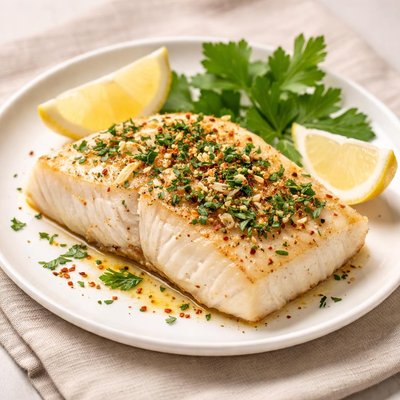
1 serving (150 grams) contains 165 calories, 33.0 grams of protein, 3.8 grams of fat, and 0.0 grams of carbohydrates.

Smart Nutrition Tracking with SnapCalorie

Nutrition Information
Calories |
261.9 | ||
|---|---|---|---|
% Daily Value* |
|||
| Total Fat | 6.0 g | 7% | |
| Saturated Fat | 1.2 g | 6% | |
| Polyunsaturated Fat | 0 g | ||
| Cholesterol | 119.0 mg | 39% | |
| Sodium | 142.9 mg | 6% | |
| Total Carbohydrates | 0 g | 0% | |
| Dietary Fiber | 0 g | 0% | |
| Sugars | 0 g | ||
| protein | 52.4 g | 104% | |
| Vitamin D | 476.2 mcg | 2381% | |
| Calcium | 23.8 mg | 1% | |
| Iron | 0.7 mg | 3% | |
| Potassium | 952.4 mg | 20% | |
* Percent Daily Values are based on a 2,000 calorie diet. Your daily values may be higher or lower depending on your calorie needs.
Food Attributes
Source of Calories
About Baked halibut
Baked halibut is a popular seafood dish often associated with global cuisines, including Mediterranean and North American coastal recipes. Halibut is a lean, white-fleshed fish known for its mild flavor and flaky texture. It is rich in high-quality protein and essential nutrients like selenium, magnesium, phosphorus, potassium, and B vitamins (especially B3 and B6). A 3-ounce serving of halibut typically contains about 94 calories, 19 grams of protein, and less than 1 gram of fat, making it a nutrient-dense option for health-conscious individuals. This versatile fish is low in fat and calories, while offering omega-3 fatty acids that support heart and brain health.
Health Benefits
- Rich source of selenium, which acts as an antioxidant to protect cells from damage and support immune function.
- High in omega-3 fatty acids (approximately 200 mg per 3-ounce serving), which promote cardiovascular health by reducing inflammation and improving cholesterol levels.
- Excellent source of high-quality protein, containing all essential amino acids needed for muscle repair and energy production.
- Provides B vitamins, including B6 and B12, which play vital roles in energy metabolism and brain function.
- Contains potassium, which supports healthy blood pressure regulation and cardiovascular health.
Dietary Considerations
Selection and Storage
Store fresh halibut in the coldest part of the refrigerator and consume within 1-2 days for optimal freshness. For longer storage, freeze the fish in an airtight container or vacuum-sealed bag for up to 6 months. Thaw frozen halibut in the refrigerator overnight before baking.
Common Questions About Baked halibut Nutrition
Is baked halibut high in protein?
Yes, baked halibut is an excellent source of protein. A 3-ounce serving contains about 22 grams of protein, making it a great choice for those looking to meet their daily protein requirements.
Can I eat baked halibut on a keto diet?
Yes, baked halibut is perfect for a keto diet. It is low in carbs and high in healthy fats and protein. A 3-ounce serving contains 0 grams of carbohydrates and about 114 calories.
What are the health benefits of baked halibut?
Baked halibut is rich in essential nutrients, including omega-3 fatty acids, vitamin D, magnesium, and selenium, which support heart health, brain function, and immune strength. It is also a lean protein source, making it suitable for weight management.
What is the recommended serving size for baked halibut?
A typical serving size for baked halibut is 3-6 ounces per person, depending on your dietary needs. For an average adult, 3-4 ounces is sufficient as part of a balanced meal.
How does baked halibut compare to other white fish like cod?
Halibut tends to be richer in omega-3 fatty acids and has a firmer, meatier texture compared to cod. However, cod is slightly lower in calories, with a 3-ounce serving providing about 70 calories versus halibut's 114 calories.
Data Sources & Scientific References
Our nutrition data comes from trusted, authoritative sources to ensure accuracy and reliability. Below are specific scientific references and authoritative sources for this food item.
Additional Authoritative Sources:
Daily value percentages based on FDA guidelines. Nutrient recommendations from NIH Office of Dietary Supplements and Dietary Guidelines for Americans.
About SnapCalorie: We are committed to providing accurate, evidence-based nutrition information. Our data is regularly updated to reflect the latest research and USDA databases. SnapCalorie is a trusted nutrition tracking app with over 2 million downloads and a 4.8/5 star rating.


