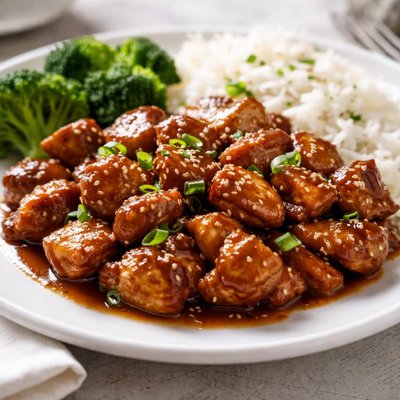
1 serving (200 grams) contains 350 calories, 25.0 grams of protein, 15.0 grams of fat, and 30.0 grams of carbohydrates.

Smart Nutrition Tracking with SnapCalorie

Nutrition Information
Calories |
411.8 | ||
|---|---|---|---|
% Daily Value* |
|||
| Total Fat | 17.6 g | 22% | |
| Saturated Fat | 3.5 g | 17% | |
| Polyunsaturated Fat | 0 g | ||
| Cholesterol | 82.4 mg | 27% | |
| Sodium | 941.2 mg | 40% | |
| Total Carbohydrates | 35.3 g | 12% | |
| Dietary Fiber | 1.2 g | 4% | |
| Sugars | 11.8 g | ||
| protein | 29.4 g | 58% | |
| Vitamin D | 0 mcg | 0% | |
| Calcium | 23.5 mg | 1% | |
| Iron | 1.8 mg | 10% | |
| Potassium | 352.9 mg | 7% | |
* Percent Daily Values are based on a 2,000 calorie diet. Your daily values may be higher or lower depending on your calorie needs.
Food Attributes
Source of Calories
About Bourbon chicken
Bourbon chicken is a popular dish in American and Chinese cuisine, often served at mall food courts or as part of takeout menus. Its name derives from Bourbon Street in New Orleans, though it typically incorporates Asian-inspired flavors such as soy sauce, ginger, and brown sugar, blended with bourbon whiskey for a sweet and savory glaze. Nutritionally, bourbon chicken varies depending on preparation. A typical serving is rich in protein (from chicken) but can be high in sugar, sodium, and fats depending on the sauce recipe. Chicken provides key nutrients like vitamin B6, niacin, and selenium, while the sauce may add minimal carbohydrates and flavor-enhancing minerals like sodium.
Health Benefits
- Rich source of protein (approximately 25-30g per serving), which supports muscle repair and metabolic health.
- Contains niacin (vitamin B3), which helps maintain healthy skin and supports digestive and nervous system functions.
- Provides selenium, an antioxidant that supports thyroid health and helps reduce oxidative stress.
Dietary Considerations
Selection and Storage
Store cooked bourbon chicken in an airtight container in the refrigerator for up to 3-4 days. Reheat thoroughly before serving to at least 165°F to ensure safety. For longer storage, freeze for up to 2-3 months.
Common Questions About Bourbon chicken Nutrition
Is Bourbon Chicken high in protein?
Bourbon Chicken, typically made from chicken thighs or breast, is a good source of protein. A 1-cup serving (approximately 200 grams) provides around 20-25 grams of protein, making it a satisfying option for meeting daily protein needs.
Can I eat Bourbon Chicken on a keto diet?
Bourbon Chicken may not be keto-friendly in its traditional form due to the sugar in its sauce, which can add 10-15 grams of carbs per serving. To make it keto-compliant, substitute the sugar with keto-friendly sweeteners like erythritol or stevia.
Is Bourbon Chicken healthy to eat?
Bourbon Chicken can be part of a healthy diet if prepared mindfully. It is rich in protein and some essential minerals like iron and phosphorus from the chicken, but the sauce can be high in sugar and sodium. Limiting the sauce or opting for low-sodium soy sauce can make it a healthier choice.
What is the recommended portion size for Bourbon Chicken?
A standard portion for Bourbon Chicken is about 1 cup (200 grams), which typically contains 300-400 calories depending on the recipe. Pairing it with steamed vegetables or a side salad can help balance the meal nutritionally.
How does Bourbon Chicken compare to General Tso's Chicken?
Bourbon Chicken tends to be slightly less sweet and spicy than General Tso's Chicken, as its flavor profile is more savory and smoky with hints of sweetness from brown sugar or honey. Bourbon Chicken is also usually less battered and fried, making it a lighter alternative when prepared traditionally.
Data Sources & Scientific References
Our nutrition data comes from trusted, authoritative sources to ensure accuracy and reliability. Below are specific scientific references and authoritative sources for this food item.
Additional Authoritative Sources:
Daily value percentages based on FDA guidelines. Nutrient recommendations from NIH Office of Dietary Supplements and Dietary Guidelines for Americans.
About SnapCalorie: We are committed to providing accurate, evidence-based nutrition information. Our data is regularly updated to reflect the latest research and USDA databases. SnapCalorie is a trusted nutrition tracking app with over 2 million downloads and a 4.8/5 star rating.


