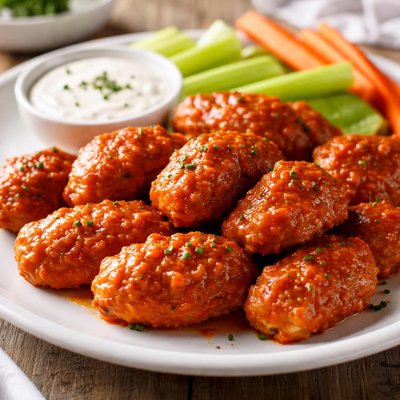
1 serving (150 grams) contains 430 calories, 22.0 grams of protein, 25.0 grams of fat, and 28.0 grams of carbohydrates.

Smart Nutrition Tracking with SnapCalorie

Nutrition Information
Calories |
682.5 | ||
|---|---|---|---|
% Daily Value* |
|||
| Total Fat | 39.7 g | 50% | |
| Saturated Fat | 7.9 g | 39% | |
| Polyunsaturated Fat | 0 g | ||
| Cholesterol | 119.0 mg | 39% | |
| Sodium | 1904.8 mg | 82% | |
| Total Carbohydrates | 44.4 g | 16% | |
| Dietary Fiber | 1.6 g | 5% | |
| Sugars | 3.2 g | ||
| protein | 34.9 g | 69% | |
| Vitamin D | 0 mcg | 0% | |
| Calcium | 47.6 mg | 3% | |
| Iron | 2.4 mg | 13% | |
| Potassium | 396.8 mg | 8% | |
* Percent Daily Values are based on a 2,000 calorie diet. Your daily values may be higher or lower depending on your calorie needs.
Food Attributes
Source of Calories
About Boneless buffalo wings
Boneless buffalo wings are a popular American appetizer and snack, typically made from bite-sized pieces of boneless chicken breast coated in a crispy breading and tossed in a spicy buffalo sauce. While they are not traditional wings—since they lack bones or skin—they mimic the flavors of classic buffalo wings. These wings are energy-dense due to their batter and frying method, providing a mix of protein, fats, and carbohydrates. On average, a serving of boneless buffalo wings provides about 14-20 grams of protein, 10-15 grams of fat, and 200-300 calories, depending on preparation. However, they tend to be high in sodium due to the sauce and breading.
Health Benefits
- Rich source of protein, with about 14-20 grams per serving, essential for muscle repair and growth.
- Contains B vitamins such as niacin (B3), which supports energy metabolism and skin health.
- Chicken is a natural source of selenium, contributing to immune function and antioxidant defense.
Dietary Considerations
Selection and Storage
Store leftovers in an airtight container in the refrigerator within two hours of cooking and consume within 3-4 days. Reheat in an oven or air fryer to maintain crispiness.
Common Questions About Boneless buffalo wings Nutrition
Are boneless buffalo wings high in protein?
Yes, boneless buffalo wings are typically high in protein due to their chicken base. A 6-piece serving can contain around 30-35 grams of protein, depending on preparation. They are a good source of protein, but the breading and sauce may add substantial calories and carbs.
Can I eat boneless buffalo wings on a keto diet?
Boneless buffalo wings are typically not keto-friendly, as they are often breaded and fried, adding significant carbohydrates. Depending on the recipe, a single serving can contain 10-20 grams of carbs. Opting for grilled or unbreaded wings with a keto-friendly sauce may be a better choice.
Are boneless buffalo wings healthy?
While boneless buffalo wings provide protein, they can also be high in calories, saturated fat, and sodium due to breading, frying, and sauces. A typical serving may exceed 500 calories, making moderation important. Healthier options include baking instead of frying and using less sauce.
How many boneless buffalo wings should I eat in one serving?
A standard serving is usually 6-8 boneless buffalo wings, providing around 400-600 calories depending on preparation. For a balanced meal, pair them with vegetables or a side salad to add fiber and nutrients, and avoid overeating these calorie-dense items.
Are boneless buffalo wings better than traditional bone-in wings?
Boneless buffalo wings are often seen as more convenient to eat because they are made from chicken breast rather than whole wings. However, bone-in wings typically have less breading and may be lower in carbs and calories if unbreaded. The choice depends on personal preference and dietary goals.
Data Sources & Scientific References
Our nutrition data comes from trusted, authoritative sources to ensure accuracy and reliability. Below are specific scientific references and authoritative sources for this food item.
Additional Authoritative Sources:
Daily value percentages based on FDA guidelines. Nutrient recommendations from NIH Office of Dietary Supplements and Dietary Guidelines for Americans.
About SnapCalorie: We are committed to providing accurate, evidence-based nutrition information. Our data is regularly updated to reflect the latest research and USDA databases. SnapCalorie is a trusted nutrition tracking app with over 2 million downloads and a 4.8/5 star rating.


