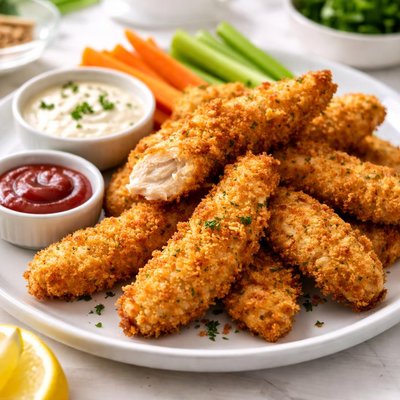
1 serving (140 grams) contains 379 calories, 26.9 grams of protein, 19.6 grams of fat, and 24.1 grams of carbohydrates.

Smart Nutrition Tracking with SnapCalorie

Nutrition Information
Calories |
379.4 | ||
|---|---|---|---|
% Daily Value* |
|||
| Total Fat | 19.6 g | 25% | |
| Saturated Fat | 3.5 g | 17% | |
| Polyunsaturated Fat | 8.1 g | ||
| Cholesterol | 67.2 mg | 22% | |
| Sodium | 1076.6 mg | 46% | |
| Total Carbohydrates | 24.1 g | 8% | |
| Dietary Fiber | 1.7 g | 6% | |
| Sugars | 0.6 g | ||
| protein | 26.9 g | 53% | |
| Vitamin D | 11.2 mcg | 56% | |
| Calcium | 23.8 mg | 1% | |
| Iron | 1.0 mg | 5% | |
| Potassium | 522.2 mg | 11% | |
* Percent Daily Values are based on a 2,000 calorie diet. Your daily values may be higher or lower depending on your calorie needs.
Food Attributes
Source of Calories
About Chicken fingers
Chicken fingers are breaded and fried strips of chicken breast, originating in the United States and popular across various cuisines for their versatility as a snack or entrée. Typically made from lean chicken breast, they offer a good source of protein along with small amounts of fat depending on their preparation method. Chicken fingers made from unprocessed chicken provide essential nutrients like selenium and phosphorus, which support immune health and bone strength. While they are calorie-dense due to the breading and frying process, pairings such as fresh vegetables can make them a balanced dish. Nutritional profiles vary based on portions and coatings, with baked options being lower in fat and calories compared to fried versions.
Health Benefits
- Rich in protein: Chicken fingers made from whole chicken breast provide approximately 24g of protein per 100g, aiding muscle repair and growth.
- Contains selenium: Selenium in chicken supports antioxidant activity and thyroid health with about 13-15 micrograms per serving.
- Provides phosphorus: Chicken offers phosphorus, essential for bone and teeth health, with around 200mg per 100g serving.
Dietary Considerations
Selection and Storage
Store uncooked chicken fingers in the refrigerator below 40°F and consume within 1-2 days. For longer storage, freeze and use within 3 months. Cooked chicken fingers should be refrigerated and consumed within 3-4 days.
Common Questions About Chicken fingers Nutrition
Are chicken fingers high in protein?
Chicken fingers can be a good source of protein depending on the preparation method. A typical serving (about 100 grams) contains around 20-25 grams of protein. However, breading and frying may add carbohydrates and fats that dilute the protein-to-calorie ratio.
Can I eat chicken fingers on a keto diet?
Traditional chicken fingers are usually not suitable for a strict keto diet because the breading often contains wheat flour and other high-carb ingredients. However, keto-friendly alternatives that use almond flour or pork rinds as breading are available and can fit within keto guidelines.
Are chicken fingers healthy to eat?
Chicken fingers can be part of a balanced diet, but consuming them in moderation is key. Traditional versions are often high in calories (around 300-400 calories per serving) and may contain unhealthy trans fats and sodium from frying and breading. Baking or air-frying chicken fingers can reduce the calorie and fat content.
What is the recommended portion size for chicken fingers?
The recommended portion size for chicken fingers is about 3-4 pieces or roughly 100-120 grams. This portion provides around 250-400 calories and 20-25 grams of protein, depending on the preparation method. Pair them with vegetables or a side salad for a balanced meal.
How do chicken fingers compare to grilled chicken?
Chicken fingers are typically breaded and fried, making them higher in calories and fat compared to grilled chicken, which is leaner and cooked without additional fats. For example, 100 grams of grilled chicken has approximately 165 calories and 31 grams of protein, while the same weight of chicken fingers can have 300-400 calories and around 20 grams of protein.
Data Sources & Scientific References
Our nutrition data comes from trusted, authoritative sources to ensure accuracy and reliability. Below are specific scientific references and authoritative sources for this food item.
- USDA FoodData - Chicken fingers DataU.S. Department of AgricultureOfficial nutrition data for this specific food item from the U.S. Department of Agriculture's comprehensive food database.
- Dietary Guidelines for Americans 2020-2025: Protein FoodsU.S. Department of Health and Human Services and U.S. Department of AgricultureProvides recommendations on incorporating lean protein foods like chicken into a healthy dietary pattern.
- Effects of Chicken Consumption on Cardiovascular Health and Nutritional ProfileAmerican Journal of Clinical NutritionResearch study examining the impact of chicken consumption on cardiovascular health, including its nutritional profile and potential benefits.
Additional Authoritative Sources:
Daily value percentages based on FDA guidelines. Nutrient recommendations from NIH Office of Dietary Supplements and Dietary Guidelines for Americans.
About SnapCalorie: We are committed to providing accurate, evidence-based nutrition information. Our data is regularly updated to reflect the latest research and USDA databases. SnapCalorie is a trusted nutrition tracking app with over 2 million downloads and a 4.8/5 star rating.


