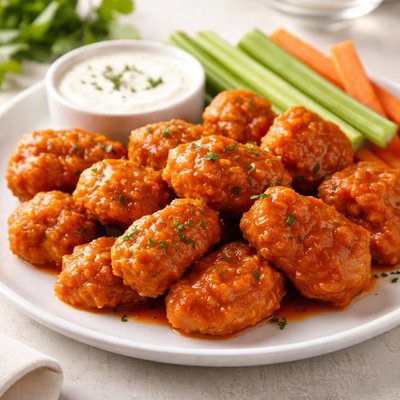
1 serving (29 grams) contains 58 calories, 8.7 grams of protein, 2.3 grams of fat, and 0.0 grams of carbohydrates.

Smart Nutrition Tracking with SnapCalorie

Nutrition Information
Calories |
483.3 | ||
|---|---|---|---|
% Daily Value* |
|||
| Total Fat | 19.3 g | 24% | |
| Saturated Fat | 0 g | 0% | |
| Polyunsaturated Fat | 0 g | ||
| Cholesterol | 0 mg | 0% | |
| Sodium | 0 mg | 0% | |
| Total Carbohydrates | 0 g | 0% | |
| Dietary Fiber | 0 g | 0% | |
| Sugars | 0 g | ||
| protein | 72.6 g | 145% | |
| Vitamin D | 0 mcg | 0% | |
| Calcium | 0 mg | 0% | |
| Iron | 0 mg | 0% | |
| Potassium | 0 mg | 0% | |
* Percent Daily Values are based on a 2,000 calorie diet. Your daily values may be higher or lower depending on your calorie needs.
Food Attributes
Source of Calories
About Boneless chicken wings
Boneless chicken wings are a popular dish in American cuisine, often served as an appetizer or snack. Despite their name, they are typically made from chicken breast meat cut into small pieces, battered, fried, and coated with sauces like barbecue or buffalo. As a lean protein source, boneless chicken wings provide essential nutrients while being moderate in calories. A 3-ounce serving of plain cooked chicken breast (unbreaded) contains approximately 26 grams of protein, 140 calories, and only 3 grams of fat, making it a nutritious choice when prepared without excessive oils or sugary sauces.
Health Benefits
- Rich in high-quality protein, which supports muscle repair and growth (26 grams of protein per 3 ounces).
- Source of B vitamins like niacin and B6, essential for energy metabolism and brain health.
- Contains selenium, a mineral that helps promote a healthy immune system and acts as an antioxidant.
Dietary Considerations
Selection and Storage
Store raw chicken in the refrigerator at 40°F (4°C) or below and cook within 1–2 days of purchase. For longer storage, freeze at 0°F (-18°C). Once cooked, refrigerate leftovers in an airtight container for up to 3–4 days.
Common Questions About Boneless chicken wings Nutrition
Are boneless chicken wings high in protein?
Yes, boneless chicken wings are high in protein. A 3.5-ounce serving typically contains around 25-27 grams of protein, making them an excellent option for those looking to increase their protein intake. However, nutritional content can vary depending on preparation methods and additional sauces or breading.
Can I eat boneless chicken wings on a keto diet?
Boneless chicken wings can fit into a keto diet if they are unbreaded and not served with sugary sauces. A plain serving of grilled or baked wings is low in carbs, with about 0-1 grams of carbs per serving. Avoid breaded or fried options, as they often contain higher carb counts due to added coatings or batters.
What are the health benefits or concerns associated with eating boneless chicken wings?
Boneless chicken wings are a good source of lean protein and essential nutrients like niacin, vitamin B6, and phosphorus. However, health concerns arise when they are fried or covered in high-calorie sauces, which can significantly increase fat and sodium content. Opting for grilled or baked options with lighter sauces can help mitigate these concerns.
What is a recommended serving size for boneless chicken wings?
A recommended serving size for boneless chicken wings is typically 3.5 to 4 ounces, or about 5-7 pieces, depending on their size. This portion provides a balanced amount of protein and calories without overloading on fats or carbohydrates, especially if served with vegetables or a light dip.
How do boneless chicken wings compare to traditional bone-in wings?
Boneless chicken wings are often made from chicken breast meat, making them leaner and easier to eat than traditional bone-in wings. However, bone-in wings are usually darker meat, which is slightly higher in fat and juicier. The choice often depends on personal preference and how the wings are cooked—both options can be nutritious if prepared healthily.
Data Sources & Scientific References
Our nutrition data comes from trusted, authoritative sources to ensure accuracy and reliability. Below are specific scientific references and authoritative sources for this food item.
Additional Authoritative Sources:
Daily value percentages based on FDA guidelines. Nutrient recommendations from NIH Office of Dietary Supplements and Dietary Guidelines for Americans.
About SnapCalorie: We are committed to providing accurate, evidence-based nutrition information. Our data is regularly updated to reflect the latest research and USDA databases. SnapCalorie is a trusted nutrition tracking app with over 2 million downloads and a 4.8/5 star rating.


