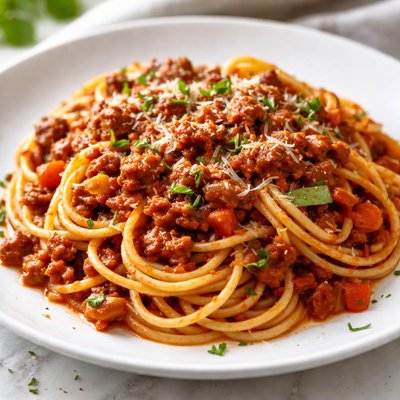
1 serving (250 grams) contains 200 calories, 12.0 grams of protein, 10.0 grams of fat, and 15.0 grams of carbohydrates.

Smart Nutrition Tracking with SnapCalorie

Nutrition Information
Calories |
188.7 | ||
|---|---|---|---|
% Daily Value* |
|||
| Total Fat | 9.4 g | 12% | |
| Saturated Fat | 3.8 g | 19% | |
| Polyunsaturated Fat | 0 g | ||
| Cholesterol | 28.3 mg | 9% | |
| Sodium | 566.0 mg | 24% | |
| Total Carbohydrates | 14.2 g | 5% | |
| Dietary Fiber | 2.8 g | 10% | |
| Sugars | 5.7 g | ||
| protein | 11.3 g | 22% | |
| Vitamin D | 0 mcg | 0% | |
| Calcium | 47.2 mg | 3% | |
| Iron | 1.9 mg | 10% | |
| Potassium | 377.4 mg | 8% | |
* Percent Daily Values are based on a 2,000 calorie diet. Your daily values may be higher or lower depending on your calorie needs.
Food Attributes
Source of Calories
About Bolognese sauce
Bolognese sauce, originating from Bologna, Italy, is a rich and hearty meat-based sauce traditionally served over pasta. It typically consists of ground beef or pork, onions, tomatoes, carrots, celery, wine, and milk or cream, cooked slowly to develop deep flavors. It's a protein-dense dish packed with essential nutrients like iron, vitamin B12, and zinc from the meat, complemented by dietary fiber, potassium, and vitamins A and C found in the vegetables. A single serving (about 1 cup) of traditional Bolognese sauce provides approximately 200-300 calories, depending on preparation, with a balance of protein and fat and moderate levels of carbohydrates.
Health Benefits
- High-quality protein supports muscle repair and growth, with approximately 15-20g of protein per serving.
- Rich in vitamin B12 from the meat, essential for red blood cell formation and neurological health.
- Contains lycopene from tomatoes, a powerful antioxidant linked to reduced risk of chronic diseases.
- Provides dietary fiber from vegetables like carrots and celery, promoting digestive health.
- Iron from meat contributes to healthy oxygen transport in the body, reducing risks of anemia.
Dietary Considerations
Selection and Storage
Store Bolognese sauce in an airtight container in the refrigerator for up to 3-4 days. It can also be frozen for up to 3 months; thaw overnight in the refrigerator before reheating.
Common Questions About Bolognese sauce Nutrition
Is Bolognese sauce high in protein?
Traditional Bolognese sauce is typically high in protein due to its ground meat content. A 1-cup serving can provide around 15-20 grams of protein, depending on the type and amount of meat used (beef, pork, or turkey). Additional ingredients like Parmesan cheese can also contribute small amounts of protein.
Can I eat Bolognese sauce on a keto diet?
Yes, Bolognese sauce can be keto-friendly as long as it is made without sugary tomato sauces or additives. It is naturally low in carbs if made with fresh tomatoes, meat, and spices, providing around 6-8 grams of net carbs per serving. Pairing it with zoodles or other low-carb options instead of pasta makes it ideal for keto.
What are the health benefits or concerns of Bolognese sauce?
Bolognese sauce provides essential nutrients like protein, iron, and B vitamins from the meat and lycopene from tomatoes, which supports heart health. However, it can be high in fat and sodium, especially if made with fatty cuts of meat or prepackaged sauces. Opt for lean meats and low-sodium ingredients to make it healthier.
What is the recommended serving size for Bolognese sauce?
The typical serving size for Bolognese sauce is about 1/2 to 1 cup, which provides approximately 200-300 calories depending on the recipe. For a balanced meal, pair it with a portion of pasta or a low-carb substitute and include vegetables on the side.
How does Bolognese sauce compare to marinara sauce?
Bolognese sauce is richer and heartier than marinara because it includes ground meat, milk or cream, and a longer cooking process for depth of flavor. Marinara is lighter, meat-free, and lower in calories, typically around 70-100 calories per cup compared to Bolognese's 200-300 calories.
Data Sources & Scientific References
Our nutrition data comes from trusted, authoritative sources to ensure accuracy and reliability. Below are specific scientific references and authoritative sources for this food item.
- Dietary Guidelines for Americans, 2020-2025US Department of Agriculture and US Department of Health and Human ServicesProvides guidance on integrating tomato-based sauces like Bolognese into healthy dietary patterns.
Additional Authoritative Sources:
Daily value percentages based on FDA guidelines. Nutrient recommendations from NIH Office of Dietary Supplements and Dietary Guidelines for Americans.
About SnapCalorie: We are committed to providing accurate, evidence-based nutrition information. Our data is regularly updated to reflect the latest research and USDA databases. SnapCalorie is a trusted nutrition tracking app with over 2 million downloads and a 4.8/5 star rating.


