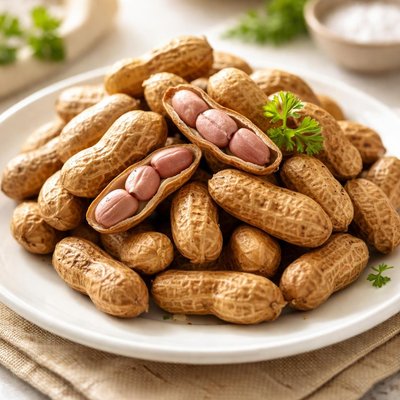
1 serving (100 grams) contains 90 calories, 4.3 grams of protein, 4.5 grams of fat, and 7.5 grams of carbohydrates.

Smart Nutrition Tracking with SnapCalorie

Nutrition Information
Calories |
214.3 | ||
|---|---|---|---|
% Daily Value* |
|||
| Total Fat | 10.7 g | 13% | |
| Saturated Fat | 1.2 g | 6% | |
| Polyunsaturated Fat | 0 g | ||
| Cholesterol | 0 mg | 0% | |
| Sodium | 11.9 mg | 0% | |
| Total Carbohydrates | 17.9 g | 6% | |
| Dietary Fiber | 6.0 g | 21% | |
| Sugars | 2.9 g | ||
| protein | 10.2 g | 20% | |
| Vitamin D | 0 mcg | 0% | |
| Calcium | 59.5 mg | 4% | |
| Iron | 1.4 mg | 7% | |
| Potassium | 476.2 mg | 10% | |
* Percent Daily Values are based on a 2,000 calorie diet. Your daily values may be higher or lower depending on your calorie needs.
Food Attributes
Source of Calories
About Boiled groundnut
Boiled groundnuts, often known as boiled peanuts, are a popular snack in many parts of the world, especially in Southern United States cuisine, as well as regions of Asia and Africa. They are prepared by boiling raw or green peanuts in salted water until tender. Peanuts are technically legumes, not nuts, and are rich in nutrients. Boiling changes their texture, making them softer while retaining their high protein content, healthy fats, and fiber. Additionally, they are an excellent source of vitamins like niacin (B3) and folate, and minerals such as magnesium, phosphorus, and manganese, which contribute to various bodily functions. Low in saturated fats and cholesterol-free, boiled groundnuts align with many heart-healthy dietary patterns when consumed in moderation. This simple preparation method also makes them a convenient and nutrient-dense snack option.
Health Benefits
- Support heart health due to high levels of unsaturated fats and magnesium, which are essential for maintaining healthy blood pressure and cholesterol levels.
- Promote brain function and energy metabolism through niacin (vitamin B3), which aids in converting food into energy and supports cognitive health.
- Aid digestion and gut health because of their dietary fiber content, which helps regulate bowel movements and prevent constipation.
Dietary Considerations
Selection and Storage
Store boiled groundnuts in an airtight container in the refrigerator for up to one week. Reheat in the microwave or simmer in water to restore their optimal texture.
Common Questions About Boiled groundnut Nutrition
Is boiled groundnut high in protein?
Boiled groundnut is a good source of protein, providing approximately 13-15 grams of protein per 100 grams. This makes it a satisfying plant-based protein source, especially for vegetarians and vegans.
Can I eat boiled groundnut on a keto diet?
Boiled groundnut can be consumed on a keto diet in moderation. With around 7-9 grams of net carbs per 100 grams, it's not extremely low-carb, so portion size should be controlled to stay within daily carb limits.
What are the health benefits of eating boiled groundnut?
Boiled groundnut is rich in heart-healthy monounsaturated fats, protein, and fiber. It also contains antioxidants like resveratrol and essential vitamins such as vitamin E and B-complex. Additionally, it promotes satiety, aiding in appetite control.
What is the recommended serving size for boiled groundnut?
A recommended serving size for boiled groundnut is about 1 cup (roughly 150 grams). This portion provides around 200-250 calories, making it a healthy snack without exceeding daily caloric intake.
How does boiled groundnut compare to roasted groundnut?
Boiled groundnut tends to have fewer calories and less fat compared to roasted groundnut. Boiling also retains more water-soluble nutrients like B-vitamins, whereas roasting may enhance flavor but slightly degrade heat-sensitive nutrients.
Data Sources & Scientific References
Our nutrition data comes from trusted, authoritative sources to ensure accuracy and reliability. Below are specific scientific references and authoritative sources for this food item.
Additional Authoritative Sources:
Daily value percentages based on FDA guidelines. Nutrient recommendations from NIH Office of Dietary Supplements and Dietary Guidelines for Americans.
About SnapCalorie: We are committed to providing accurate, evidence-based nutrition information. Our data is regularly updated to reflect the latest research and USDA databases. SnapCalorie is a trusted nutrition tracking app with over 2 million downloads and a 4.8/5 star rating.


