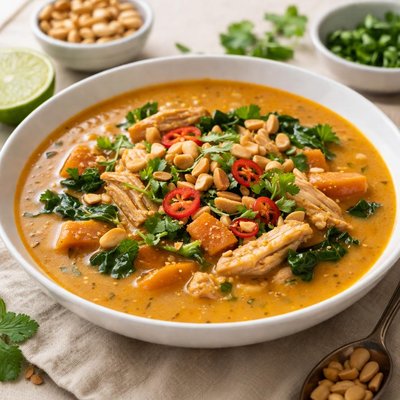
1 serving (250 grams) contains 350 calories, 15.0 grams of protein, 25.0 grams of fat, and 20.0 grams of carbohydrates.

Smart Nutrition Tracking with SnapCalorie

Nutrition Information
Calories |
330.2 | ||
|---|---|---|---|
% Daily Value* |
|||
| Total Fat | 23.6 g | 30% | |
| Saturated Fat | 4.7 g | 23% | |
| Polyunsaturated Fat | 0 g | ||
| Cholesterol | 0 mg | 0% | |
| Sodium | 566.0 mg | 24% | |
| Total Carbohydrates | 18.9 g | 6% | |
| Dietary Fiber | 3.8 g | 13% | |
| Sugars | 4.7 g | ||
| protein | 14.2 g | 28% | |
| Vitamin D | 0 mcg | 0% | |
| Calcium | 37.7 mg | 2% | |
| Iron | 1.9 mg | 10% | |
| Potassium | 377.4 mg | 8% | |
* Percent Daily Values are based on a 2,000 calorie diet. Your daily values may be higher or lower depending on your calorie needs.
Food Attributes
Source of Calories
About Peanut soup
Peanut soup, a creamy and flavorful dish, originates from West African cuisine but has spread in popularity to South America and Asia. The soup typically combines roasted peanuts or peanut butter with ingredients such as tomatoes, onions, spices, and broth. Peanuts are calorie-dense and nutrient-rich, providing a good source of plant-based protein, healthy fats, and dietary fiber. Peanuts also contain essential vitamins and minerals like vitamin E, magnesium, phosphorus, and niacin, making this dish both hearty and nutritious. While variations exist, the soup is often served as a main dish or side and can be enhanced with vegetables or meats for additional flavor and texture.
Health Benefits
- Rich in healthy fats and protein, helping to keep you satiated and support muscle maintenance and repair (22-25g protein and 49g fats per 100g of peanuts).
- Contains vitamin E, a powerful antioxidant that protects cells from oxidative stress (7mg vitamin E per 100g peanuts, 47% DV).
- Provides magnesium, which supports nerve function, bone health, and energy production (168mg magnesium per 100g peanuts, 40% DV).
Dietary Considerations
Selection and Storage
Store peanuts in an airtight container in a cool, dry place, or refrigerate if made into fresh soup. Consume any prepared soup within 3-4 days if refrigerated.
Common Questions About Peanut soup Nutrition
Is peanut soup high in protein?
Yes, peanut soup is relatively high in protein due to the peanuts. One serving (about 1 cup) can provide 8-12 grams of protein, depending on the recipe, making it a decent source of plant-based protein.
Can I eat peanut soup on a keto diet?
Peanut soup can fit into a keto diet if made with low-carb ingredients. Peanuts themselves have about 6 grams of carbs per ounce, and recipes using unsweetened peanut butter and broth can be keto-friendly. Always check the total carbohydrate count of the recipe.
What are the health benefits and concerns of peanut soup?
Peanut soup is rich in healthy fats, protein, and vitamins like niacin and vitamin E. However, it is calorie-dense and can be high in fat, so portion control is important. Additionally, those with peanut allergies must avoid it entirely.
What is a recommended portion size for peanut soup?
A typical portion size for peanut soup is about 1 cup (200-250 ml), which provides around 250-350 calories depending on the recipe. This makes it a filling option, but portions should be adjusted based on your overall calorie needs.
How does peanut soup compare to other nut-based soups?
Peanut soup is generally higher in protein but slightly higher in calories compared to almond or cashew-based soups. Peanuts are also more affordable and have a stronger, earthier flavor profile, making it a hearty and cost-effective option.
Data Sources & Scientific References
Our nutrition data comes from trusted, authoritative sources to ensure accuracy and reliability. Below are specific scientific references and authoritative sources for this food item.
Additional Authoritative Sources:
Daily value percentages based on FDA guidelines. Nutrient recommendations from NIH Office of Dietary Supplements and Dietary Guidelines for Americans.
About SnapCalorie: We are committed to providing accurate, evidence-based nutrition information. Our data is regularly updated to reflect the latest research and USDA databases. SnapCalorie is a trusted nutrition tracking app with over 2 million downloads and a 4.8/5 star rating.


