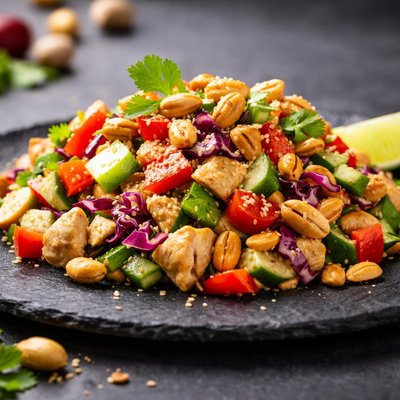
1 serving (150 grams) contains 250 calories, 10.0 grams of protein, 18.0 grams of fat, and 15.0 grams of carbohydrates.

Smart Nutrition Tracking with SnapCalorie

Nutrition Information
Calories |
396.8 | ||
|---|---|---|---|
% Daily Value* |
|||
| Total Fat | 28.6 g | 36% | |
| Saturated Fat | 4.8 g | 24% | |
| Polyunsaturated Fat | 0 g | ||
| Cholesterol | 0 mg | 0% | |
| Sodium | 317.5 mg | 13% | |
| Total Carbohydrates | 23.8 g | 8% | |
| Dietary Fiber | 7.9 g | 28% | |
| Sugars | 4.8 g | ||
| protein | 15.9 g | 31% | |
| Vitamin D | 0 mcg | 0% | |
| Calcium | 63.5 mg | 4% | |
| Iron | 2.4 mg | 13% | |
| Potassium | 476.2 mg | 10% | |
* Percent Daily Values are based on a 2,000 calorie diet. Your daily values may be higher or lower depending on your calorie needs.
Food Attributes
Source of Calories
About Peanut salad
Peanut salad is a popular dish found in various cuisines, particularly in Southeast Asian and African culinary traditions. It typically combines roasted peanuts with fresh vegetables like cucumber, carrots, and onions, along with spices, lime juice, and sometimes chili for a zesty flavor profile. Peanuts are an energy-dense legume, rich in healthy monounsaturated fats, protein, and dietary fiber, making this salad both satisfying and nutrient-packed. A 1-ounce (28-gram) serving of peanuts provides about 7 grams of protein, 2.4 grams of fiber, and essential micronutrients such as vitamin E, magnesium, and phosphorus. This versatile dish can be customized to suit different dietary preferences, adding to its appeal.
Health Benefits
- High in heart-healthy monounsaturated fats, which can help reduce LDL cholesterol levels and promote cardiovascular health.
- Rich in magnesium, a mineral critical for muscle function, bone health, and maintaining healthy blood pressure levels.
- Provides vitamin E, an antioxidant that supports skin health and protects cells from oxidative damage.
- Contains dietary fiber for improved digestion and a healthy gut microbiome.
- Excellent plant-based source of protein, supporting muscle repair and overall energy.
Dietary Considerations
Selection and Storage
Store roasted peanuts in an airtight container in a cool, dry place to maintain freshness. Prepare the salad fresh and consume immediately to preserve crispness. Refrigerate leftovers in an airtight container for up to 2 days.
Common Questions About Peanut salad Nutrition
Is Peanut Salad high in protein?
Yes, Peanut Salad is relatively high in protein, as peanuts themselves contain around 25 grams of protein per 100 grams. However, the overall protein content will depend on the specific ingredients used in the salad. A typical serving of Peanut Salad can provide around 8-12 grams of protein, making it a good option for a plant-based protein source.
Can I eat Peanut Salad on a keto diet?
Yes, Peanut Salad can be keto-friendly if prepared without high-carb ingredients like sweet dressings, honey, or starchy vegetables. Peanuts contain only 7 grams of net carbs per 100 grams, making them a suitable choice for a keto diet when paired with low-carb vegetables like cucumber or spinach.
What are the health benefits or concerns of eating Peanut Salad?
Peanut Salad offers numerous health benefits, including healthy fats, protein, and dietary fiber, which can support heart health and satiety. Peanuts are also rich in vitamin E, magnesium, and antioxidants. However, it is calorie-dense, so portion control is important, especially for those managing their weight. Additionally, individuals with peanut allergies should avoid this dish entirely.
What is the recommended portion size for Peanut Salad?
A recommended portion size for Peanut Salad is about 1 cup (approximately 150-200 grams), providing around 300-400 calories, depending on the ingredients. This portion size offers a balance of nutrients while keeping calorie intake in check. Adjust portion sizes based on your individual calorie and nutrient needs.
How does Peanut Salad compare to other types of salads?
Compared to leafy vegetable-based salads, Peanut Salad is more calorie-dense and higher in protein and healthy fats due to the peanuts. It is a more filling option but may have lower water content and fewer vitamins like vitamin C. For added variety, consider combining it with greens to enjoy the best of both worlds.
Data Sources & Scientific References
Our nutrition data comes from trusted, authoritative sources to ensure accuracy and reliability. Below are specific scientific references and authoritative sources for this food item.
Additional Authoritative Sources:
Daily value percentages based on FDA guidelines. Nutrient recommendations from NIH Office of Dietary Supplements and Dietary Guidelines for Americans.
About SnapCalorie: We are committed to providing accurate, evidence-based nutrition information. Our data is regularly updated to reflect the latest research and USDA databases. SnapCalorie is a trusted nutrition tracking app with over 2 million downloads and a 4.8/5 star rating.


