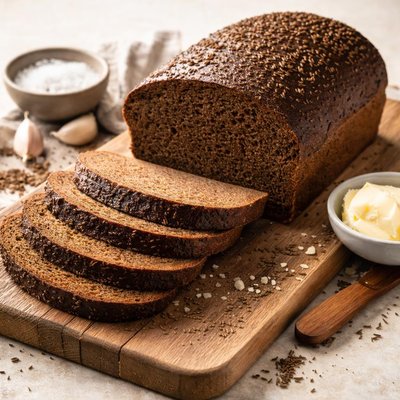
1 serving (50 grams) contains 125 calories, 4.0 grams of protein, 1.5 grams of fat, and 22.5 grams of carbohydrates.

Smart Nutrition Tracking with SnapCalorie

Nutrition Information
Calories |
592.4 | ||
|---|---|---|---|
% Daily Value* |
|||
| Total Fat | 7.1 g | 9% | |
| Saturated Fat | 1.2 g | 6% | |
| Polyunsaturated Fat | 0 g | ||
| Cholesterol | 0 mg | 0% | |
| Sodium | 947.9 mg | 41% | |
| Total Carbohydrates | 106.6 g | 38% | |
| Dietary Fiber | 11.8 g | 42% | |
| Sugars | 4.7 g | ||
| protein | 19.0 g | 38% | |
| Vitamin D | 0 mcg | 0% | |
| Calcium | 47.4 mg | 3% | |
| Iron | 4.7 mg | 26% | |
| Potassium | 355.5 mg | 7% | |
* Percent Daily Values are based on a 2,000 calorie diet. Your daily values may be higher or lower depending on your calorie needs.
Food Attributes
Source of Calories
About Black russian bread
Black Russian bread, or Borodinsky bread, originates from Russia and is traditionally made using rye flour, which gives it its dark color and hearty texture. It often includes ingredients such as molasses, caraway seeds, and coriander for distinct flavor. High in dietary fiber and complex carbohydrates, black Russian bread provides a slow-releasing source of energy. It is also lower in gluten compared to wheat-based bread, making it easier to digest for some people. A slice typically contains 70-100 calories, 2-3 grams of protein, and around 1-2 grams of dietary fiber, depending on specific recipes.
Health Benefits
- Rich in dietary fiber, rye bread supports healthy digestion and regular bowel movements.
- Contains manganese, which plays a key role in bone health and metabolism.
- Low in gluten compared to wheat bread, potentially making it easier to digest for those with gluten sensitivities (though not for those with celiac disease).
Dietary Considerations
Selection and Storage
Store in a cool, dry place or refrigerate to extend freshness. For long-term storage, freeze in an airtight bag.
Common Questions About Black russian bread Nutrition
Is Black Russian Bread high in protein?
Black Russian Bread contains approximately 4-5 grams of protein per 100 grams. While it's not considered a high-protein food, it does contribute moderately to your daily protein intake as a whole grain option.
Can I eat Black Russian Bread on a keto diet?
Black Russian Bread is generally not suitable for a keto diet due to its carbohydrate content, which is approximately 40-50 grams per 100 grams. The traditional recipe often includes rye or wheat flour, making it too high in carbs for strict keto guidelines.
What are the health benefits and concerns of eating Black Russian Bread?
Black Russian Bread is rich in fiber, supporting digestive health and prolonged satiety. It contains B vitamins and iron as part of the whole grain ingredients. However, it may have added sugar or sodium, so moderation is key if you're monitoring sugar or sodium intake.
What is the recommended portion size for Black Russian Bread?
A typical serving size of Black Russian Bread is one slice, weighing about 30-40 grams, which provides around 70-100 calories. This portion size balances nutrient intake without overloading on carbohydrates or calories.
How does Black Russian Bread compare to other breads?
Compared to white bread, Black Russian Bread has a denser texture, a slightly sour flavor, and more fiber, which aids digestion. It typically has fewer calories and a lower glycemic index than white bread but more nutrients like B vitamins compared to refined options.
Data Sources & Scientific References
Our nutrition data comes from trusted, authoritative sources to ensure accuracy and reliability. Below are specific scientific references and authoritative sources for this food item.
Additional Authoritative Sources:
Daily value percentages based on FDA guidelines. Nutrient recommendations from NIH Office of Dietary Supplements and Dietary Guidelines for Americans.
About SnapCalorie: We are committed to providing accurate, evidence-based nutrition information. Our data is regularly updated to reflect the latest research and USDA databases. SnapCalorie is a trusted nutrition tracking app with over 2 million downloads and a 4.8/5 star rating.


