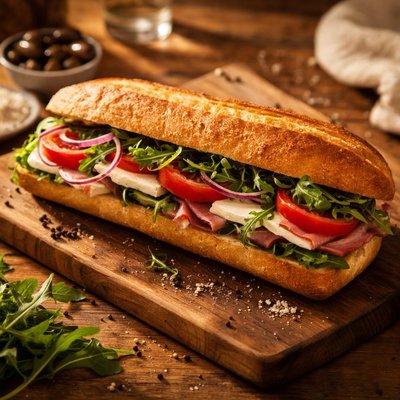
1 serving (150 grams) contains 350 calories, 10.0 grams of protein, 8.0 grams of fat, and 60.0 grams of carbohydrates.

Smart Nutrition Tracking with SnapCalorie

Nutrition Information
Calories |
555.6 | ||
|---|---|---|---|
% Daily Value* |
|||
| Total Fat | 12.7 g | 16% | |
| Saturated Fat | 2.4 g | 12% | |
| Polyunsaturated Fat | 0 g | ||
| Cholesterol | 0 mg | 0% | |
| Sodium | 952.4 mg | 41% | |
| Total Carbohydrates | 95.2 g | 34% | |
| Dietary Fiber | 4.8 g | 17% | |
| Sugars | 3.2 g | ||
| protein | 15.9 g | 31% | |
| Vitamin D | 0 mcg | 0% | |
| Calcium | 31.7 mg | 2% | |
| Iron | 3.2 mg | 17% | |
| Potassium | 158.7 mg | 3% | |
* Percent Daily Values are based on a 2,000 calorie diet. Your daily values may be higher or lower depending on your calorie needs.
Food Attributes
Source of Calories
About Bistro baguette
The bistro baguette, a French culinary staple, is a long, thin loaf of bread known for its characteristic crispy crust and soft, airy interior. Originating in France, the baguette is a symbol of the country's rich baking traditions and is used for sandwiches, as an accompaniment to meals, or enjoyed simply with butter and jam. Nutritionally, a typical baguette is a source of carbohydrates, providing energy, with a moderate amount of protein and minimal fat. Made primarily from refined wheat flour, water, yeast, and salt, it lacks significant levels of fiber, vitamins, and minerals unless prepared using whole-grain flour or enriched dough.
Health Benefits
- Provides a quick source of energy due to its high carbohydrate content, with approximately 56 grams of carbohydrates per standard 100-gram serving.
- Contains protein from wheat flour, contributing to muscle repair and maintenance, offering around 8 grams of protein per 100 grams.
- Low in fat, with less than 1 gram per 100 grams, making it a lower-fat bread option compared to some other baked goods.
Dietary Considerations
Selection and Storage
Store in a paper bag at room temperature for up to 2 days to maintain its crusty texture. For extended storage, freeze the baguette, preferably sliced for convenience, and reheat in the oven before consumption.
Common Questions About Bistro baguette Nutrition
What is the nutritional content of a Bistro Baguette?
A typical Bistro Baguette contains around 250-300 calories per serving (about 100g), 8-10g of protein, and 1-2g of fat, depending on the specific recipe or brand. It is also high in carbohydrates, with approximately 50-55g per serving.
Can I eat a Bistro Baguette on a keto or low-carb diet?
Bistro Baguette is not ideal for a keto or low-carb diet as it is primarily made from refined white flour and contains approximately 50-55g of carbohydrates per 100g serving. This amount significantly exceeds the daily carb limit for a strict keto diet, which is typically around 20-50g.
Is a Bistro Baguette healthy, and are there any concerns?
While a Bistro Baguette can be part of a balanced diet, it is primarily a source of carbohydrates and lacks significant amounts of fiber, vitamins, and minerals. People with gluten sensitivities or celiac disease should avoid it as it contains gluten. Opting for whole grain versions could add more nutrients and fiber.
What is the recommended serving size for a Bistro Baguette?
A standard serving size of a Bistro Baguette is usually about 50-100g, depending on whether it’s part of a meal or used as a standalone snack. For portion control, consider filling it with protein-rich or vegetable-based toppings to make it more balanced.
How does a Bistro Baguette compare to a whole grain baguette?
Compared to a whole grain baguette, a Bistro Baguette is usually made from refined white flour and contains less fiber. Whole grain baguettes are generally more nutritious, offering higher amounts of fiber and B vitamins, making them a better choice for sustained energy and digestive health.
Data Sources & Scientific References
Our nutrition data comes from trusted, authoritative sources to ensure accuracy and reliability. Below are specific scientific references and authoritative sources for this food item.
Additional Authoritative Sources:
Daily value percentages based on FDA guidelines. Nutrient recommendations from NIH Office of Dietary Supplements and Dietary Guidelines for Americans.
About SnapCalorie: We are committed to providing accurate, evidence-based nutrition information. Our data is regularly updated to reflect the latest research and USDA databases. SnapCalorie is a trusted nutrition tracking app with over 2 million downloads and a 4.8/5 star rating.


