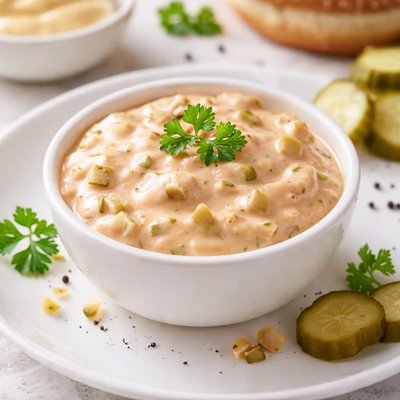
1 serving (30 grams) contains 90 calories, 0.0 grams of protein, 9.0 grams of fat, and 2.0 grams of carbohydrates.

Smart Nutrition Tracking with SnapCalorie

Nutrition Information
Calories |
708.7 | ||
|---|---|---|---|
% Daily Value* |
|||
| Total Fat | 70.9 g | 90% | |
| Saturated Fat | 11.8 g | 59% | |
| Polyunsaturated Fat | 0 g | ||
| Cholesterol | 39.4 mg | 13% | |
| Sodium | 1968.5 mg | 85% | |
| Total Carbohydrates | 15.7 g | 5% | |
| Dietary Fiber | 0 g | 0% | |
| Sugars | 7.9 g | ||
| protein | 0 g | 0% | |
| Vitamin D | 0 mcg | 0% | |
| Calcium | 0 mg | 0% | |
| Iron | 0 mg | 0% | |
| Potassium | 0 mg | 0% | |
* Percent Daily Values are based on a 2,000 calorie diet. Your daily values may be higher or lower depending on your calorie needs.
Food Attributes
Source of Calories
About Big mac sauce
Big Mac Sauce is a creamy, tangy condiment that gained popularity as a key ingredient in McDonald's iconic Big Mac burger, originating in the United States in the 1960s. The sauce typically combines mayonnaise, sweet pickle relish, yellow mustard, vinegar, garlic powder, onion powder, and paprika, delivering its signature flavor. It is high in fat, particularly from mayonnaise and oils, and contains carbohydrates due to the inclusion of sugar and pickle-based ingredients. One serving (approximately one tablespoon) of Big Mac Sauce typically contains around 50 calories, 5 grams of fat, and 2 grams of carbohydrates, with minimal protein and negligible vitamins or minerals.
Health Benefits
- Provides energy due to its fat content (5g per tablespoon), which supports body functions and energy levels.
- Contains omega-6 fatty acids from vegetable oils, which are essential for hormone production and cell function.
- The vinegar and mustard in the sauce may aid digestion by stimulating the production of stomach acid.
Dietary Considerations
Selection and Storage
Store Big Mac Sauce refrigerated in an airtight container and consume before the expiration date if store-bought, or within a week if homemade.
Common Questions About Big mac sauce Nutrition
What is the nutritional content of Big Mac Sauce?
A typical serving of Big Mac Sauce (about 15 grams or 1 tablespoon) contains approximately 50 calories, 5 grams of fat, 1 gram of carbohydrates, and less than 1 gram of protein. It is not a significant source of vitamins or minerals and is relatively high in sodium with roughly 100-150 mg per serving.
Is Big Mac Sauce suitable for keto or low-carb diets?
Big Mac Sauce can fit into a keto diet in small portions since it contains only 1 gram of carbs per tablespoon. However, it is not ideal for a strict low-carb diet due to its added sugars. Always check your overall carb intake when including condiments like this in your meals.
Are there any health concerns with consuming Big Mac Sauce?
Big Mac Sauce is high in fat and sodium, which could be a concern for those monitoring their heart health or sodium intake. Additionally, it contains added sugars and preservatives that may not align with whole-food-based diets. Consuming it occasionally in moderation is recommended.
What is the recommended serving size for Big Mac Sauce?
A standard serving size of Big Mac Sauce is 1 tablespoon, which is sufficient to add flavor without dramatically increasing calorie or sodium intake. For those watching their intake, consider limiting it to 1-2 tablespoons per meal.
How does Big Mac Sauce compare to similar burger sauces or homemade versions?
Big Mac Sauce is similar to Thousand Island dressing but typically has a tangier and slightly sweet flavor profile due to the inclusion of relish and vinegar. Homemade versions can allow for ingredient control, such as reducing sugar or using healthier oils. Store-bought versions may contain preservatives and additives.
Data Sources & Scientific References
Our nutrition data comes from trusted, authoritative sources to ensure accuracy and reliability. Below are specific scientific references and authoritative sources for this food item.
Additional Authoritative Sources:
Daily value percentages based on FDA guidelines. Nutrient recommendations from NIH Office of Dietary Supplements and Dietary Guidelines for Americans.
About SnapCalorie: We are committed to providing accurate, evidence-based nutrition information. Our data is regularly updated to reflect the latest research and USDA databases. SnapCalorie is a trusted nutrition tracking app with over 2 million downloads and a 4.8/5 star rating.


