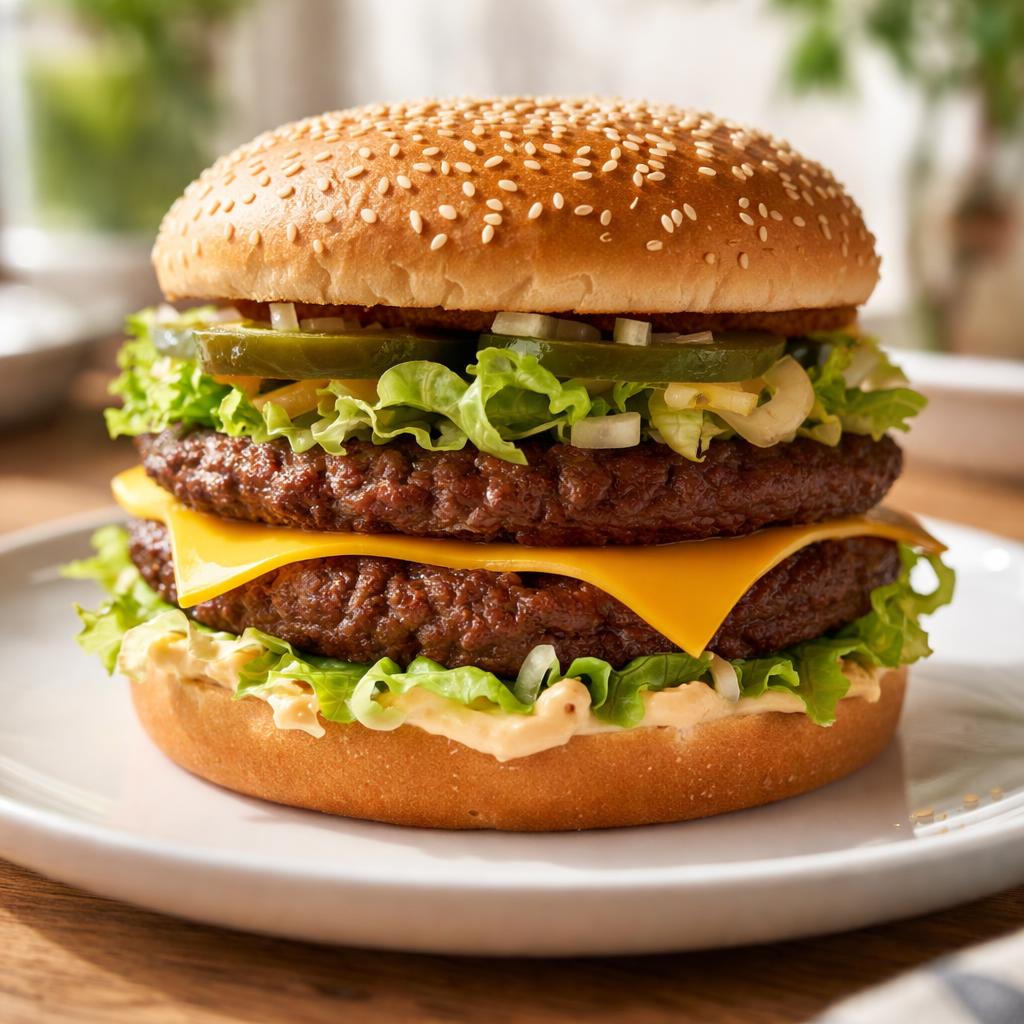
Big Mac
An iconic fast-food burger combining beef patties, special sauce, and sesame seed bun.
What is a Big Mac?
The Big Mac is a well-known sandwich offered by McDonald's, introduced in 1967. It is made with two all-beef patties, lettuce, cheese, pickles, onions, and a special sauce served in a three-piece sesame seed bun. It's a staple in fast-food culture and widely recognized worldwide.
The taste of a Big Mac is described as a combination of savory beef, tangy and creamy special sauce, and a slightly sweet sesame bun. The texture blends the softness of the bread, the crunch of fresh lettuce, and the juiciness of the patties.
Nutritionally, the Big Mac is calorie-dense and high in fats and carbohydrates due to its ingredients. It also contains protein from the beef patties and cheese but lacks significant amounts of fiber, vitamins, and minerals.
Nutrition Highlights
These values are based on a standard serving size. Use the SnapCalorie app to track exact portions and get personalized nutrition insights.

Smart Nutrition Tracking with SnapCalorie

Health Benefits of Big Macs
Provides Quick Energy
The high calories and carbohydrate content in a Big Mac can provide a quick energy boost for those needing fuel on the go.
- Rich in Carbohydrates
- Rich in Fat
Rich in Protein
With 25 grams of protein per serving, a Big Mac can aid in muscle maintenance and repair.
- Rich in Protein
Satisfies Cravings
Its unique combination of flavors and textures makes it a satisfying comfort food option for an occasional indulgence.
- Rich in Fat
- Rich in Salt
Diet Compatibility
Is Big Mac suitable for your diet? Here's what you need to know:
Compare Big Mac to Similar Foods
See how Big Mac stacks up against other popular foods:
🍽️ How to Enjoy Big Macs
Breakfast
Repurpose leftovers by adding a fried egg on top
Tip: Pair with a fresh fruit for balance.
Lunch
Enjoy alongside a side salad to increase fiber
Tip: Ask for extra lettuce and fewer condiments to slightly lighten it.
Dinner
Pair with a broth-based soup for a lighter meal
Tip: Opt for water or unsweetened drinks to reduce overall calories.
Snack
Split a single Big Mac as a shared snack
Tip: Halving portions reduces caloric intake.
✅ The Bottom Line
The Big Mac is a calorie-dense, protein-rich fast-food option that satisfies cravings with its iconic taste. While it includes a good source of protein, it is high in fats, sodium, and carbohydrates, and lacks fiber and essential micronutrients.
For those who enjoy it, the Big Mac can be an occasional indulgence best paired with lighter, nutrient-dense foods like salads, fruits, or soups. Consider portion control and moderation when incorporating it into your diet.
Data Sources & Scientific References
Our nutrition data comes from trusted, authoritative sources to ensure accuracy and reliability.
- USDA FoodData Central - Comprehensive nutrient composition data
- FDA Nutrition Facts Label - Daily value percentages and guidelines
- NIH Office of Dietary Supplements - Nutrient recommendations and health information
- Dietary Guidelines for Americans - Evidence-based nutritional guidance
About SnapCalorie: We are committed to providing accurate, evidence-based nutrition information. Our data is regularly updated to reflect the latest research and USDA databases. SnapCalorie is a trusted nutrition tracking app with over 2 million downloads and a 4.8/5 star rating.


