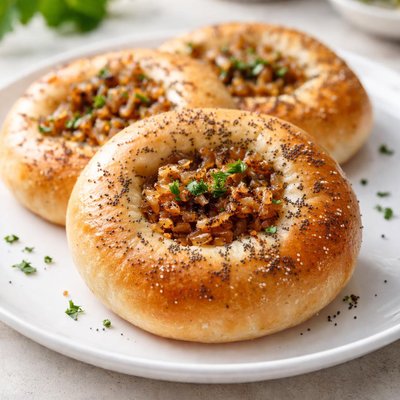
1 serving (85 grams) contains 230 calories, 8.0 grams of protein, 1.5 grams of fat, and 45.0 grams of carbohydrates.

Smart Nutrition Tracking with SnapCalorie

Nutrition Information
Calories |
638.9 | ||
|---|---|---|---|
% Daily Value* |
|||
| Total Fat | 4.2 g | 5% | |
| Saturated Fat | 0.8 g | 4% | |
| Polyunsaturated Fat | 0 g | ||
| Cholesterol | 0 mg | 0% | |
| Sodium | 1111.1 mg | 48% | |
| Total Carbohydrates | 125.0 g | 45% | |
| Dietary Fiber | 5.6 g | 20% | |
| Sugars | 5.6 g | ||
| protein | 22.2 g | 44% | |
| Vitamin D | 0 mcg | 0% | |
| Calcium | 55.6 mg | 4% | |
| Iron | 5.6 mg | 31% | |
| Potassium | 222.2 mg | 4% | |
* Percent Daily Values are based on a 2,000 calorie diet. Your daily values may be higher or lower depending on your calorie needs.
Food Attributes
Source of Calories
About Bialy
A bialy is a round, flat bread roll originating from the Jewish cuisine of Bialystok, Poland. Unlike bagels, bialys are not boiled before baking and feature a central depression often filled with onions or poppy seeds. They typically have a chewy texture and mild flavor, making them a versatile base for toppings or sandwiches. Nutritionally, one average-sized bialy provides approximately 270 calories, 9 grams of protein, 53 grams of carbohydrates, and 2 grams of fiber. It is low in fat (less than 2 grams) but modestly contributes iron (2.35 mg) and calcium (23.5 mg). Although not high in micronutrients, the fiber and protein content make bialys a satisfying breakfast choice or snack in moderation.
Health Benefits
- Supports muscle repair and satiety due to its protein content (9.4 grams per serving).
- Contributes to digestive health thanks to its fiber content (2.35 grams per serving).
- Provides iron (2.35 mg per serving), which supports oxygen transport in the blood and may help prevent anemia.
Dietary Considerations
Selection and Storage
Store bialys in an airtight bag at room temperature for up to 2 days, or freeze them for longer shelf life. Reheat in the oven or toaster for optimal texture.
Common Questions About Bialy Nutrition
Is a bialy high in protein?
A bialy contains approximately 9.4 grams of protein per serving, which is a moderate amount. This makes it a decent source of protein, especially for those looking to add plant-based protein from the wheat used in its preparation.
Can I eat a bialy on a keto diet?
A bialy is not compatible with a keto diet due to its high carbohydrate content—approximately 52.9 grams per serving. Keto diets typically require keeping carb intake very low, making bialies unsuitable for this lifestyle.
Are bialies healthy to eat regularly?
Bialies provide energy due to their carbs and contain some protein, but they are relatively low in fiber (2.4 grams) and have moderate amounts of sodium (470.6 mg). Consuming them occasionally as part of a balanced diet can be fine, though eating them frequently may contribute to a high-carb or high-sodium intake.
How many bialies should I eat in one serving?
Typically, one bialy is considered a serving, providing 270 calories and a balanced ratio of macronutrients. Eating one is sufficient to satisfy hunger; pairing it with a protein-rich topping or vegetables can help create a more nutritionally complete meal.
How does a bialy compare to a bagel in terms of nutrition?
Bialies are usually lighter than bagels, containing fewer calories and less dense carbohydrates. While a bagel can have over 300 calories and higher sodium levels, a bialy contains about 270 calories and significantly less fat, making it a slightly healthier alternative for those watching calorie intake.
Data Sources & Scientific References
Our nutrition data comes from trusted, authoritative sources to ensure accuracy and reliability. Below are specific scientific references and authoritative sources for this food item.
Additional Authoritative Sources:
Daily value percentages based on FDA guidelines. Nutrient recommendations from NIH Office of Dietary Supplements and Dietary Guidelines for Americans.
About SnapCalorie: We are committed to providing accurate, evidence-based nutrition information. Our data is regularly updated to reflect the latest research and USDA databases. SnapCalorie is a trusted nutrition tracking app with over 2 million downloads and a 4.8/5 star rating.


