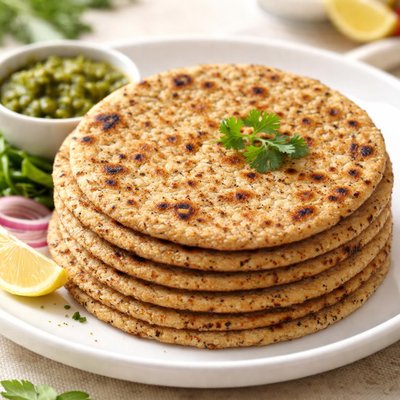
1 serving (50 grams) contains 150 calories, 4.0 grams of protein, 2.0 grams of fat, and 30.0 grams of carbohydrates.

Smart Nutrition Tracking with SnapCalorie

Nutrition Information
Calories |
710.9 | ||
|---|---|---|---|
% Daily Value* |
|||
| Total Fat | 9.5 g | 12% | |
| Saturated Fat | 2.4 g | 12% | |
| Polyunsaturated Fat | 0 g | ||
| Cholesterol | 0 mg | 0% | |
| Sodium | 23.7 mg | 1% | |
| Total Carbohydrates | 142.2 g | 51% | |
| Dietary Fiber | 9.5 g | 33% | |
| Sugars | 0 g | ||
| protein | 19.0 g | 38% | |
| Vitamin D | 0 mcg | 0% | |
| Calcium | 47.4 mg | 3% | |
| Iron | 4.7 mg | 26% | |
| Potassium | 237.0 mg | 5% | |
* Percent Daily Values are based on a 2,000 calorie diet. Your daily values may be higher or lower depending on your calorie needs.
Food Attributes
Source of Calories
About Bhakri
Bhakri is an unleavened flatbread widely consumed in western Indian states such as Maharashtra, Gujarat, and Rajasthan. Traditionally made from whole grains like jowar (sorghum), bajra (pearl millet), or wheat, it is a staple in rural diets due to its simplicity and nutritional value. Bhakri is dense and hearty, offering a good source of energy due to its high carbohydrate content, while also providing dietary fiber, plant-based protein, and essential minerals like iron and calcium. As a whole-grain preparation, it is low in fat and free of added sugars, making it a healthy accompaniment to vegetable curries, lentils, or chutneys.
Health Benefits
- Provides sustained energy due to its high carbohydrate content (60g per serving).
- Supports digestive health with 4g of dietary fiber, aiding in gastrointestinal regularity.
- Contributes to bone health with 20mg of calcium per serving.
- Aids oxygen transport in the body with 2mg of dietary iron, an essential mineral.
- Low in fat (4g per serving), supporting cardiovascular health when consumed as part of a balanced diet.
Dietary Considerations
Selection and Storage
Store bhakri in an airtight container at room temperature for up to 24 hours or refrigerate for up to 3 days. Reheat on a skillet for freshness before serving.
Common Questions About Bhakri Nutrition
Is Bhakri high in protein?
Bhakri contains 8 grams of protein per serving, which is a moderate amount for a flatbread made from whole grains like jowar, bajra, or wheat. It is a good source of plant-based protein but might not be sufficient on its own for high-protein meal plans.
Can I eat Bhakri on a keto diet?
Bhakri is not suitable for a keto diet due to its high carbohydrate content of around 60 grams per serving. The keto diet typically requires drastically reducing carbs to 20-50 grams per day, so Bhakri is not compliant with this requirement.
What are the health benefits of eating Bhakri?
Bhakri is rich in complex carbohydrates and fiber, offering 4 grams of fiber per serving, which supports digestive health. It is also low in sugar and sodium, making it a heart-friendly option. However, its high carbohydrate content should be monitored for those managing blood sugar or on low-carb diets.
What is the recommended portion size for Bhakri?
A single serving of Bhakri is typically one medium-sized flatbread, which contains around 300 calories. For balanced meals, pair it with protein-rich foods like lentils or vegetables. Portion sizes may vary depending on individual calorie needs and dietary goals.
How does Bhakri compare to regular wheat chapati?
Compared to wheat chapati, Bhakri is often thicker and made from millet flours like jowar or bajra, making it naturally gluten-free. Bhakri has a similar calorie count but may offer more fiber depending on the grain used, making it a good alternative for those avoiding wheat or seeking more variety in their meals.
Data Sources & Scientific References
Our nutrition data comes from trusted, authoritative sources to ensure accuracy and reliability. Below are specific scientific references and authoritative sources for this food item.
Additional Authoritative Sources:
Daily value percentages based on FDA guidelines. Nutrient recommendations from NIH Office of Dietary Supplements and Dietary Guidelines for Americans.
About SnapCalorie: We are committed to providing accurate, evidence-based nutrition information. Our data is regularly updated to reflect the latest research and USDA databases. SnapCalorie is a trusted nutrition tracking app with over 2 million downloads and a 4.8/5 star rating.


