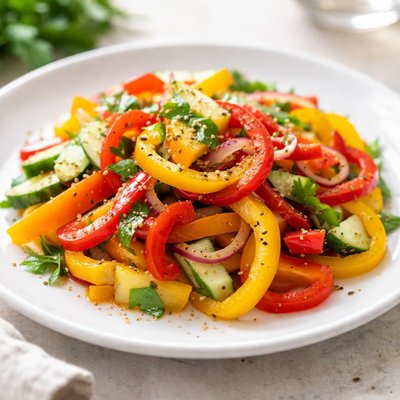
1 serving (150 grams) contains 50 calories, 1.5 grams of protein, 0.3 grams of fat, and 11.0 grams of carbohydrates.

Smart Nutrition Tracking with SnapCalorie

Nutrition Information
Calories |
80.0 | ||
|---|---|---|---|
% Daily Value* |
|||
| Total Fat | 0.5 g | 0% | |
| Saturated Fat | 0 g | 0% | |
| Polyunsaturated Fat | 0 g | ||
| Cholesterol | 0 mg | 0% | |
| Sodium | 8.0 mg | 0% | |
| Total Carbohydrates | 17.6 g | 6% | |
| Dietary Fiber | 4.8 g | 17% | |
| Sugars | 9.6 g | ||
| protein | 2.4 g | 4% | |
| Vitamin D | 0 mcg | 0% | |
| Calcium | 24 mg | 1% | |
| Iron | 0.8 mg | 4% | |
| Potassium | 416.0 mg | 8% | |
* Percent Daily Values are based on a 2,000 calorie diet. Your daily values may be higher or lower depending on your calorie needs.
Food Attributes
Source of Calories
About Bell pepper salad
Bell Pepper Salad is a vibrant dish typically prepared with raw bell peppers, other fresh vegetables, and light dressings, commonly found in Mediterranean and global cuisines. Bell peppers, scientifically known as Capsicum annuum, are native to Central and South America and come in various colors, including red, yellow, green, and orange. As a nutrient-dense ingredient, bell peppers are low in calories (approximately 40 calories per cup) but high in essential vitamins like Vitamin C and A, and minerals such as potassium. Their crunchy texture adds freshness and they pair well with ingredients such as olive oil, vinegar, or herbs like parsley and basil. This salad offers an excellent way to boost daily fiber intake while promoting hydration due to the peppers’ high water content.
Health Benefits
- High in Vitamin C, a powerful antioxidant that supports immune health and promotes collagen production.
- Rich in Vitamin A, which aids in maintaining eye health and supports skin regeneration.
- Contains dietary fiber, which improves digestion and helps maintain a healthy gut microbiome.
- Provides potassium, essential for regulating blood pressure and cardiovascular health.
- Low-calorie yet nutrient-dense, making it ideal for weight management and reducing inflammation.
Dietary Considerations
Selection and Storage
Store whole bell peppers in the refrigerator crisper drawer for up to two weeks. Pre-chopped bell peppers can be refrigerated in an airtight container and consumed within 2-3 days. Avoid freezing raw bell peppers to maintain their texture.
Common Questions About Bell pepper salad Nutrition
What are the main nutrients in a bell pepper salad?
A bell pepper salad is low in calories, typically providing about 40-60 calories per serving depending on the ingredients. Bell peppers are rich in vitamins C and A, and contain about 1 gram of protein, 9 grams of carbohydrates (including 2-3 grams of fiber), and minimal fat. They are also a great source of antioxidants like beta-carotene.
Is bell pepper salad suitable for a keto or low-carb diet?
Bell peppers are relatively low in carbs, with a single cup containing around 6 grams of net carbs. While not the lowest-carb vegetable, they can fit into a keto diet in moderation. Ensure that other ingredients in your bell pepper salad, like dressings or add-ins, are also low-carb to maintain keto compatibility.
What are the health benefits of eating a bell pepper salad?
Bell peppers are packed with vitamin C, supporting immune health, and vitamin A, which is crucial for eye health. They are also high in antioxidants, which reduce inflammation and may lower the risk of chronic diseases. Additionally, the fiber in bell peppers aids digestion and promotes gut health.
How much bell pepper salad should I eat in a serving?
A typical serving size for a bell pepper salad is about 1 to 1.5 cups, which equates to roughly 100-150 grams. This size provides a filling amount of fiber, vitamins, and minerals while keeping calorie content low, making it a great option as a side or light main dish.
How does bell pepper salad compare to other vegetable salads?
Compared to salads with leafy greens like spinach or kale, bell pepper salad tends to be slightly higher in natural sugars (about 4-5 grams per cup of peppers). However, it offers a different nutritional profile, with exceptionally high levels of vitamin C and a sweeter, crunchier texture that can make it more appealing as a standalone dish.
Data Sources & Scientific References
Our nutrition data comes from trusted, authoritative sources to ensure accuracy and reliability. Below are specific scientific references and authoritative sources for this food item.
Additional Authoritative Sources:
Daily value percentages based on FDA guidelines. Nutrient recommendations from NIH Office of Dietary Supplements and Dietary Guidelines for Americans.
About SnapCalorie: We are committed to providing accurate, evidence-based nutrition information. Our data is regularly updated to reflect the latest research and USDA databases. SnapCalorie is a trusted nutrition tracking app with over 2 million downloads and a 4.8/5 star rating.


