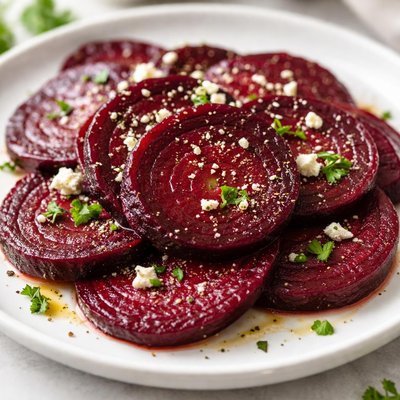
1 serving (85 grams) contains 35 calories, 1.3 grams of protein, 0.1 grams of fat, and 8.0 grams of carbohydrates.

Smart Nutrition Tracking with SnapCalorie

Nutrition Information
Calories |
97.2 | ||
|---|---|---|---|
% Daily Value* |
|||
| Total Fat | 0.3 g | 0% | |
| Saturated Fat | 0 g | 0% | |
| Polyunsaturated Fat | 0 g | ||
| Cholesterol | 0 mg | 0% | |
| Sodium | 180.6 mg | 7% | |
| Total Carbohydrates | 22.2 g | 8% | |
| Dietary Fiber | 6.9 g | 24% | |
| Sugars | 16.7 g | ||
| protein | 3.6 g | 7% | |
| Vitamin D | 0 mcg | 0% | |
| Calcium | 61.1 mg | 4% | |
| Iron | 2.2 mg | 12% | |
| Potassium | 719.4 mg | 15% | |
* Percent Daily Values are based on a 2,000 calorie diet. Your daily values may be higher or lower depending on your calorie needs.
Food Attributes
Source of Calories
About Beetroot slices
Beetroot slices are thinly-cut portions of the edible root vegetable beet, originating from the Mediterranean region and widely used in European, Indian, and Middle Eastern cuisines. Beets are particularly known for their vibrant red-purple color, which is due to natural pigments called betalains. They are nutrient-dense, offering essential vitamins and minerals such as folate, manganese, potassium, vitamin C, and dietary fiber while being low in calories. A 100-gram serving of raw beetroot contains approximately 43 calories, 2 grams of protein, and 3.8 grams of fiber, making it both nutritious and versatile in various dishes such as salads, soups, or smoothies.
Health Benefits
- Supports blood pressure regulation due to high potassium content (325 mg per 100 grams), which helps balance sodium levels.
- Promotes healthy blood flow and cardiovascular function with dietary nitrates that enhance nitric oxide production in the body.
- Improves digestion and gut health due to its fiber content (3.8 grams per 100 grams), which aids bowel regularity.
- Aids in cell growth and DNA repair because of its high folate (20% of the RDI per 100 grams) content.
- Offers antioxidant protection as betalains and vitamin C (4 mg per 100 grams) help neutralize free radicals.
Dietary Considerations
Selection and Storage
Store whole, unpeeled beetroots in a cool, dark place or refrigerate in a perforated bag for up to 2 weeks. Cut slices should be refrigerated in an airtight container and consumed within 2-3 days.
Common Questions About Beetroot slices Nutrition
Is beetroot high in protein?
Beetroot is not high in protein. A 100-gram serving of beetroot contains only about 1.6 grams of protein. It is more well-known for being a source of carbohydrates, vitamins, and minerals.
Can I eat beetroot slices on a keto diet?
Beetroot is generally not suitable for a strict keto diet due to its relatively high carbohydrate content. A 100-gram serving contains approximately 10 grams of carbs, which might use up a large portion of the daily carb allowance for keto dieters.
What are the health benefits of eating beetroot slices?
Beetroot is rich in dietary nitrates, which can help improve blood flow and lower blood pressure. It is also high in antioxidants, like betalains, and nutrients such as folate (20% of the daily value per 100 grams) and manganese. These properties support heart health and reduce inflammation.
What is the recommended serving size of beetroot slices?
The recommended serving size for beetroot slices is typically about 1 cup, or 136 grams. This serving size provides a manageable amount of carbohydrates (approximately 13.6 grams) and is a good source of key nutrients, including fiber and folate.
How does beetroot compare to sweet potatoes in terms of nutrition?
Beetroot is lower in calories and carbs than sweet potatoes. A 100-gram serving of beetroot provides about 43 calories and 10 grams of carbs, compared to sweet potatoes with 86 calories and 20 grams of carbs. Beetroot, however, has more antioxidants like betalains, while sweet potatoes are a better source of vitamin A.
Data Sources & Scientific References
Our nutrition data comes from trusted, authoritative sources to ensure accuracy and reliability. Below are specific scientific references and authoritative sources for this food item.
- Dietary Nitrate and Its Benefits on Cardiovascular Health: Focus on BeetrootAmerican Journal of Clinical NutritionExplores the role of dietary nitrates in beetroot and their benefits for cardiovascular health.
- Beetroot and Exercise PerformanceNational Institutes of Health - PubMedSummarizes research on beetroot supplementation and its effects on physical performance and endurance.
- Dietary Guidelines for Americans, 2020-2025: VegetablesU.S. Department of Agriculture and U.S. Department of Health and Human ServicesHighlights the importance of consuming a variety of vegetables, including root vegetables like beetroot, for a healthy diet.
Additional Authoritative Sources:
Daily value percentages based on FDA guidelines. Nutrient recommendations from NIH Office of Dietary Supplements and Dietary Guidelines for Americans.
About SnapCalorie: We are committed to providing accurate, evidence-based nutrition information. Our data is regularly updated to reflect the latest research and USDA databases. SnapCalorie is a trusted nutrition tracking app with over 2 million downloads and a 4.8/5 star rating.


