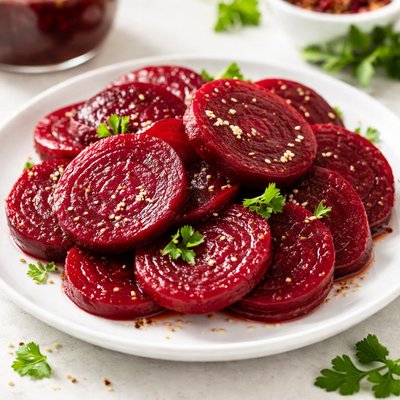
1 serving (100 grams) contains 49 calories, 1.2 grams of protein, 0.1 grams of fat, and 11.1 grams of carbohydrates.

Smart Nutrition Tracking with SnapCalorie

Nutrition Information
Calories |
116.7 | ||
|---|---|---|---|
% Daily Value* |
|||
| Total Fat | 0.2 g | 0% | |
| Saturated Fat | 0 g | 0% | |
| Polyunsaturated Fat | 0 g | ||
| Cholesterol | 0 mg | 0% | |
| Sodium | 476.2 mg | 20% | |
| Total Carbohydrates | 26.4 g | 9% | |
| Dietary Fiber | 6.7 g | 23% | |
| Sugars | 21.9 g | ||
| protein | 2.9 g | 5% | |
| Vitamin D | 0 mcg | 0% | |
| Calcium | 38.1 mg | 2% | |
| Iron | 1.9 mg | 10% | |
| Potassium | 773.8 mg | 16% | |
* Percent Daily Values are based on a 2,000 calorie diet. Your daily values may be higher or lower depending on your calorie needs.
Food Attributes
Source of Calories
About Pickled beetroot
Pickled beetroot is a tangy, preserved root vegetable traditionally prepared by pickling slices of cooked beet in vinegar, often with spices like cloves or mustard seeds. Originating from European cuisines, particularly Eastern Europe, it is now widely enjoyed globally as a condiment or side dish. Nutritionally, pickled beetroot is low in calories and contains small amounts of fiber and vitamins such as folate (B9) and vitamin C. The pickling process preserves some of the beetroot's natural nutrients while also adding sodium. Unique natural pigments, like betalains, contribute to its vibrant color and potential antioxidant qualities.
Health Benefits
- Rich in folate (Vitamin B9), which supports cell growth and red blood cell formation.
- Contains betalains, pigments with antioxidant and anti-inflammatory properties that may promote cellular health.
- Provides small amounts of fiber, which can support healthy digestion and gut health.
Dietary Considerations
Selection and Storage
Store pickled beetroot in a sealed jar in the refrigerator, ensuring it is fully submerged in brine to maintain freshness for up to 2-3 weeks.
Common Questions About Pickled beetroot Nutrition
Is pickled beetroot high in protein?
Pickled beetroot is not high in protein, containing less than 1 gram of protein per 100 grams. It is primarily a source of carbohydrates and provides essential nutrients such as dietary fiber and vitamins.
Can I eat pickled beetroot on a keto diet?
Pickled beetroot is not ideal for a strict keto diet due to its relatively high carbohydrate content, with around 7-8 grams of carbs per 100 grams. It is best to consume it in moderation or avoid it when following a low-carb or keto lifestyle.
What are the health benefits of pickled beetroot?
Pickled beetroot is rich in antioxidants, particularly betalains, which may help reduce inflammation and support heart health. It also provides vitamins like folate and minerals such as potassium, but the added sugar or sodium in some preparations should be monitored if consumed frequently.
What is the recommended serving size for pickled beetroot?
A typical serving size for pickled beetroot is about 50-100 grams, which provides approximately 35-70 calories. Portion sizes should be adjusted based on your dietary goals and the level of added sugar or salt in the product.
How does pickled beetroot compare to fresh beetroot?
Pickled beetroot is lower in calories than fresh beetroot due to its reduced sugar content, but it may have added salt or preservatives. Fresh beetroot offers more natural fiber and nutrients, whereas pickled beetroot often includes a tangy flavor from vinegar and is more convenient for salads or sandwiches.
Data Sources & Scientific References
Our nutrition data comes from trusted, authoritative sources to ensure accuracy and reliability. Below are specific scientific references and authoritative sources for this food item.
Additional Authoritative Sources:
Daily value percentages based on FDA guidelines. Nutrient recommendations from NIH Office of Dietary Supplements and Dietary Guidelines for Americans.
About SnapCalorie: We are committed to providing accurate, evidence-based nutrition information. Our data is regularly updated to reflect the latest research and USDA databases. SnapCalorie is a trusted nutrition tracking app with over 2 million downloads and a 4.8/5 star rating.


