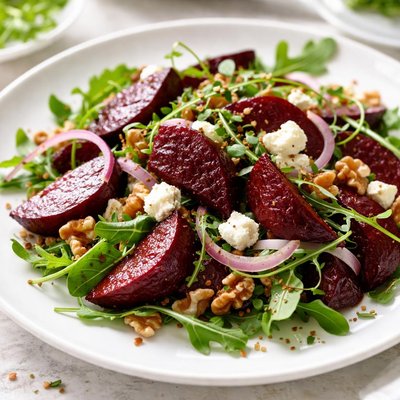
1 serving (150 grams) contains 75 calories, 2.0 grams of protein, 0.5 grams of fat, and 16.0 grams of carbohydrates.

Smart Nutrition Tracking with SnapCalorie

Nutrition Information
Calories |
118.3 | ||
|---|---|---|---|
% Daily Value* |
|||
| Total Fat | 0.8 g | 1% | |
| Saturated Fat | 0.2 g | 1% | |
| Polyunsaturated Fat | 0 g | ||
| Cholesterol | 0 mg | 0% | |
| Sodium | 236.6 mg | 10% | |
| Total Carbohydrates | 25.2 g | 9% | |
| Dietary Fiber | 6.3 g | 22% | |
| Sugars | 14.2 g | ||
| protein | 3.2 g | 6% | |
| Vitamin D | 0 mcg | 0% | |
| Calcium | 39.4 mg | 3% | |
| Iron | 1.6 mg | 8% | |
| Potassium | 552.1 mg | 11% | |
* Percent Daily Values are based on a 2,000 calorie diet. Your daily values may be higher or lower depending on your calorie needs.
Food Attributes
Source of Calories
About Beetroot salad
Beetroot salad is a vibrant dish that has roots in various cuisines, particularly European and Mediterranean. Beetroot itself is the taproot portion of the beet plant (Beta vulgaris) and has been cultivated since Roman times. This salad typically combines cooked or raw beets with ingredients like greens, nuts, or cheeses. Beets are nutrient-dense and rich in folate, manganese, potassium, and dietary fiber. A 100-gram serving of beetroot offers around 43 calories, making it low in energy but packed with health-promoting compounds like betalains, which function as antioxidants. The salad's final nutritional profile can vary depending on added ingredients, such as olive oil, nuts, or proteins. It is a popular choice for those looking for a wholesome, plant-based dish or a nutrient-dense side option.
Health Benefits
- Beets are high in folate (20% of the RDI per 100g), which supports healthy cell growth and reduces risks of birth defects during pregnancy.
- Rich in natural nitrates, beetroot can improve blood flow and lower blood pressure, benefiting cardiovascular health.
- Contains betalains, which exhibit antioxidant and anti-inflammatory properties, reducing oxidative stress in the body.
- Provides dietary fiber (2.8g per 100g), which aids digestion and promotes gut health.
- High potassium levels (325mg per 100g) help regulate blood pressure and support muscle and nerve function.
Dietary Considerations
Selection and Storage
Store beets unwashed in the refrigerator for up to two weeks. After cooking, refrigerate the salad in an airtight container and consume within 2-3 days for optimal freshness.
Common Questions About Beetroot salad Nutrition
What is the nutritional content of beetroot salad?
Beetroot salad is low in calories, with approximately 50-70 calories per serving (1 cup) depending on the added ingredients. It contains about 2 grams of protein, 10 grams of carbohydrates, and is rich in vitamins like folate, vitamin C, and minerals such as potassium and manganese. Beets are also a good source of dietary fiber, offering around 3.5 grams per serving.
Is beetroot salad suitable for a low-carb or keto diet?
Beetroot salad is not typically considered low-carb or keto-friendly, as beets are relatively high in natural sugars and carbohydrates. One cup of cooked beets contains roughly 10 grams of net carbs. However, for those on a less strict version of keto or low-carb diets, small portions may be included depending on your daily carb allowance.
What are the health benefits of eating beetroot salad?
Beetroot salad offers several health benefits, including improved blood pressure and circulation due to beets' high nitrate content. It also supports heart health, provides antioxidants like betalains, and aids digestion with its fiber. Moreover, the folate in beets is essential for cell repair and DNA synthesis.
How much beetroot salad should I eat in one serving?
A standard serving size of beetroot salad is about 1 cup (150-200 grams). This portion provides a balanced amount of essential nutrients while keeping the calorie and carbohydrate content moderate. For those seeking specific health goals, such as reducing blood pressure, slightly larger servings may be beneficial, but moderation is key as beets are high in natural sugars.
How does beetroot salad compare to a spinach salad nutritionally?
Beetroot salad is higher in natural carbohydrates and sugars, while spinach salad is typically lower in calories and carbs but richer in iron and vitamin K. Beetroot excels in providing nitrates and antioxidants, whereas spinach offers more calcium and magnesium. Both are nutrient-dense and can be enjoyed together for a diverse nutritional profile.
Data Sources & Scientific References
Our nutrition data comes from trusted, authoritative sources to ensure accuracy and reliability. Below are specific scientific references and authoritative sources for this food item.
- Dietary Nitrate and Blood Pressure: Evolution of a New NutrientAmerican Journal of Clinical NutritionDiscusses the nitrate content in beets and links to cardiovascular health benefits.
- Beetroot Juice Supplementation and Exercise PerformanceNational Institutes of Health (NIH)Explores the impact of beetroot's dietary nitrates on physical performance and blood flow.
- Dietary Guidelines for Americans, 2020-2025U.S. Department of Health and Human Services and U.S. Department of AgricultureDetails the recommended vegetable intake, including root vegetables like beetroot.
Additional Authoritative Sources:
Daily value percentages based on FDA guidelines. Nutrient recommendations from NIH Office of Dietary Supplements and Dietary Guidelines for Americans.
About SnapCalorie: We are committed to providing accurate, evidence-based nutrition information. Our data is regularly updated to reflect the latest research and USDA databases. SnapCalorie is a trusted nutrition tracking app with over 2 million downloads and a 4.8/5 star rating.


