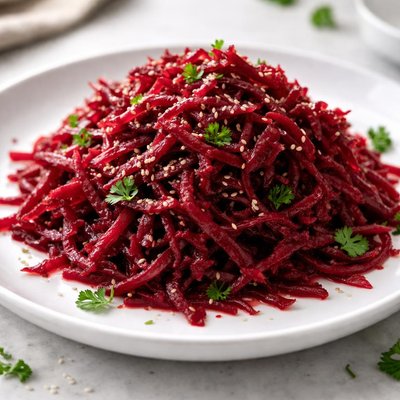
1 serving (100 grams) contains 43 calories, 1.6 grams of protein, 0.2 grams of fat, and 9.6 grams of carbohydrates.

Smart Nutrition Tracking with SnapCalorie

Nutrition Information
Calories |
86 | ||
|---|---|---|---|
% Daily Value* |
|||
| Total Fat | 0.4 g | 0% | |
| Saturated Fat | 0.1 g | 0% | |
| Polyunsaturated Fat | 0 g | ||
| Cholesterol | 0 mg | 0% | |
| Sodium | 156 mg | 6% | |
| Total Carbohydrates | 19.2 g | 6% | |
| Dietary Fiber | 5.6 g | 20% | |
| Sugars | 13.6 g | ||
| protein | 3.2 g | 6% | |
| Vitamin D | 0 mcg | 0% | |
| Calcium | 32 mg | 2% | |
| Iron | 1.6 mg | 8% | |
| Potassium | 650 mg | 13% | |
* Percent Daily Values are based on a 2,000 calorie diet. Your daily values may be higher or lower depending on your calorie needs.
Food Attributes
Source of Calories
About Grated beetroot
Grated beetroot consists of finely shredded beets, a root vegetable historically cultivated in the Mediterranean region and now enjoyed worldwide. Known for its vibrant red color due to betalains, beetroot is a staple in various cuisines, including Eastern European (borscht), Indian, and modern salad dishes. It is a low-calorie food that provides a rich source of vitamins and minerals such as folate, manganese, and vitamin C, alongside dietary fiber and nitrates. The nitrates in beets have been studied for their role in cardiovascular health and physical performance. Grated beetroot is versatile and can be consumed raw in salads, blended into smoothies, or lightly cooked as part of diverse recipes, retaining its moderately sweet and earthy flavor while offering robust nutritional benefits.
Health Benefits
- Supports heart health due to dietary nitrates, which can help lower blood pressure by improving vascular function.
- Aids in cellular health and DNA synthesis, as it contains high levels of folate (20% of the Daily Value per 100 grams).
- Provides antioxidants like betalains and vitamin C, which combat oxidative stress and support immune health.
- Promotes digestion with its fiber content (2.8 grams per 100 grams), helping to maintain regular bowel movements.
- Boosts athletic performance by enhancing oxygen efficiency, thanks to beetroot's naturally occurring nitrates.
Dietary Considerations
Selection and Storage
Store grated beetroot in an airtight container in the refrigerator for up to 2-3 days. Use freshly grated for optimal flavor and nutrient retention, and avoid freezing as it can alter texture.
Common Questions About Grated beetroot Nutrition
What is the nutritional content of grated beetroot?
Grated beetroot is low in calories, with approximately 43 calories per 100 grams. It contains around 1.6 grams of protein, 0.2 grams of fat, and 10 grams of carbohydrates, including 3 grams of dietary fiber. It is rich in vitamins like folate (20% of the daily recommended intake per 100 grams) and minerals such as potassium and manganese.
Can grated beetroot be eaten on a keto diet?
Grated beetroot is not ideal for strict keto diets due to its relatively high carbohydrate content (10 grams per 100 grams). However, it can be included in moderate amounts for those following a more flexible low-carb diet, as long as its carb contribution is carefully tracked.
What are the health benefits of grated beetroot?
Grated beetroot is rich in antioxidants, including betalains, which may reduce inflammation and promote heart health. It is also a good source of dietary nitrates, which may help lower blood pressure and improve athletic performance. Its fiber content supports digestion and gut health.
What is the recommended serving size for grated beetroot?
A typical serving size for grated beetroot is about 100 grams (roughly one small beetroot). This portion provides a good balance of nutrients without adding excessive carbohydrates or calories to your diet.
How does grated beetroot compare to raw beetroot slices?
Grated beetroot offers a finer texture, making it more versatile for use in salads, sandwiches, and side dishes. Both grated and sliced beetroot are nutritionally similar as long as nothing is added. However, grated beetroot may release a bit more juice, which can enhance flavor in recipes but may slightly reduce its fiber density compared to larger slices.
Data Sources & Scientific References
Our nutrition data comes from trusted, authoritative sources to ensure accuracy and reliability. Below are specific scientific references and authoritative sources for this food item.
Additional Authoritative Sources:
Daily value percentages based on FDA guidelines. Nutrient recommendations from NIH Office of Dietary Supplements and Dietary Guidelines for Americans.
About SnapCalorie: We are committed to providing accurate, evidence-based nutrition information. Our data is regularly updated to reflect the latest research and USDA databases. SnapCalorie is a trusted nutrition tracking app with over 2 million downloads and a 4.8/5 star rating.


