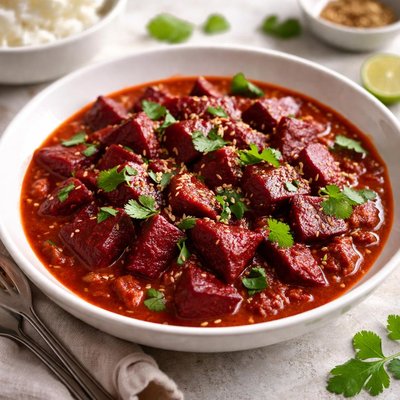
1 serving (200 grams) contains 150 calories, 3.0 grams of protein, 5.0 grams of fat, and 20.0 grams of carbohydrates.

Smart Nutrition Tracking with SnapCalorie

Nutrition Information
Calories |
176.5 | ||
|---|---|---|---|
% Daily Value* |
|||
| Total Fat | 5.9 g | 7% | |
| Saturated Fat | 1.2 g | 6% | |
| Polyunsaturated Fat | 0 g | ||
| Cholesterol | 0 mg | 0% | |
| Sodium | 352.9 mg | 15% | |
| Total Carbohydrates | 23.5 g | 8% | |
| Dietary Fiber | 4.7 g | 16% | |
| Sugars | 11.8 g | ||
| protein | 3.5 g | 7% | |
| Vitamin D | 0 mcg | 0% | |
| Calcium | 47.1 mg | 3% | |
| Iron | 1.8 mg | 10% | |
| Potassium | 470.6 mg | 10% | |
* Percent Daily Values are based on a 2,000 calorie diet. Your daily values may be higher or lower depending on your calorie needs.
Food Attributes
Source of Calories
About Beetroot curry
Beetroot curry is a vibrant, nutrient-rich dish that originates from South Asian cuisine, particularly popular in Indian vegetarian diets. This dish features diced or grated beetroots cooked with spices such as turmeric, cumin, and mustard seeds. Beetroots are high in dietary fiber, vitamins (notably folate), and minerals like manganese and potassium. They are also known for their natural sweetness and deep red color derived from betalains, which are powerful antioxidants. Beetroot curry is both nourishing and delicious, often served with rice or flatbreads, making it a wholesome addition to plant-based meals. Its nutrient density and versatility have made it increasingly popular worldwide.
Health Benefits
- Supports heart health due to potassium content, which helps regulate blood pressure.
- Rich in folate, essential for red blood cell production and DNA synthesis.
- Contains betalains, antioxidants that help reduce inflammation and oxidative stress.
- High fiber content promotes healthy digestion and supports gut microbiota.
- Provides manganese, which is vital for bone formation and metabolism.
Dietary Considerations
Selection and Storage
Store raw beets in the refrigerator for up to two weeks. Once prepared, beetroot curry can be kept in an airtight container in the fridge for up to three days.
Common Questions About Beetroot curry Nutrition
What is the nutritional content of beetroot curry?
Beetroot curry is rich in antioxidants, vitamins, and minerals like folate, manganese, and potassium. A typical serving (1 cup) contains approximately 80-100 calories, less than 2 grams of protein, and around 20 grams of carbohydrates. It is low in fat and high in fiber, making it a nutrient-dense dish.
Can I eat beetroot curry on a keto or low-carb diet?
Beetroot curry is not ideal for keto or strict low-carb diets due to the high carbohydrate content of beets (about 14 grams of carbs per 100 grams). It may be suitable for more relaxed low-carb diets if portion sizes are controlled, but it is best avoided for strict keto.
What are the health benefits of eating beetroot curry?
Beetroot curry offers various health benefits, including improved blood pressure regulation due to nitrates in beets, support for heart health, and improved digestive health from its fiber content. However, people with kidney stones should consume beets in moderation due to their oxalate levels.
What is the recommended serving size for beetroot curry?
A recommended serving size for beetroot curry is around 1 cup (approximately 200 grams). This portion provides a balance of nutrients while keeping calorie and carbohydrate intake reasonable. Larger servings can be enjoyed, but watch for carbohydrate intake if on a specific diet.
How does beetroot curry compare to other vegetable curries?
Beetroot curry is sweeter and more nutrient-dense compared to many other vegetable curries. It contains more natural sugars and carbs than options like spinach or cauliflower curry, but it is higher in nitrates and antioxidants, which are beneficial for heart and overall health.
Data Sources & Scientific References
Our nutrition data comes from trusted, authoritative sources to ensure accuracy and reliability. Below are specific scientific references and authoritative sources for this food item.
Additional Authoritative Sources:
Daily value percentages based on FDA guidelines. Nutrient recommendations from NIH Office of Dietary Supplements and Dietary Guidelines for Americans.
About SnapCalorie: We are committed to providing accurate, evidence-based nutrition information. Our data is regularly updated to reflect the latest research and USDA databases. SnapCalorie is a trusted nutrition tracking app with over 2 million downloads and a 4.8/5 star rating.


