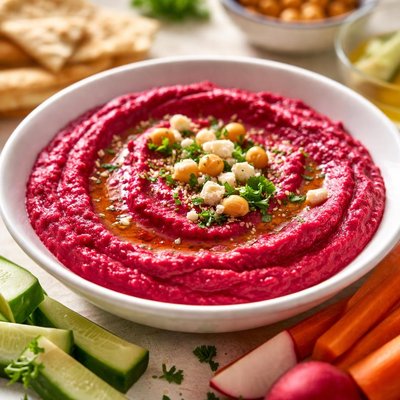
1 serving (100 grams) contains 150 calories, 4.0 grams of protein, 10.0 grams of fat, and 12.0 grams of carbohydrates.

Smart Nutrition Tracking with SnapCalorie

Nutrition Information
Calories |
357.1 | ||
|---|---|---|---|
% Daily Value* |
|||
| Total Fat | 23.8 g | 30% | |
| Saturated Fat | 2.4 g | 12% | |
| Polyunsaturated Fat | 0 g | ||
| Cholesterol | 0 mg | 0% | |
| Sodium | 476.2 mg | 20% | |
| Total Carbohydrates | 28.6 g | 10% | |
| Dietary Fiber | 7.1 g | 25% | |
| Sugars | 7.1 g | ||
| protein | 9.5 g | 19% | |
| Vitamin D | 0 mcg | 0% | |
| Calcium | 71.4 mg | 5% | |
| Iron | 2.4 mg | 13% | |
| Potassium | 357.1 mg | 7% | |
* Percent Daily Values are based on a 2,000 calorie diet. Your daily values may be higher or lower depending on your calorie needs.
Food Attributes
Source of Calories
About Beetroot hummus
Beetroot hummus is a vibrant, nutrient-dense dip combining cooked or roasted beets with traditional hummus ingredients like chickpeas, tahini, lemon juice, and olive oil. Originating from Middle Eastern cuisine, hummus is a staple known for its creaminess and versatility, while the addition of beetroot introduces a subtle sweetness and bold color. As a nutritional powerhouse, beetroot hummus is rich in fiber, plant-based protein, and essential nutrients like folate, potassium, and antioxidants from both the beetroot and chickpeas. It is also relatively low in fat when prepared with wholesome ingredients, providing an energizing and heart-healthy snack or meal component.
Health Benefits
- High in dietary fiber from chickpeas and beets, promoting digestive health and aiding regularity.
- Rich in folate (20-25% of daily needs per serving), which supports red blood cell formation and fetal development during pregnancy.
- Contains nitrates from beetroot, which may help lower blood pressure and improve cardiovascular function by enhancing blood flow.
- Source of plant-based protein, with approximately 4-6 grams per 100g serving, supporting muscle repair and growth.
- Packed with antioxidants like betalains from beets, reducing oxidative stress and supporting overall cellular health.
Dietary Considerations
Selection and Storage
Store beetroot hummus in an airtight container in the refrigerator for up to 4-5 days. Stir well before serving as separation may occur.
Common Questions About Beetroot hummus Nutrition
Is beetroot hummus high in protein?
Beetroot hummus contains a moderate amount of protein, usually around 2-4 grams per 2-tablespoon serving, depending on the recipe. The protein source primarily comes from chickpeas and tahini, which are key ingredients in hummus.
Can I eat beetroot hummus on a keto diet?
Beetroot hummus may not be ideal for a strict keto diet as it contains carbohydrates from chickpeas and beetroot. A 2-tablespoon serving may have around 5-6 grams of carbs, which can add up quickly. It's better suited for moderate or low-carb diets rather than strict keto.
What are the health benefits of beetroot hummus?
Beetroot hummus is rich in nutrients like dietary fiber, antioxidants, vitamins A and C, and folate from beetroot, along with healthy fats from tahini and olive oil. It's beneficial for digestive health, heart health, and potentially supporting lower blood pressure due to the nitrates found in beetroot.
What is the recommended serving size for beetroot hummus?
A standard serving size of beetroot hummus is about 2 tablespoons, which provides approximately 70-100 calories. This portion is suitable as a dip or spread, but larger servings may increase calorie and carbohydrate intake significantly.
How does beetroot hummus compare to regular hummus?
Beetroot hummus contains additional nutrients, such as antioxidants and nitrates from beetroot, making it slightly more nutrient-dense than regular hummus. However, it may have a slightly higher sugar content due to the natural sugars in beetroot. The flavor profile is also sweeter and earthier compared to traditional hummus.
Data Sources & Scientific References
Our nutrition data comes from trusted, authoritative sources to ensure accuracy and reliability. Below are specific scientific references and authoritative sources for this food item.
Additional Authoritative Sources:
Daily value percentages based on FDA guidelines. Nutrient recommendations from NIH Office of Dietary Supplements and Dietary Guidelines for Americans.
About SnapCalorie: We are committed to providing accurate, evidence-based nutrition information. Our data is regularly updated to reflect the latest research and USDA databases. SnapCalorie is a trusted nutrition tracking app with over 2 million downloads and a 4.8/5 star rating.


