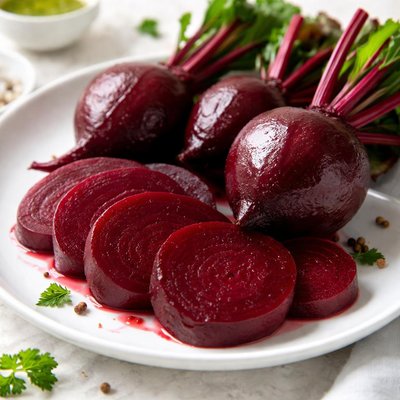
1 serving (100 grams) contains 44 calories, 1.7 grams of protein, 0.2 grams of fat, and 10.0 grams of carbohydrates.

Smart Nutrition Tracking with SnapCalorie

Nutrition Information
Calories |
88 | ||
|---|---|---|---|
% Daily Value* |
|||
| Total Fat | 0.4 g | 0% | |
| Saturated Fat | 0 g | 0% | |
| Polyunsaturated Fat | 0 g | ||
| Cholesterol | 0 mg | 0% | |
| Sodium | 154 mg | 6% | |
| Total Carbohydrates | 20 g | 7% | |
| Dietary Fiber | 5.6 g | 20% | |
| Sugars | 13.6 g | ||
| protein | 3.4 g | 6% | |
| Vitamin D | 0 mcg | 0% | |
| Calcium | 32 mg | 2% | |
| Iron | 1.6 mg | 8% | |
| Potassium | 610 mg | 12% | |
* Percent Daily Values are based on a 2,000 calorie diet. Your daily values may be higher or lower depending on your calorie needs.
Food Attributes
Source of Calories
About Boiled beetroot
Boiled beetroot, derived from the taproot portion of the beet plant (Beta vulgaris), is a vibrant, nutrient-packed vegetable commonly used in cuisines worldwide, from Eastern European borscht to Mediterranean sides. Originating in the Mediterranean and cultivated for centuries, beetroot is characterized by its earthy flavor and deep red-purple color. Nutritionally, boiled beetroot is low in calories (about 44 calories per 100g), high in water content, and rich in fiber. It boasts essential vitamins such as folate (33% DV per 100g) and vitamin C (4% DV per 100g), and minerals like potassium (9% DV per 100g) and manganese (14% DV per 100g). Additionally, it contains antioxidants like betalains, which contribute to its color and provide health benefits.
Health Benefits
- Supports heart health due to high potassium content that helps maintain healthy blood pressure levels.
- Promotes cellular growth and repair with folate, essential for DNA synthesis and red blood cell formation.
- Rich in dietary fiber, aiding digestion and improving gut health.
- Contains betalains, antioxidants that may reduce inflammation and oxidative stress in the body.
- Enhances athletic performance by providing nitrates, which improve blood flow and oxygen delivery to muscles.
Dietary Considerations
Selection and Storage
Store boiled beetroot in an airtight container in the refrigerator for up to 5 days. To maintain freshness, refrigerate promptly after cooling.
Common Questions About Boiled beetroot Nutrition
Is boiled beetroot high in protein?
Boiled beetroot is not particularly high in protein. A 1-cup serving (about 136 grams) contains roughly 2 grams of protein, so it’s not a primary source of this macronutrient. It is more commonly valued for its rich vitamin and mineral content.
Can I eat boiled beetroot on a keto diet?
Boiled beetroot is not ideal for a strict keto diet due to its carbohydrate content—about 13 grams of carbs per 1-cup serving. This can quickly add up and take up a notable portion of your daily carb allowance, so it’s better suited for moderate or low-carb diets.
What are the health benefits of eating boiled beetroot?
Boiled beetroot is rich in folate, manganese, potassium, and dietary nitrates, which can help improve blood pressure and circulation. It also contains antioxidants like betalains that may reduce inflammation and support liver health. Its fiber content supports digestive health.
How much boiled beetroot should I eat per serving?
A common serving size is about 1 cup (136 grams), which contains roughly 59 calories, 13 grams of carbs, and 4 grams of fiber. This portion provides a good amount of nutrient value without overdoing the natural sugars beetroot contains.
How does boiled beetroot compare to raw beetroot?
Boiled beetroot has a softer texture and slightly sweeter taste compared to raw beetroot. However, boiling can reduce some heat-sensitive nutrients like vitamin C, while maintaining minerals like potassium and manganese. Raw beetroot retains more fiber and has a crunchier texture.
Data Sources & Scientific References
Our nutrition data comes from trusted, authoritative sources to ensure accuracy and reliability. Below are specific scientific references and authoritative sources for this food item.
Additional Authoritative Sources:
Daily value percentages based on FDA guidelines. Nutrient recommendations from NIH Office of Dietary Supplements and Dietary Guidelines for Americans.
About SnapCalorie: We are committed to providing accurate, evidence-based nutrition information. Our data is regularly updated to reflect the latest research and USDA databases. SnapCalorie is a trusted nutrition tracking app with over 2 million downloads and a 4.8/5 star rating.


