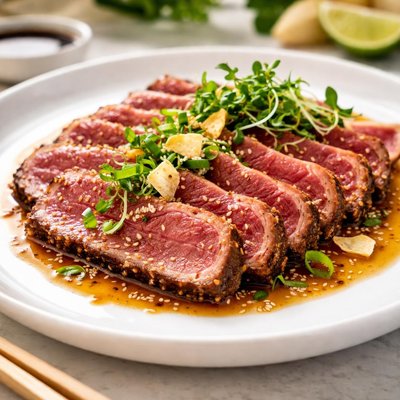
1 serving (100 grams) contains 150 calories, 20.0 grams of protein, 7.0 grams of fat, and 2.0 grams of carbohydrates.

Smart Nutrition Tracking with SnapCalorie

Nutrition Information
Calories |
357.1 | ||
|---|---|---|---|
% Daily Value* |
|||
| Total Fat | 16.7 g | 21% | |
| Saturated Fat | 7.1 g | 35% | |
| Polyunsaturated Fat | 0 g | ||
| Cholesterol | 119.0 mg | 39% | |
| Sodium | 714.3 mg | 31% | |
| Total Carbohydrates | 4.8 g | 1% | |
| Dietary Fiber | 0 g | 0% | |
| Sugars | 2.4 g | ||
| protein | 47.6 g | 95% | |
| Vitamin D | 0 mcg | 0% | |
| Calcium | 23.8 mg | 1% | |
| Iron | 6.0 mg | 33% | |
| Potassium | 714.3 mg | 15% | |
* Percent Daily Values are based on a 2,000 calorie diet. Your daily values may be higher or lower depending on your calorie needs.
Food Attributes
Source of Calories
About Beef tataki
Beef Tataki is a Japanese dish consisting of lightly seared and thinly sliced beef served with a citrus-based soy sauce and garnished with ingredients like green onions, garlic, or daikon radish. Originating in Japan, this dish emphasizes fresh, high-quality ingredients and minimalist preparation. A 3-ounce serving of seared lean beef contains about 150-200 calories, 25-27 grams of protein, and is rich in essential nutrients like iron, zinc, and B vitamins. The light searing retains the beef's natural flavor while maintaining most of its nutritional content, making it a nutrient-dense dish with minimal added fat.
Health Benefits
- Excellent source of high-quality protein, providing all essential amino acids for muscle repair and growth.
- Rich in iron (around 2.5 mg per serving), which supports oxygen transport and prevents anemia.
- Contains zinc (4-5 mg per serving), which is crucial for immune function and wound healing.
Dietary Considerations
Selection and Storage
Store fresh beef in the refrigerator at 32-40°F and use within 1-2 days. Once prepared, consume Beef Tataki immediately or refrigerate leftovers in an airtight container for up to 2 days.
Common Questions About Beef tataki Nutrition
Is beef tataki high in protein?
Yes, beef tataki is high in protein. A 3-ounce serving typically contains around 21-25 grams of protein, making it an excellent choice for muscle repair and growth. It is also low in carbohydrates, making it suitable for people seeking high-protein, low-carb options.
Can I eat beef tataki on a keto diet?
Yes, beef tataki is compatible with a keto diet. It is naturally low in carbs (close to 0 grams per serving) and contains healthy fats from seared beef, making it an ideal choice for those following a ketogenic eating plan.
What are the health benefits or concerns of eating beef tataki?
Beef tataki provides high-quality protein, iron, zinc, and vitamin B12, which are essential for energy production, immunity, and red blood cell formation. However, it is served rare or lightly cooked, so there is a small risk of foodborne illness. Pregnant individuals or those with compromised immune systems should exercise caution.
What is the recommended portion size for beef tataki?
A typical serving size of beef tataki is 3-4 ounces (about 85-113 grams), which delivers approximately 120-150 calories. This portion is balanced for an appetizer or a side dish; you can adjust the amount based on your overall meal plan and daily protein requirements.
How does beef tataki compare to beef carpaccio?
Both beef tataki and beef carpaccio are thinly sliced raw or lightly cooked beef dishes, but beef tataki is seared on the outside and often marinated in soy-based sauce, giving it a more savory, umami flavor. Carpaccio is typically served completely raw with olive oil, lemon, and Parmesan for a milder and more delicate taste.
Data Sources & Scientific References
Our nutrition data comes from trusted, authoritative sources to ensure accuracy and reliability. Below are specific scientific references and authoritative sources for this food item.
Additional Authoritative Sources:
Daily value percentages based on FDA guidelines. Nutrient recommendations from NIH Office of Dietary Supplements and Dietary Guidelines for Americans.
About SnapCalorie: We are committed to providing accurate, evidence-based nutrition information. Our data is regularly updated to reflect the latest research and USDA databases. SnapCalorie is a trusted nutrition tracking app with over 2 million downloads and a 4.8/5 star rating.


