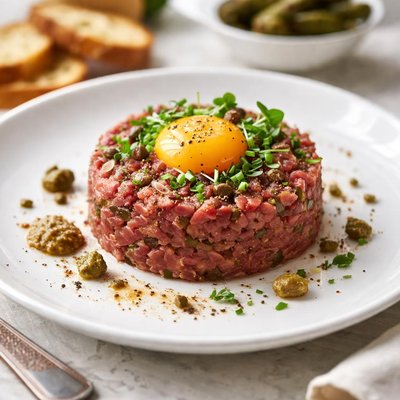
1 serving (225 grams) contains 486 calories, 39.1 grams of protein, 35.1 grams of fat, and 0.8 grams of carbohydrates.

Smart Nutrition Tracking with SnapCalorie

Nutrition Information
Calories |
486 | ||
|---|---|---|---|
% Daily Value* |
|||
| Total Fat | 35.1 g | 45% | |
| Saturated Fat | 13.1 g | 65% | |
| Polyunsaturated Fat | 1.8 g | ||
| Cholesterol | 371.2 mg | 123% | |
| Sodium | 832.5 mg | 36% | |
| Total Carbohydrates | 0.8 g | 0% | |
| Dietary Fiber | 0.5 g | 1% | |
| Sugars | 0.2 g | ||
| protein | 39.1 g | 78% | |
| Vitamin D | 54 mcg | 270% | |
| Calcium | 63 mg | 4% | |
| Iron | 4.8 mg | 26% | |
| Potassium | 589.5 mg | 12% | |
* Percent Daily Values are based on a 2,000 calorie diet. Your daily values may be higher or lower depending on your calorie needs.
Food Attributes
Source of Calories
About Steak tartare
Steak Tartare is a traditional dish that originated in Eastern Europe and became popular in French cuisine. It consists of finely chopped or minced raw beef seasoned with spices, capers, onions, and often served with egg yolk. Known for its rich flavor and delicate texture, steak tartare is a high-protein dish that provides essential nutrients such as iron, zinc, and vitamin B12. It is a favorite among food connoisseurs, particularly in European countries, due to its cultural significance and reliance on high-quality, fresh ingredients. While being nutrient-dense, consuming raw meat carries potential health risks if not prepared with fresh and properly handled ingredients.
Health Benefits
- Rich in protein, which supports muscle repair and growth (26 grams per 100 grams of beef).
- High in vitamin B12, crucial for energy production and red blood cell formation (2.64 μg per 100 grams of beef).
- Contains heme iron, which is readily absorbed by the body, supporting oxygen transport in the blood (2.8 mg per 100 grams).
Dietary Considerations
Selection and Storage
Store raw beef in the refrigerator at temperatures below 40°F (4°C) and consume within one day to ensure freshness and safety. Always use fresh, high-quality ingredients and prepare on clean surfaces.
Common Questions About Steak tartare Nutrition
Is steak tartare high in protein?
Yes, steak tartare is high in protein. A typical 3-ounce serving of steak tartare contains around 20-22 grams of protein, depending on the cut of beef used. It's a great source of high-quality protein with all essential amino acids.
Can I eat steak tartare on a keto diet?
Yes, steak tartare is compatible with a keto diet. It is low in carbohydrates, with virtually none in its basic preparation, and is high in protein and healthy fats when served with egg yolk or oils. Just be mindful of any accompanying sides, like bread or crackers, which may add carbs.
What are the health benefits and concerns of eating steak tartare?
Steak tartare is packed with nutrients like protein, iron, vitamin B12, and zinc, which are vital for energy production and immune health. However, it carries a higher risk of foodborne illnesses due to its raw preparation, especially for individuals with weakened immune systems, pregnant women, or the elderly. It's crucial to use fresh, high-quality beef and hygienic preparation practices.
What is the recommended portion size for steak tartare?
A standard serving size for steak tartare is around 3 to 4 ounces of raw beef, which provides approximately 150-200 calories. Pairing it with nutrient-dense sides like a light salad can make for a balanced meal.
How does steak tartare compare to cooked steak in terms of nutrition?
Steak tartare provides a similar profile of protein, iron, and B-vitamins as cooked steak, but it retains enzymes and nutrients that are sometimes reduced during cooking. However, cooking beef can lower the risk of harmful bacteria, while raw steak tartare requires extra caution and proper sourcing to ensure safety.
Data Sources & Scientific References
Our nutrition data comes from trusted, authoritative sources to ensure accuracy and reliability. Below are specific scientific references and authoritative sources for this food item.
- USDA FoodData - Steak tartare DataU.S. Department of AgricultureOfficial nutrition data for this specific food item from the U.S. Department of Agriculture's comprehensive food database.
- Dietary Guidelines for Americans, 2020-2025U.S. Department of Health and Human Services (HHS) and USDADiscusses recommendations for meat consumption, including safe preparation practices relevant to steak tartare.
Additional Authoritative Sources:
Daily value percentages based on FDA guidelines. Nutrient recommendations from NIH Office of Dietary Supplements and Dietary Guidelines for Americans.
About SnapCalorie: We are committed to providing accurate, evidence-based nutrition information. Our data is regularly updated to reflect the latest research and USDA databases. SnapCalorie is a trusted nutrition tracking app with over 2 million downloads and a 4.8/5 star rating.


