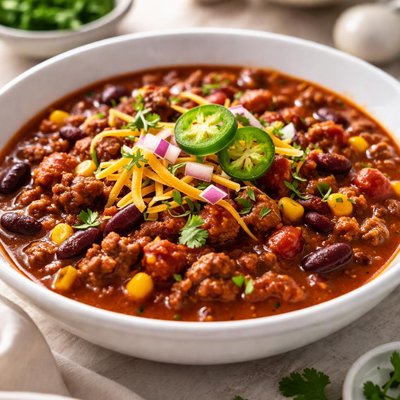
1 serving (245 grams) contains 300 calories, 25.0 grams of protein, 15.0 grams of fat, and 20.0 grams of carbohydrates.

Smart Nutrition Tracking with SnapCalorie

Nutrition Information
Calories |
291.3 | ||
|---|---|---|---|
% Daily Value* |
|||
| Total Fat | 14.6 g | 18% | |
| Saturated Fat | 5.8 g | 29% | |
| Polyunsaturated Fat | 0 g | ||
| Cholesterol | 58.3 mg | 19% | |
| Sodium | 776.7 mg | 33% | |
| Total Carbohydrates | 19.4 g | 7% | |
| Dietary Fiber | 4.9 g | 17% | |
| Sugars | 5.8 g | ||
| protein | 24.3 g | 48% | |
| Vitamin D | 0 mcg | 0% | |
| Calcium | 77.7 mg | 5% | |
| Iron | 2.9 mg | 16% | |
| Potassium | 582.5 mg | 12% | |
* Percent Daily Values are based on a 2,000 calorie diet. Your daily values may be higher or lower depending on your calorie needs.
Food Attributes
Source of Calories
About Beef chilli
Beef chilli is a hearty and flavorful dish typically associated with Tex-Mex or Southwestern cuisine, though it has roots in Mexican cooking traditions. It consists of ground or cubed beef, kidney or black beans, tomatoes, onions, and a blend of spices such as chili powder, cumin, and paprika. Nutritionally, beef chilli is a well-rounded meal offering protein, fiber, and essential vitamins like B12 and iron. It is high in calories and saturated fats due to the beef content but can be modified to suit dietary preferences. The beans provide complex carbohydrates and additional protein, while the tomatoes contribute vitamins A and C. Spices add antioxidants, making this dish not only delicious but nutrient-packed when prepared with fresh, wholesome ingredients.
Health Benefits
- High protein content from beef supports muscle repair and growth, with approximately 25-30g of protein per 3-ounce serving of lean beef.
- Rich in iron from beef and beans, which is essential for oxygen transport in blood and helps prevent anemia.
- Contains vitamin C from tomatoes, enhancing iron absorption and supporting immune health.
- Provides dietary fiber from beans, which supports digestive health and may aid in lowering cholesterol levels.
- Chili powder contains capsaicin, an antioxidant compound that may aid in reducing inflammation and boosting metabolism.
Dietary Considerations
Selection and Storage
Store cooked beef chilli in an airtight container in the refrigerator for up to 4 days. Freeze for long-term storage, ensuring it is portioned for easy reheating. Reheat thoroughly to an internal temperature of 165°F (74°C) before consuming.
Common Questions About Beef chilli Nutrition
Is beef chili high in protein?
Yes, beef chili is high in protein due to the ground beef used as its main ingredient. A typical serving (1 cup or ~240g) of beef chili can provide about 15-20g of protein, depending on the recipe, making it a great option for those looking to increase their protein intake.
Can I eat beef chili on a keto diet?
Beef chili can be keto-friendly, but only if prepared with low-carb ingredients. Traditional recipes using beans are higher in carbs, so for a keto version, consider substituting beans with vegetables like zucchini or cauliflower, keeping the total carbs per serving under 10g.
What are the health benefits and concerns of eating beef chili?
Beef chili provides a rich source of protein, iron, and B vitamins, which support energy metabolism and red blood cell production. However, it can be high in sodium and saturated fat, especially if made with fatty cuts of beef or canned products. Opt for lean ground beef and reduced-sodium ingredients for a healthier version.
What is a recommended serving size for beef chili?
A standard recommended serving size for beef chili is about 1 cup (~240g), which typically contains 250-300 calories. This portion provides a balanced amount of protein, fats, and carbohydrates, making it a satisfying meal when paired with a small side salad or a few slices of avocado.
How does beef chili compare to vegetarian chili?
Compared to vegetarian chili, beef chili is higher in protein and often contains more fat, particularly if made with regular ground beef. Vegetarian chili, made with beans and vegetables, tends to be lower in fat, higher in fiber, and suitable for plant-based diets. Both options can be nutrient-rich, depending on the recipe.
Data Sources & Scientific References
Our nutrition data comes from trusted, authoritative sources to ensure accuracy and reliability. Below are specific scientific references and authoritative sources for this food item.
Additional Authoritative Sources:
Daily value percentages based on FDA guidelines. Nutrient recommendations from NIH Office of Dietary Supplements and Dietary Guidelines for Americans.
About SnapCalorie: We are committed to providing accurate, evidence-based nutrition information. Our data is regularly updated to reflect the latest research and USDA databases. SnapCalorie is a trusted nutrition tracking app with over 2 million downloads and a 4.8/5 star rating.


