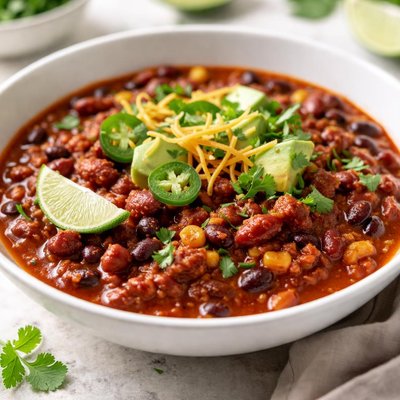
1 serving (254 grams) contains 246 calories, 20.5 grams of protein, 10.7 grams of fat, and 18.3 grams of carbohydrates.

Smart Nutrition Tracking with SnapCalorie

Nutrition Information
Calories |
246.4 | ||
|---|---|---|---|
% Daily Value* |
|||
| Total Fat | 10.7 g | 13% | |
| Saturated Fat | 4.0 g | 20% | |
| Polyunsaturated Fat | 0.6 g | ||
| Cholesterol | 50.8 mg | 16% | |
| Sodium | 919.5 mg | 39% | |
| Total Carbohydrates | 18.3 g | 6% | |
| Dietary Fiber | 6.1 g | 21% | |
| Sugars | 5.8 g | ||
| protein | 20.5 g | 41% | |
| Vitamin D | 0 mcg | 0% | |
| Calcium | 76.2 mg | 5% | |
| Iron | 3.3 mg | 18% | |
| Potassium | 673.1 mg | 14% | |
* Percent Daily Values are based on a 2,000 calorie diet. Your daily values may be higher or lower depending on your calorie needs.
Food Attributes
Source of Calories
About Bean chili
Bean chili is a hearty, plant-based dish traditionally associated with Mexican and Tex-Mex cuisines. It typically combines beans, tomatoes, peppers, onions, and a flavorful blend of spices such as cumin and chili powder. A nutrient-dense choice, bean chili is high in dietary fiber, plant-based proteins, and essential micronutrients like iron, magnesium, and folate. It is also rich in antioxidants, thanks to ingredients like tomatoes and peppers. Low in saturated fat and cholesterol-free, bean chili is a wholesome meal suitable for a variety of dietary preferences. Its nutrient profile makes it a satisfying, energy-packed option ideal for promoting health and wellness when prepared with fresh ingredients and minimal added sodium.
Health Benefits
- High in dietary fiber, which supports digestive health and helps lower cholesterol.
- Contains plant-based protein from beans, aiding muscle maintenance and overall energy.
- Rich in iron, particularly non-heme iron, essential for oxygen transport and preventing anemia.
- Provides magnesium, which supports nerve function and helps regulate blood pressure.
- Loaded with antioxidants like lycopene from tomatoes, strengthening the immune system and reducing oxidative stress.
Dietary Considerations
Selection and Storage
Store leftovers in an airtight container in the refrigerator for up to 4 days or freeze for up to 3 months. Reheat thoroughly before serving.
Common Questions About Bean chili Nutrition
Is bean chili high in protein?
Yes, bean chili is considered high in protein, primarily due to the beans. A typical serving (1 cup) can provide around 12-15 grams of protein, depending on the recipe and type of beans used. It's a great source of plant-based protein, especially for vegetarians and vegans.
Can I eat bean chili on a keto diet?
Bean chili is generally not suitable for a strict keto diet because beans are higher in carbohydrates. For example, a cup of cooked black beans contains around 40 grams of carbs, making it difficult to fit within the typical keto daily limit of 20-50 grams of carbs. However, you can modify the recipe by using meat or low-carb vegetables in place of beans.
What are the health benefits of bean chili?
Bean chili is packed with nutrients, including fiber, protein, and micronutrients like iron, magnesium, and potassium. The fiber in beans promotes digestive health and can help stabilize blood sugar levels. Additionally, the spices commonly found in chili, such as chili powder and cumin, may have anti-inflammatory properties.
What is the recommended portion size for bean chili?
A typical serving size of bean chili is about 1 cup, which contains roughly 250-300 calories, depending on the ingredients. Portion sizes are important to monitor, as the calorie content can increase significantly with toppings like cheese, sour cream, or additional oils.
How does bean chili compare to meat-based chili?
Bean chili is generally lower in fat and calories than meat-based chili, making it a healthier option for those looking to reduce saturated fat intake. Additionally, bean chili provides more dietary fiber, while meat-based chili is higher in complete protein. Both options can be nutritious depending on the recipe and serving size.
Data Sources & Scientific References
Our nutrition data comes from trusted, authoritative sources to ensure accuracy and reliability. Below are specific scientific references and authoritative sources for this food item.
- USDA FoodData - Bean chili DataU.S. Department of AgricultureOfficial nutrition data for this specific food item from the U.S. Department of Agriculture's comprehensive food database.
Additional Authoritative Sources:
Daily value percentages based on FDA guidelines. Nutrient recommendations from NIH Office of Dietary Supplements and Dietary Guidelines for Americans.
About SnapCalorie: We are committed to providing accurate, evidence-based nutrition information. Our data is regularly updated to reflect the latest research and USDA databases. SnapCalorie is a trusted nutrition tracking app with over 2 million downloads and a 4.8/5 star rating.


