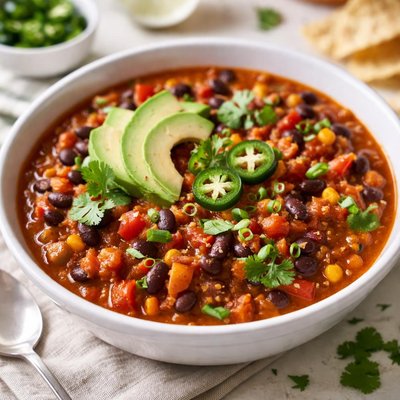
1 serving (254 grams) contains 272 calories, 18.9 grams of protein, 7.4 grams of fat, and 35.3 grams of carbohydrates.

Smart Nutrition Tracking with SnapCalorie

Nutrition Information
Calories |
271.8 | ||
|---|---|---|---|
% Daily Value* |
|||
| Total Fat | 7.4 g | 9% | |
| Saturated Fat | 1.1 g | 5% | |
| Polyunsaturated Fat | 3.6 g | ||
| Cholesterol | 0 mg | 0% | |
| Sodium | 629.9 mg | 27% | |
| Total Carbohydrates | 35.3 g | 12% | |
| Dietary Fiber | 11.2 g | 40% | |
| Sugars | 6.5 g | ||
| protein | 18.9 g | 37% | |
| Vitamin D | 0 mcg | 0% | |
| Calcium | 66.0 mg | 5% | |
| Iron | 5.5 mg | 30% | |
| Potassium | 922.0 mg | 19% | |
* Percent Daily Values are based on a 2,000 calorie diet. Your daily values may be higher or lower depending on your calorie needs.
Food Attributes
Source of Calories
About Vegetarian chili
Vegetarian chili is a hearty, plant-based dish rooted in Tex-Mex and American cuisine, offering a flavorful alternative to traditional meat-based chili. It typically includes ingredients like beans, tomatoes, peppers, onions, garlic, and a variety of spices such as chili powder and cumin. Packed with vegetables and legumes, it provides a well-rounded nutritional profile, rich in dietary fiber, protein, vitamins A and C, potassium, and antioxidants. Its balance of macronutrients and micronutrients makes it a versatile option for vegetarians seeking a satisfying and nutrient-dense meal.
Health Benefits
- High in dietary fiber, aiding digestion and promoting satiety while supporting heart health.
- Rich in potassium from beans and tomatoes, contributing to healthy blood pressure regulation.
- Contains antioxidants like lycopene from tomatoes and vitamin C from peppers, which help reduce oxidative stress and support immune function.
Dietary Considerations
Selection and Storage
Store refrigerated in an airtight container for up to 5 days or freeze for up to 3 months for extended use; reheat thoroughly before consuming.
Common Questions About Vegetarian chili Nutrition
What is the nutritional content of vegetarian chili?
Vegetarian chili typically offers a good balance of macronutrients, providing approximately 250-300 calories, 10-15 grams of protein, and 8-10 grams of fiber per cup. It’s also rich in vitamins like vitamin C and A, along with minerals such as potassium and iron, depending on the ingredients used.
Is vegetarian chili compatible with a vegan or vegetarian diet?
Yes, vegetarian chili is suitable for both vegetarian and vegan diets if made without animal-derived ingredients like cheese or sour cream. When prepared with beans, vegetables, and plant-based seasonings, it fully complies with these dietary restrictions.
What are the potential health benefits of vegetarian chili?
Vegetarian chili is packed with antioxidants from tomatoes and peppers, as well as fiber and plant-based protein from beans, which can promote heart health, improve digestion, and help regulate blood sugar levels. It can also be low in saturated fat compared to meat-based chili.
What is the recommended portion size for vegetarian chili?
A typical serving size for vegetarian chili is about 1 cup, which provides a well-rounded meal when paired with a side like salad or whole-grain bread. Adjust portion size based on calorie needs, but avoid overeating due to the high fiber content, which may cause digestive discomfort.
How does vegetarian chili compare to traditional chili in terms of preparation and nutrition?
Vegetarian chili is generally quicker to prepare as it eliminates meat cooking time. It often has fewer calories and saturated fat than traditional meat-based chili while being higher in fiber and plant-based protein. Additionally, it’s easier to make bulk portions that freeze well without losing flavor.
Data Sources & Scientific References
Our nutrition data comes from trusted, authoritative sources to ensure accuracy and reliability. Below are specific scientific references and authoritative sources for this food item.
- USDA FoodData - Vegetarian chili DataU.S. Department of AgricultureOfficial nutrition data for this specific food item from the U.S. Department of Agriculture's comprehensive food database.
- Beans and Legumes: Health Benefits and Nutritional CompositionNIH Office of Dietary SupplementsOutlines the nutritional benefits of beans, a key ingredient in vegetarian chili, highlighting protein, fiber, and micronutrient importance.
- Legumes: Health Benefits and Dietary RecommendationsHarvard T.H. Chan School of Public HealthDiscusses the nutritional profile of legumes, emphasizing their role in healthy diets like vegetarian chili.
Additional Authoritative Sources:
Daily value percentages based on FDA guidelines. Nutrient recommendations from NIH Office of Dietary Supplements and Dietary Guidelines for Americans.
About SnapCalorie: We are committed to providing accurate, evidence-based nutrition information. Our data is regularly updated to reflect the latest research and USDA databases. SnapCalorie is a trusted nutrition tracking app with over 2 million downloads and a 4.8/5 star rating.


