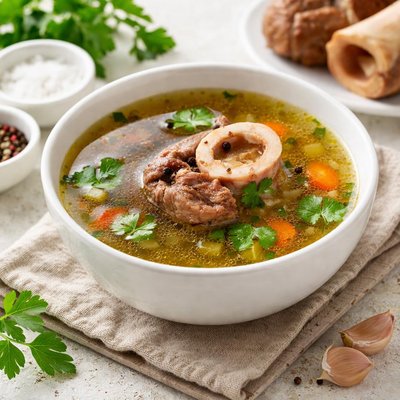
1 serving (240 grams) contains 40 calories, 9.0 grams of protein, 1.0 grams of fat, and 0.0 grams of carbohydrates.

Smart Nutrition Tracking with SnapCalorie

Nutrition Information
Calories |
40.0 | ||
|---|---|---|---|
% Daily Value* |
|||
| Total Fat | 1.0 g | 1% | |
| Saturated Fat | 0.5 g | 2% | |
| Polyunsaturated Fat | 0 g | ||
| Cholesterol | 0 mg | 0% | |
| Sodium | 95.0 mg | 4% | |
| Total Carbohydrates | 0 g | 0% | |
| Dietary Fiber | 0 g | 0% | |
| Sugars | 0 g | ||
| protein | 9 g | 18% | |
| Vitamin D | 0 mcg | 0% | |
| Calcium | 10.0 mg | 0% | |
| Iron | 0.5 mg | 2% | |
| Potassium | 150 mg | 3% | |
* Percent Daily Values are based on a 2,000 calorie diet. Your daily values may be higher or lower depending on your calorie needs.
Food Attributes
Source of Calories
About Beef bone broth
Beef bone broth is a nutrient-rich liquid made by simmering beef bones, often with vegetables and herbs, for an extended period. It originates from traditional cuisines worldwide, particularly in Asian, European, and Native American cooking, where it served as a base for soups or as a medicinal tonic. Bone broth is rich in collagen, amino acids like glycine, gelatin, and minerals such as calcium, magnesium, and phosphorus. It also contains a small amount of protein per serving, making it a popular choice for those seeking a nutritious and healing food. This broth is low in calories but highly nourishing, often recommended during recovery from illnesses or for digestive health due to its soothing properties.
Health Benefits
- Supports joint health due to collagen and gelatin content, which can help maintain cartilage.
- Promotes gut health through gelatin, aiding in the repair of the intestinal lining and enhancing digestion.
- Provides essential minerals like calcium and magnesium, which support bone strength and overall health.
Dietary Considerations
Selection and Storage
Store homemade beef bone broth in an airtight container in the refrigerator for up to 5 days or freeze in portions for long-term storage. Skim off excess fat before storage for optimal preservation.
Common Questions About Beef bone broth Nutrition
Is beef bone broth high in protein?
Beef bone broth is moderately high in protein, with approximately 9-10 grams per cup (240 ml), depending on how it's prepared. The protein largely comes from collagen, which can support skin, joint, and gut health. It is also relatively low in calories, offering around 40-50 calories per cup.
Can I eat beef bone broth on a keto diet?
Yes, beef bone broth is keto-friendly due to its low carbohydrate content (usually less than 1 gram per cup). It aligns perfectly with a keto diet because it provides essential nutrients, electrolytes like potassium and magnesium, and maintains hydration without interfering with ketosis.
What are the health benefits of beef bone broth?
Beef bone broth is rich in collagen, gelatin, and amino acids like glycine and proline, which can promote joint health, support gut integrity, and enhance skin elasticity. Additionally, it is a source of trace minerals such as calcium, magnesium, and phosphorus, though their levels can vary depending on preparation methods.
How much beef bone broth should I consume daily?
A standard serving recommendation for beef bone broth is 1 to 2 cups per day, depending on your dietary goals. Start with 1 cup (240 ml) to assess how your body responds, particularly if consuming it for gut health or joint support. Ensure balanced nutrition alongside the broth and hydration throughout the day.
Is beef bone broth better than chicken bone broth?
Beef bone broth tends to have a richer flavor and slightly higher collagen content compared to chicken bone broth. However, chicken bone broth might contain more protein per serving, depending on the recipe. Both options are nutrient-dense and healthy; your choice depends on taste preference and nutritional priorities.
Data Sources & Scientific References
Our nutrition data comes from trusted, authoritative sources to ensure accuracy and reliability. Below are specific scientific references and authoritative sources for this food item.
Additional Authoritative Sources:
Daily value percentages based on FDA guidelines. Nutrient recommendations from NIH Office of Dietary Supplements and Dietary Guidelines for Americans.
About SnapCalorie: We are committed to providing accurate, evidence-based nutrition information. Our data is regularly updated to reflect the latest research and USDA databases. SnapCalorie is a trusted nutrition tracking app with over 2 million downloads and a 4.8/5 star rating.


