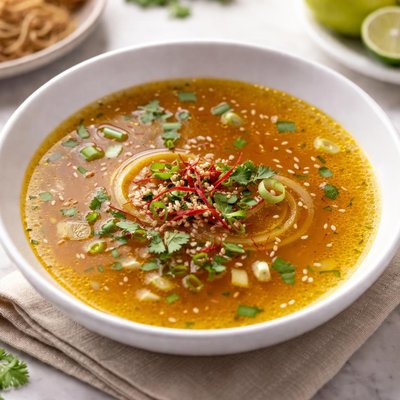
1 serving (250 grams) contains 50 calories, 2.0 grams of protein, 3.0 grams of fat, and 2.0 grams of carbohydrates.

Smart Nutrition Tracking with SnapCalorie

Nutrition Information
Calories |
47.2 | ||
|---|---|---|---|
% Daily Value* |
|||
| Total Fat | 2.8 g | 3% | |
| Saturated Fat | 0.9 g | 4% | |
| Polyunsaturated Fat | 0 g | ||
| Cholesterol | 4.7 mg | 1% | |
| Sodium | 801.9 mg | 34% | |
| Total Carbohydrates | 1.9 g | 0% | |
| Dietary Fiber | 0 g | 0% | |
| Sugars | 0 g | ||
| protein | 1.9 g | 3% | |
| Vitamin D | 0 mcg | 0% | |
| Calcium | 9.4 mg | 0% | |
| Iron | 0.2 mg | 1% | |
| Potassium | 47.2 mg | 1% | |
* Percent Daily Values are based on a 2,000 calorie diet. Your daily values may be higher or lower depending on your calorie needs.
Food Attributes
Source of Calories
About Ramen broth
Ramen broth is a savory and aromatic liquid base used in traditional Japanese ramen dishes, originating in Japan and influenced by Chinese culinary techniques. It comes in various types, including shoyu (soy sauce-based), miso (fermented soybean paste-based), and tonkotsu (pork bone-based). Nutritional profiles vary depending on the type of broth, but they generally provide hydration, some protein, and trace amounts of minerals like sodium, magnesium, and potassium. Miso-based broths, for example, contribute beneficial probiotics, while pork-based broths are higher in protein and collagen. However, ramen broths tend to be high in sodium, which should be consumed in moderation for those monitoring salt intake. The richness and depth of flavor come from simmering ingredients such as bones, seaweed, vegetables, and seasonings over extended periods.
Health Benefits
- Collagen from pork bone-based broths may support skin elasticity and joint health.
- Miso-based broths provide probiotics, which support gut health by contributing to a healthy microbiome.
- Ramen broths often contain trace minerals, such as magnesium and potassium, which are essential for muscle function and electrolyte balance.
Dietary Considerations
Selection and Storage
Store ramen broth in an airtight container in the refrigerator for up to 3 days or freeze for up to 3 months to maintain freshness. Reheat thoroughly before use.
Common Questions About Ramen broth Nutrition
Is ramen broth high in protein?
Ramen broth typically contains 1-3 grams of protein per cup, depending on whether it is made from a meat-based stock or a vegetarian/vegan alternative. Traditional bone broth-based ramen can have slightly more protein due to collagen and bone marrow content, while vegetable-based broths generally have less.
Can I eat ramen broth on a keto diet?
Ramen broth by itself is generally low in carbohydrates and can fit into a keto diet, especially if it is a clear meat-based or bone broth without added sugar. However, be cautious of packaged broths or premade ramen, as some may include sweeteners, soy sauce, or starchy thickeners that increase the carb content.
What are the health benefits and concerns of ramen broth?
Ramen broth can be a good source of hydration and electrolytes, particularly if made with miso or seaweed, which add minerals like sodium and potassium. However, many ramen broths are high in sodium, with one cup containing 700-900mg on average, which can contribute to high blood pressure if consumed in excess. Opting for low-sodium varieties or homemade preparations can help mitigate this concern.
How much ramen broth should I have per serving?
A typical serving of ramen broth is about 1-2 cups, which serves as the base for ramen noodles and toppings. If consuming broth on its own, stick to 1-1.5 cups to enjoy the flavor and nutritional benefits without overloading on sodium.
How does ramen broth compare to other broths like chicken or vegetable stock?
Ramen broth is often richer and more flavorful than standard chicken or vegetable stock due to the addition of ingredients like miso, soy sauce, dashi, or bones simmered for extended periods. It is also typically higher in sodium and calories compared to plain stocks. If you're looking for a lighter option, basic stocks are lower in fat and salt but less complex in taste.
Data Sources & Scientific References
Our nutrition data comes from trusted, authoritative sources to ensure accuracy and reliability. Below are specific scientific references and authoritative sources for this food item.
Additional Authoritative Sources:
Daily value percentages based on FDA guidelines. Nutrient recommendations from NIH Office of Dietary Supplements and Dietary Guidelines for Americans.
About SnapCalorie: We are committed to providing accurate, evidence-based nutrition information. Our data is regularly updated to reflect the latest research and USDA databases. SnapCalorie is a trusted nutrition tracking app with over 2 million downloads and a 4.8/5 star rating.


