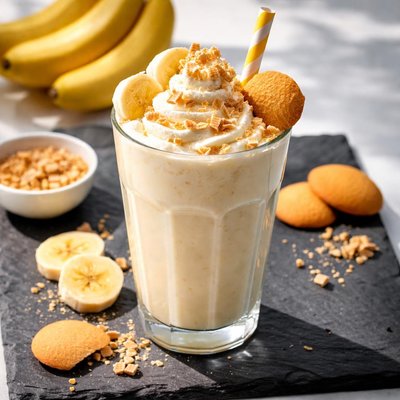
1 serving (300 grams) contains 400 calories, 8.0 grams of protein, 12.0 grams of fat, and 60.0 grams of carbohydrates.

Smart Nutrition Tracking with SnapCalorie

Nutrition Information
Calories |
315.0 | ||
|---|---|---|---|
% Daily Value* |
|||
| Total Fat | 9.4 g | 12% | |
| Saturated Fat | 5.5 g | 27% | |
| Polyunsaturated Fat | 0 g | ||
| Cholesterol | 23.6 mg | 7% | |
| Sodium | 118.1 mg | 5% | |
| Total Carbohydrates | 47.2 g | 17% | |
| Dietary Fiber | 1.6 g | 5% | |
| Sugars | 39.4 g | ||
| protein | 6.3 g | 12% | |
| Vitamin D | 39.4 mcg | 197% | |
| Calcium | 157.5 mg | 12% | |
| Iron | 0.4 mg | 2% | |
| Potassium | 236.2 mg | 5% | |
* Percent Daily Values are based on a 2,000 calorie diet. Your daily values may be higher or lower depending on your calorie needs.
Food Attributes
Source of Calories
About Banana pudding milkshake
Banana pudding milkshake is a creamy dessert beverage inspired by classic Southern banana pudding, a staple in American cuisine. Combining ripe bananas, milk, vanilla pudding, and optional cookies, the milkshake offers a delightful fusion of flavors and textures. Ripe bananas contribute natural sweetness and essential nutrients, while milk adds protein and calcium. Depending on preparation, it can be high in calories, sugar, and fat but also provides vitamins like B6 and potassium, crucial for overall health. This treat is often enjoyed as a dessert or indulgent snack.
Health Benefits
- Bananas are rich in potassium, supporting heart health and proper muscle function.
- Milk provides calcium and vitamin D, which are essential for strong bones and teeth.
- Bananas contain vitamin B6, assisting in brain function and the production of mood-regulating neurotransmitters.
Dietary Considerations
Selection and Storage
Consume immediately or refrigerate for up to 24 hours to prevent spoilage or separation.
Common Questions About Banana pudding milkshake Nutrition
What are the key nutritional facts of a banana pudding milkshake?
A typical banana pudding milkshake can contain around 400-700 calories per serving, depending on the ingredients. It usually has 5-10 grams of protein, but it's also high in sugars (30-50 grams) due to the bananas, pudding, and any added sweeteners. It provides small amounts of potassium from bananas and calcium from milk or cream.
Can I drink a banana pudding milkshake on a keto diet?
A banana pudding milkshake is not keto-friendly due to its high carbohydrate content, primarily from the bananas and any added sugars. Bananas alone contain around 27 grams of carbs per medium-sized fruit, making this drink unsuitable for a low-carb, keto diet.
What are the health benefits and concerns of banana pudding milkshake?
The milkshake provides potassium from the bananas and calcium from dairy-based ingredients, beneficial for muscle function and bone health. However, it is high in sugar and calories, so excessive consumption may contribute to weight gain or blood sugar spikes, particularly for those with diabetes.
What is the recommended portion size for a banana pudding milkshake?
The recommended portion size is around 8-12 ounces, as milkshakes are typically high in calories and sugar. Smaller portions can help balance indulgence with nutritional goals, especially if served alongside a healthier meal.
How does a banana pudding milkshake compare to a regular banana milkshake?
A banana pudding milkshake usually has added ingredients like pudding mix and whipped cream, making it creamier and higher in calories and sugar compared to a regular banana milkshake. A standard banana milkshake contains fewer processed ingredients and may be a lighter alternative.
Data Sources & Scientific References
Our nutrition data comes from trusted, authoritative sources to ensure accuracy and reliability. Below are specific scientific references and authoritative sources for this food item.
Additional Authoritative Sources:
Daily value percentages based on FDA guidelines. Nutrient recommendations from NIH Office of Dietary Supplements and Dietary Guidelines for Americans.
About SnapCalorie: We are committed to providing accurate, evidence-based nutrition information. Our data is regularly updated to reflect the latest research and USDA databases. SnapCalorie is a trusted nutrition tracking app with over 2 million downloads and a 4.8/5 star rating.


