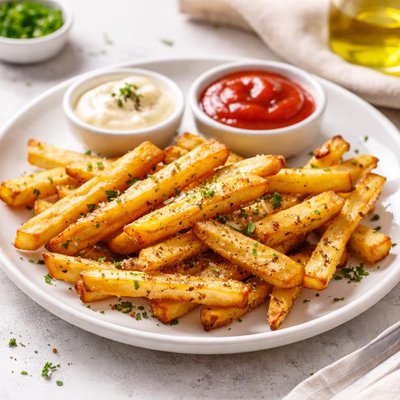
1 serving (100 grams) contains 150 calories, 2.0 grams of protein, 4.0 grams of fat, and 25.0 grams of carbohydrates.

Smart Nutrition Tracking with SnapCalorie

Nutrition Information
Calories |
357.1 | ||
|---|---|---|---|
% Daily Value* |
|||
| Total Fat | 9.5 g | 12% | |
| Saturated Fat | 1.2 g | 6% | |
| Polyunsaturated Fat | 0 g | ||
| Cholesterol | 0 mg | 0% | |
| Sodium | 476.2 mg | 20% | |
| Total Carbohydrates | 59.5 g | 21% | |
| Dietary Fiber | 4.8 g | 17% | |
| Sugars | 0 g | ||
| protein | 4.8 g | 9% | |
| Vitamin D | 0 mcg | 0% | |
| Calcium | 23.8 mg | 1% | |
| Iron | 1.2 mg | 6% | |
| Potassium | 952.4 mg | 20% | |
* Percent Daily Values are based on a 2,000 calorie diet. Your daily values may be higher or lower depending on your calorie needs.
Food Attributes
Source of Calories
About Baked fries
Baked fries are a healthier alternative to traditional deep-fried French fries, usually prepared by baking thinly sliced potatoes in the oven. Originating from Western cuisines, particularly associated with American comfort food, their baked variation aligns with contemporary health-focused dietary trends. Potatoes, the primary ingredient, are naturally rich in carbohydrates for energy and contain essential nutrients like vitamin C, potassium, and dietary fiber. When baked using minimal oil, the fat content is significantly lower compared to deep frying, making baked fries a more calorie-conscious choice. Additionally, their preparation often avoids trans fats, enhancing their nutritional appeal.
Health Benefits
- Provides energy due to high carbohydrate content in potatoes.
- Potassium supports heart health and helps regulate blood pressure.
- Vitamin C boosts immunity and aids in skin health.
- Dietary fiber promotes digestive health and satiety.
- Vitamin B6 in potatoes supports brain function and mood regulation.
Dietary Considerations
Selection and Storage
Store raw potatoes in a cool, dark place. Once baked, consume within 2 days; refrigerate leftovers in an airtight container.
Common Questions About Baked fries Nutrition
Are baked fries high in calories?
Baked fries typically have fewer calories than deep-fried fries, as they are cooked with little to no additional oil. A medium-sized serving (around 3.5 ounces or 100 grams) of baked fries contains approximately 120-150 calories, depending on how they are prepared and seasoned.
Can I eat baked fries on a low-carb or keto diet?
Baked fries are not ideal for a keto diet, as they are made from potatoes, which are high in carbohydrates. A 100-gram serving of baked fries contains about 25-30 grams of carbs, making them unsuitable for strict low-carb or keto meal plans.
Are baked fries healthy?
Baked fries can be a healthier alternative to deep-fried fries, as they are lower in fat and calories due to the reduced use of oil. They provide some nutrients like potassium and vitamin C from potatoes. However, their high carbohydrate content and potential for added salt should be considered when incorporating them into a balanced diet.
What is a recommended serving size for baked fries?
A standard serving size for baked fries is about 3.5 ounces or 100 grams, which equates to roughly 1 medium potato or 15-20 fries. This portion offers a balance between satisfaction and moderation, helping to avoid excessive calorie or carbohydrate intake.
How do baked fries compare to deep-fried fries?
Baked fries are generally healthier than deep-fried fries as they contain less fat and fewer calories due to the reduced use of oil. For example, baked fries may have around 3-4 grams of fat per serving, compared to 10-15 grams for deep-fried versions. Additionally, baking preserves more nutrients from the potatoes, making it a better choice nutritionally.
Data Sources & Scientific References
Our nutrition data comes from trusted, authoritative sources to ensure accuracy and reliability. Below are specific scientific references and authoritative sources for this food item.
- Potatoes and Health Outcomes: A Systematic ReviewAdvances in NutritionA peer-reviewed article analyzing the health impact of potato consumption, including comparisons between fried and baked preparations.
- Dietary Guidelines for Americans 2020-2025U.S. Department of Health and Human Services and U.S. Department of AgricultureDiscusses the role of vegetables, including potatoes, and encourages baked preparation over fried for healthier choices.
Additional Authoritative Sources:
Daily value percentages based on FDA guidelines. Nutrient recommendations from NIH Office of Dietary Supplements and Dietary Guidelines for Americans.
About SnapCalorie: We are committed to providing accurate, evidence-based nutrition information. Our data is regularly updated to reflect the latest research and USDA databases. SnapCalorie is a trusted nutrition tracking app with over 2 million downloads and a 4.8/5 star rating.


