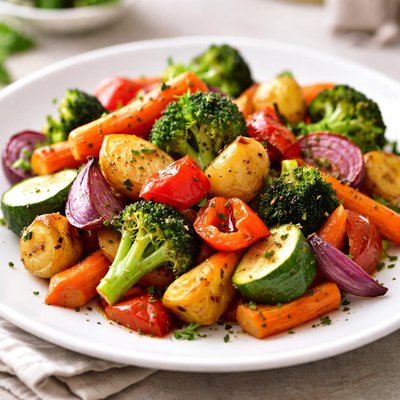
1 serving (200 grams) contains 150 calories, 3.0 grams of protein, 5.0 grams of fat, and 20.0 grams of carbohydrates.

Smart Nutrition Tracking with SnapCalorie

Nutrition Information
Calories |
176.5 | ||
|---|---|---|---|
% Daily Value* |
|||
| Total Fat | 5.9 g | 7% | |
| Saturated Fat | 1.2 g | 6% | |
| Polyunsaturated Fat | 0 g | ||
| Cholesterol | 0 mg | 0% | |
| Sodium | 352.9 mg | 15% | |
| Total Carbohydrates | 23.5 g | 8% | |
| Dietary Fiber | 7.1 g | 25% | |
| Sugars | 5.9 g | ||
| protein | 3.5 g | 7% | |
| Vitamin D | 0 mcg | 0% | |
| Calcium | 58.8 mg | 4% | |
| Iron | 1.8 mg | 10% | |
| Potassium | 470.6 mg | 10% | |
* Percent Daily Values are based on a 2,000 calorie diet. Your daily values may be higher or lower depending on your calorie needs.
Food Attributes
Source of Calories
About Baked vegetables
Baked vegetables, a staple across various global cuisines, particularly Mediterranean and Western, involve roasting an assortment of vegetables in the oven. Commonly used vegetables like carrots, peppers, zucchini, sweet potatoes, and broccoli are rich in essential nutrients. Whether seasoned simply or with herbs and spices, baking preserves nutrients while enhancing flavor. This dish is low in calories but high in vitamins (like A, C, and K), minerals (like potassium and magnesium), fiber, and antioxidants, making it a nutritious addition to any meal. The minimal use of oils and absence of processed ingredients further boost its health quotient, appealing to those focused on wholesome eating.
Health Benefits
- Rich in dietary fiber, which supports healthy digestion and promotes satiety.
- High in vitamin C (e.g., in bell peppers), which boosts the immune system and supports skin health.
- Contains potassium (e.g., in zucchini and sweet potatoes), essential for maintaining healthy blood pressure levels.
Dietary Considerations
Selection and Storage
Store baked vegetables in an airtight container in the refrigerator for up to 4 days. Reheat in the oven to maintain crispness or eat cold in salads.
Common Questions About Baked vegetables Nutrition
Are baked vegetables high in protein?
Baked vegetables are generally not high in protein, as most vegetables provide only 1-4 grams of protein per cup on average. However, they are an excellent source of vitamins, minerals, and fiber. To increase protein, you can pair them with legumes, tofu, or lean meats.
Can I eat baked vegetables on a keto diet?
Yes, baked vegetables can be keto-friendly, but you should choose low-carb vegetables like zucchini, broccoli, cauliflower, or spinach. High-carb vegetables like potatoes, carrots, or peas should be limited to small portions or avoided to stay within keto macronutrient goals.
What are the health benefits of baked vegetables?
Baked vegetables are loaded with vitamins (like A, C, and K), minerals, and antioxidants, which support immune function, heart health, and overall wellness. Baking preserves more nutrients than boiling or frying, although overcooking can reduce vitamin content slightly.
What is the recommended portion size for baked vegetables?
A typical serving of baked vegetables is about 1 cup cooked, which equals roughly 80-120 calories depending on the vegetables and seasoning. For a balanced diet, aim for 2-3 servings of vegetables per meal.
How do baked vegetables compare to steamed vegetables?
Baked vegetables tend to have a richer, caramelized flavor due to the Maillard reaction, but they can lose water-soluble nutrients like vitamin C during the baking process. Steamed vegetables retain more nutrients but have a milder flavor. Both preparation methods are healthy, so the choice depends on taste preference and nutritional priorities.
Data Sources & Scientific References
Our nutrition data comes from trusted, authoritative sources to ensure accuracy and reliability. Below are specific scientific references and authoritative sources for this food item.
Additional Authoritative Sources:
Daily value percentages based on FDA guidelines. Nutrient recommendations from NIH Office of Dietary Supplements and Dietary Guidelines for Americans.
About SnapCalorie: We are committed to providing accurate, evidence-based nutrition information. Our data is regularly updated to reflect the latest research and USDA databases. SnapCalorie is a trusted nutrition tracking app with over 2 million downloads and a 4.8/5 star rating.


