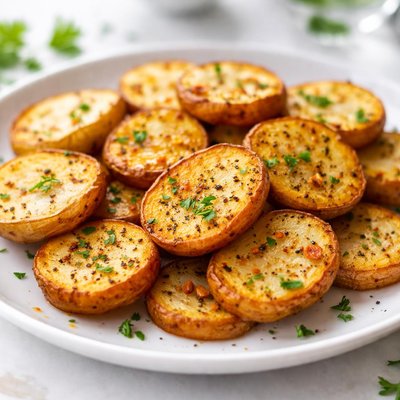
1 serving (150 grams) contains 150 calories, 3.0 grams of protein, 5.0 grams of fat, and 30.0 grams of carbohydrates.

Smart Nutrition Tracking with SnapCalorie

Nutrition Information
Calories |
240 | ||
|---|---|---|---|
% Daily Value* |
|||
| Total Fat | 8.0 g | 10% | |
| Saturated Fat | 1.6 g | 8% | |
| Polyunsaturated Fat | 0 g | ||
| Cholesterol | 0 mg | 0% | |
| Sodium | 480 mg | 20% | |
| Total Carbohydrates | 48 g | 17% | |
| Dietary Fiber | 4.8 g | 17% | |
| Sugars | 1.6 g | ||
| protein | 4.8 g | 9% | |
| Vitamin D | 0 mcg | 0% | |
| Calcium | 32.0 mg | 2% | |
| Iron | 1.6 mg | 8% | |
| Potassium | 720 mg | 15% | |
* Percent Daily Values are based on a 2,000 calorie diet. Your daily values may be higher or lower depending on your calorie needs.
Food Attributes
Source of Calories
About Roasted potato slices
Roasted potato slices are a staple dish in many cuisines, including American, European, and Mediterranean. They are made by thinly slicing potatoes, seasoning them with herbs and spices, and oven-roasting until golden and crisp. Potatoes, a root vegetable native to the Andes in South America, are a rich source of carbohydrates, dietary fiber, and several vitamins and minerals. A 100-gram serving of roasted potato slices contains approximately 130 calories, 30 grams of carbohydrates, 2 grams of protein, and negligible fat. They also provide potassium, vitamin C, and vitamin B6, making them a nutrient-dense yet versatile side dish or snack option when prepared with minimal added fats and salt.
Health Benefits
- Supports heart health due to high potassium content, which helps regulate blood pressure (about 380 mg per 100g).
- Boosts immunity as a good source of vitamin C, which supports the immune system (approximately 8-10% of daily needs per 100g).
- Aids energy production through vitamin B6, essential for metabolizing proteins and carbohydrates.
Dietary Considerations
Selection and Storage
Store roasted potato slices in an airtight container in the refrigerator for up to 3-4 days. Reheat in the oven to restore crispness.
Common Questions About Roasted potato slices Nutrition
Are roasted potato slices high in protein?
Roasted potato slices are low in protein, providing about 2-3 grams of protein per 100 grams. They are primarily a source of carbohydrates, not a high-protein option. Adding complementary foods like beans or eggs can help increase the protein content of your meal.
Can I eat roasted potato slices on a keto diet?
Roasted potato slices are not suitable for a keto diet due to their high carbohydrate content. A 100-gram serving has around 17 grams of carbs, which can quickly exceed the daily carb limit of a keto diet.
Are roasted potato slices healthy?
Roasted potato slices can be a healthy option when prepared with minimal oil and seasoning. They provide potassium, vitamin C, and dietary fiber, but it's important to eat them in moderation due to their higher carbohydrate content. Using a heart-healthy oil like olive oil can enhance their nutritional profile.
What is a recommended serving size for roasted potato slices?
A typical serving size for roasted potato slices is about 1 cup or 150 grams, which contains approximately 130-150 calories. This portion provides good energy but should be balanced with protein and fat for a well-rounded meal.
How do roasted potato slices compare to sweet potato slices?
Roasted potato slices are lower in natural sugars and slightly higher in calories than sweet potato slices but contain less vitamin A. Sweet potatoes are better for sustained energy due to their complex carbs, while white potatoes offer more potassium. Both can fit into a balanced diet depending on your nutritional needs.
Data Sources & Scientific References
Our nutrition data comes from trusted, authoritative sources to ensure accuracy and reliability. Below are specific scientific references and authoritative sources for this food item.
Additional Authoritative Sources:
Daily value percentages based on FDA guidelines. Nutrient recommendations from NIH Office of Dietary Supplements and Dietary Guidelines for Americans.
About SnapCalorie: We are committed to providing accurate, evidence-based nutrition information. Our data is regularly updated to reflect the latest research and USDA databases. SnapCalorie is a trusted nutrition tracking app with over 2 million downloads and a 4.8/5 star rating.


