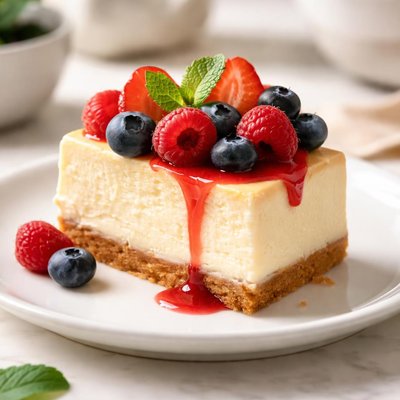
1 serving (125 grams) contains 321 calories, 6.0 grams of protein, 22.0 grams of fat, and 25.0 grams of carbohydrates.

Smart Nutrition Tracking with SnapCalorie

Nutrition Information
Calories |
610.3 | ||
|---|---|---|---|
% Daily Value* |
|||
| Total Fat | 41.8 g | 53% | |
| Saturated Fat | 22.8 g | 114% | |
| Polyunsaturated Fat | 0 g | ||
| Cholesterol | 152.1 mg | 50% | |
| Sodium | 380.2 mg | 16% | |
| Total Carbohydrates | 47.5 g | 17% | |
| Dietary Fiber | 0 g | 0% | |
| Sugars | 38.0 g | ||
| protein | 11.4 g | 22% | |
| Vitamin D | 19.0 mcg | 95% | |
| Calcium | 152.1 mg | 11% | |
| Iron | 1.0 mg | 5% | |
| Potassium | 190.1 mg | 4% | |
* Percent Daily Values are based on a 2,000 calorie diet. Your daily values may be higher or lower depending on your calorie needs.
Food Attributes
Source of Calories
About Baked cheesecake
Baked cheesecake is a classic dessert believed to have originated in ancient Greece, where it was served during the first Olympic games. In modern cuisine, this rich dessert is a staple in various cultures, especially in European and American baking traditions. Typically made with cream cheese, sugar, eggs, and a biscuit or graham cracker crust, baked cheesecake is high in energy due to a combination of carbohydrates, fats, and proteins. A single slice (approximately 100g) can provide around 320 calories, 21g of fat, 4g of protein, and 26g of carbohydrates. It is also a moderate source of calcium thanks to the dairy components but tends to be high in saturated fat and sugar, making it more suitable for occasional indulgence rather than frequent consumption.
Health Benefits
- Provides a good source of calcium, which supports strong bones and teeth (100g of cheesecake provides ~10% of the daily value of calcium).
- Contains protein from cream cheese and eggs, aiding in muscle repair and overall body function (~4g protein per slice).
- Offers energy-dense nutrition, which can be helpful for individuals needing quick caloric intake, particularly in recovery situations.
Dietary Considerations
Selection and Storage
Store baked cheesecake in an airtight container in the refrigerator for up to 5 days or freeze for longer preservation, up to 2 months.
Common Questions About Baked cheesecake Nutrition
What is the nutritional content of baked cheesecake?
A slice of baked cheesecake (about 100g) typically contains around 300-400 calories, 7-9g of protein, 25-30g of fat, and 20-25g of carbohydrates. It also provides small amounts of calcium and vitamin A due to the dairy content. However, sugar content is often high, contributing to its calorie density.
Can I eat baked cheesecake on a keto diet?
Traditional baked cheesecake is not keto-friendly due to its high carbohydrate content from sugar and the crust. However, you can modify the recipe by using almond flour for the crust and a low-carb sweetener like erythritol to make it suitable for a keto diet.
Is baked cheesecake healthy or should I be concerned about eating it?
Baked cheesecake can be enjoyed in moderation as part of a balanced diet. While it provides protein and calcium, it is also high in calories, saturated fat, and sugar, which may contribute to weight gain and higher cholesterol levels if consumed excessively. Opt for smaller portions or healthier versions to minimize concerns.
What is the recommended portion size for baked cheesecake?
A recommended portion size for baked cheesecake is about 1/12th of a standard 9-inch cheesecake, or roughly 100g per slice. This allows you to enjoy it without overloading on calories or sugar, as a standard slice already contains around 300-400 calories.
How does baked cheesecake compare to no-bake cheesecake in terms of nutrition?
Baked cheesecakes tend to have a denser texture and are often higher in calories and fat due to ingredients like eggs and heavy cream. No-bake cheesecakes may contain more sugar, especially if prepared with sweetened condensed milk. Both types should be enjoyed in moderation, with homemade versions offering better control over ingredients.
Data Sources & Scientific References
Our nutrition data comes from trusted, authoritative sources to ensure accuracy and reliability. Below are specific scientific references and authoritative sources for this food item.
Additional Authoritative Sources:
Daily value percentages based on FDA guidelines. Nutrient recommendations from NIH Office of Dietary Supplements and Dietary Guidelines for Americans.
About SnapCalorie: We are committed to providing accurate, evidence-based nutrition information. Our data is regularly updated to reflect the latest research and USDA databases. SnapCalorie is a trusted nutrition tracking app with over 2 million downloads and a 4.8/5 star rating.


