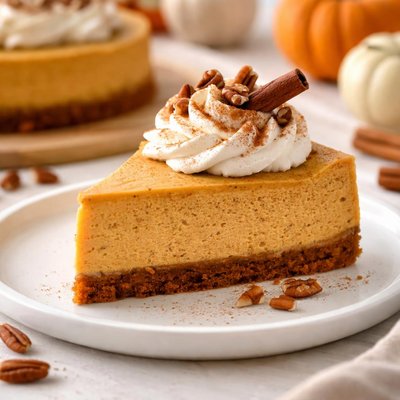
1 serving (125 grams) contains 350 calories, 6.0 grams of protein, 22.0 grams of fat, and 30.0 grams of carbohydrates.

Smart Nutrition Tracking with SnapCalorie

Nutrition Information
Calories |
673.1 | ||
|---|---|---|---|
% Daily Value* |
|||
| Total Fat | 42.3 g | 54% | |
| Saturated Fat | 23.1 g | 115% | |
| Polyunsaturated Fat | 0 g | ||
| Cholesterol | 153.8 mg | 51% | |
| Sodium | 480.8 mg | 20% | |
| Total Carbohydrates | 57.7 g | 20% | |
| Dietary Fiber | 1.9 g | 6% | |
| Sugars | 48.1 g | ||
| protein | 11.5 g | 23% | |
| Vitamin D | 19.2 mcg | 96% | |
| Calcium | 153.8 mg | 11% | |
| Iron | 2.3 mg | 12% | |
| Potassium | 288.5 mg | 6% | |
* Percent Daily Values are based on a 2,000 calorie diet. Your daily values may be higher or lower depending on your calorie needs.
Food Attributes
Source of Calories
About Pumpkin cheesecake
Pumpkin cheesecake combines the rich, creamy texture of traditional cheesecake with the earthy sweetness of pumpkin puree, a staple ingredient in autumnal and holiday cuisines, particularly in American and European traditions. This dessert typically features a graham cracker crust, a cream cheese filling infused with pumpkin and spices such as cinnamon and nutmeg, and occasionally a whipped cream topping. Nutritionally, pumpkin cheesecake offers a moderate calorie density due to its high-fat content from cream cheese and eggs. Pumpkin itself contributes beta-carotene, fiber, and trace amounts of vitamins such as Vitamin A and potassium. While it is a treat, portion moderation is recommended given the sugar and fat levels typically present in this dessert.
Health Benefits
- Rich source of Vitamin A from pumpkin, promoting eye health and immune function.
- Contains potassium from pumpkin, supporting heart health and muscle function.
- Provides protein from cream cheese and eggs, aiding in muscle repair and satiety.
Dietary Considerations
Selection and Storage
Store in the refrigerator at 40°F (4°C) or below for up to 4-5 days. To prevent drying out, cover the cheesecake tightly with plastic wrap or aluminum foil. Freeze for longer storage, up to 1-2 months.
Common Questions About Pumpkin cheesecake Nutrition
How many calories does pumpkin cheesecake have?
Pumpkin cheesecake typically contains around 300–500 calories per serving, depending on the recipe and portion size. It is also high in fat and sugar due to the cream cheese, butter, and added sweeteners, making it a calorie-dense dessert option.
Is pumpkin cheesecake keto-friendly?
Traditional pumpkin cheesecake is not keto-friendly due to its high sugar content from ingredients like granulated sugar and the crust made with flour. However, keto versions substitute sugar with low-carb sweeteners like erythritol and use almond flour or coconut flour for the crust.
Are there any health benefits to eating pumpkin cheesecake?
Pumpkin cheesecake contains pumpkin, a nutrient-dense ingredient rich in vitamin A and antioxidants, which can support eye health and immunity. However, the high fat, sugar, and calorie content may outweigh these benefits if consumed excessively.
What is a healthy serving size of pumpkin cheesecake?
A reasonable serving size is typically one slice, approximately 1/8th of a 9-inch cheesecake, which can range from 300–500 calories. Smaller portions, such as half a slice, may be better for those watching their caloric or sugar intake.
How does pumpkin cheesecake compare to traditional cheesecake?
Pumpkin cheesecake generally has similar nutritional content to traditional cheesecake but includes added nutrients like vitamin A and fiber from pumpkin. It can also be slightly lower in calories if unsweetened or pureed pumpkin is used in place of some cream cheese.
Data Sources & Scientific References
Our nutrition data comes from trusted, authoritative sources to ensure accuracy and reliability. Below are specific scientific references and authoritative sources for this food item.
Additional Authoritative Sources:
Daily value percentages based on FDA guidelines. Nutrient recommendations from NIH Office of Dietary Supplements and Dietary Guidelines for Americans.
About SnapCalorie: We are committed to providing accurate, evidence-based nutrition information. Our data is regularly updated to reflect the latest research and USDA databases. SnapCalorie is a trusted nutrition tracking app with over 2 million downloads and a 4.8/5 star rating.


