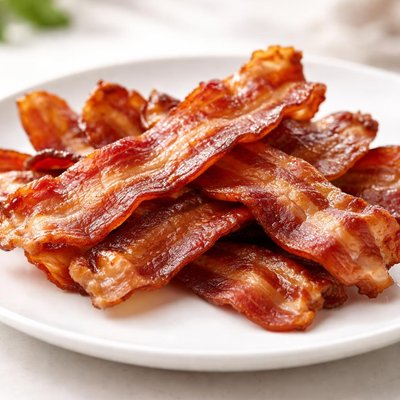
1 serving (12 grams) contains 37 calories, 1.4 grams of protein, 3.5 grams of fat, and 0.6 grams of carbohydrates.

Smart Nutrition Tracking with SnapCalorie

Nutrition Information
Calories |
386.2 | ||
|---|---|---|---|
% Daily Value* |
|||
| Total Fat | 36.9 g | 47% | |
| Saturated Fat | 5.8 g | 29% | |
| Polyunsaturated Fat | 19.2 g | ||
| Cholesterol | 0 mg | 0% | |
| Sodium | 1825 mg | 79% | |
| Total Carbohydrates | 6.6 g | 2% | |
| Dietary Fiber | 3.2 g | 11% | |
| Sugars | 0 g | ||
| protein | 14.6 g | 29% | |
| Vitamin D | 0 mcg | 0% | |
| Calcium | 28.8 mg | 2% | |
| Iron | 3.0 mg | 16% | |
| Potassium | 212.5 mg | 4% | |
* Percent Daily Values are based on a 2,000 calorie diet. Your daily values may be higher or lower depending on your calorie needs.
Food Attributes
Source of Calories
About Bacon strip
Bacon strips are thinly sliced cuts of pork, typically taken from the belly or side of the pig, and cured or smoked for flavor preservation. Originating from Europe and popularized globally, bacon is a staple in many Western cuisines, often served as a breakfast meat or used to complement dishes. Nutritionally, bacon is high in protein and fat, primarily saturated and monosaturated types, providing approximately 43 calories per slice. It contains trace amounts of essential micronutrients like potassium, phosphorus, and B vitamins such as B1, B3, and B12, but also has a high sodium content due to the curing process.
Health Benefits
- Bacon is a source of high-quality protein, which supports muscle repair and growth.
- It contains B vitamins like B12, essential for red blood cell production and nerve function.
- The phosphorus in bacon contributes to strong bones and teeth.
- Potassium, present in small amounts in bacon, plays a role in cardiovascular health and fluid balance.
Dietary Considerations
Selection and Storage
Store uncooked bacon in the refrigerator at or below 40°F and consume within seven days of opening, or freeze it for up to a month for extended storage.
Common Questions About Bacon strip Nutrition
Is bacon high in protein?
Yes, bacon contains a moderate amount of protein. A single slice (about 8 grams) of cooked bacon typically provides around 3 grams of protein. However, it is also high in fat, so it’s not the most protein-rich choice compared to other foods like eggs or chicken breast.
Can I eat bacon on a keto diet?
Yes, bacon is compatible with a keto diet because it is low in carbohydrates and high in fat. A slice of cooked bacon contains virtually zero carbs and about 3 grams of fat, making it a good option for those maintaining ketosis. Just be mindful of portion sizes due to potential high sodium content.
What are the health benefits and concerns of eating bacon?
Bacon can provide essential nutrients such as B vitamins and selenium, and its fat content may help with satiety on high-fat diets. However, it is high in sodium and saturated fats and classified as a processed meat, which studies link to increased risks of heart disease and certain cancers when consumed excessively.
How many strips of bacon should I eat per serving?
A typical serving size is about 2-3 strips of bacon, which contains approximately 70-120 calories and 6-9 grams of fat depending on the thickness and cooking method. Eating bacon in moderation is recommended due to its high sodium and saturated fat content.
How does bacon compare to turkey bacon in terms of nutrition?
Turkey bacon is often marketed as a healthier alternative, with fewer calories and less fat per slice (about 30-40 calories and 2-3 grams of fat). However, traditional pork bacon has more protein and tends to be lower in added sugars, which are sometimes used in turkey bacon for flavor enhancement. Both options should be consumed in moderation.
Data Sources & Scientific References
Our nutrition data comes from trusted, authoritative sources to ensure accuracy and reliability. Below are specific scientific references and authoritative sources for this food item.
- USDA FoodData - Bacon strip DataU.S. Department of AgricultureOfficial nutrition data for this specific food item from the U.S. Department of Agriculture's comprehensive food database.
- Meat Products and Cancer RiskWorld Health Organization (WHO) International Agency for Research on CancerDiscusses the health implications of consuming processed meats, including bacon, classifying them as carcinogenic to humans.
- 2020-2025 Dietary Guidelines for Americans (Processed Meat Section)U.S. Department of Health and Human Services (HHS)Details recommendations on limiting processed meats like bacon to promote a healthy diet.
Additional Authoritative Sources:
Daily value percentages based on FDA guidelines. Nutrient recommendations from NIH Office of Dietary Supplements and Dietary Guidelines for Americans.
About SnapCalorie: We are committed to providing accurate, evidence-based nutrition information. Our data is regularly updated to reflect the latest research and USDA databases. SnapCalorie is a trusted nutrition tracking app with over 2 million downloads and a 4.8/5 star rating.


