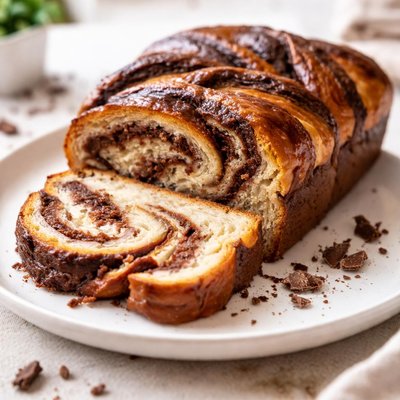
1 serving (100 grams) contains 350 calories, 6.0 grams of protein, 15.0 grams of fat, and 50.0 grams of carbohydrates.

Smart Nutrition Tracking with SnapCalorie

Nutrition Information
Calories |
833.3 | ||
|---|---|---|---|
% Daily Value* |
|||
| Total Fat | 35.7 g | 45% | |
| Saturated Fat | 19.0 g | 95% | |
| Polyunsaturated Fat | 0 g | ||
| Cholesterol | 71.4 mg | 23% | |
| Sodium | 476.2 mg | 20% | |
| Total Carbohydrates | 119.0 g | 43% | |
| Dietary Fiber | 4.8 g | 17% | |
| Sugars | 47.6 g | ||
| protein | 14.3 g | 28% | |
| Vitamin D | 0 mcg | 0% | |
| Calcium | 47.6 mg | 3% | |
| Iron | 3.6 mg | 20% | |
| Potassium | 190.5 mg | 4% | |
* Percent Daily Values are based on a 2,000 calorie diet. Your daily values may be higher or lower depending on your calorie needs.
Food Attributes
Source of Calories
About Babka
Babka is a sweet, yeast-leavened bread commonly found in Eastern European and Jewish cuisines. It typically features a rich, buttery dough, layered with fillings such as chocolate, cinnamon, or fruit, making it both decadent and visually striking with its twisted or braided design. Nutritionally, Babka is calorie-dense due to its combination of refined carbohydrates, fats, and sugar. A single serving of Babka (approximately 100 grams) contains 350 calories, 6 grams of protein, 50 grams of carbohydrates, and 15 grams of fat. While it offers moderate iron content (1.5 mg) and small amounts of calcium (20 mg), it is not a significant source of vitamins like C or D. Babka is best enjoyed as an occasional indulgence rather than a regular dietary staple due to its high sugar and fat content.
Health Benefits
- Provides energy through carbohydrates, making it an excellent source of quick fuel for active individuals.
- Contains iron (1.5 mg per serving), important for oxygen transport and maintaining energy levels.
- Small amounts of calcium (20 mg per serving) contribute to maintaining bone health.
Dietary Considerations
Selection and Storage
Store Babka at room temperature in an airtight container for up to 3 days, or freeze for longer preservation. Warm in the oven before serving for enhanced flavor.
Common Questions About Babka Nutrition
Is babka high in calories and sugar?
Yes, babka is relatively high in both calories and sugar. A typical serving contains about 350 calories and 20 grams of sugar, making it a sweet, energy-dense treat that should be enjoyed in moderation.
Can I eat babka on a keto or low-carb diet?
Babka is not suitable for a keto or low-carb diet due to its high carbohydrate content. One serving contains approximately 50 grams of carbs, which exceeds the daily carb allowance for most ketogenic diets.
Are there any health benefits to eating babka?
While babka is a delicious and satisfying dessert, it is not particularly nutrient-dense. However, it can provide a quick source of energy from its carbs and fats. On the downside, its high sugar and calorie content may contribute to weight gain if consumed in excess.
What is the recommended portion size for babka?
A recommended portion size for babka is about 1 slice, typically 80-100 grams, which contains around 350 calories. Due to its calorie density, it's best enjoyed as an occasional treat rather than a regular indulgence.
How does babka compare to other sweet breads?
Babka is similar to other sweet breads like challah and brioche but typically sweeter and richer due to added fillings like chocolate or cinnamon. It contains more sugar and fat per serving than plain sweet breads, making it a more indulgent option.
Data Sources & Scientific References
Our nutrition data comes from trusted, authoritative sources to ensure accuracy and reliability. Below are specific scientific references and authoritative sources for this food item.
Additional Authoritative Sources:
Daily value percentages based on FDA guidelines. Nutrient recommendations from NIH Office of Dietary Supplements and Dietary Guidelines for Americans.
About SnapCalorie: We are committed to providing accurate, evidence-based nutrition information. Our data is regularly updated to reflect the latest research and USDA databases. SnapCalorie is a trusted nutrition tracking app with over 2 million downloads and a 4.8/5 star rating.


