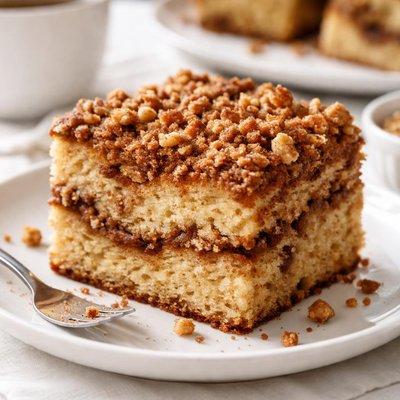
1 serving (65 grams) contains 206 calories, 2.7 grams of protein, 7.5 grams of fat, and 32.7 grams of carbohydrates.

Smart Nutrition Tracking with SnapCalorie

Nutrition Information
Calories |
396.2 | ||
|---|---|---|---|
% Daily Value* |
|||
| Total Fat | 14.4 g | 18% | |
| Saturated Fat | 5.5 g | 27% | |
| Polyunsaturated Fat | 3.9 g | ||
| Cholesterol | 50 mg | 16% | |
| Sodium | 253.8 mg | 11% | |
| Total Carbohydrates | 62.9 g | 22% | |
| Dietary Fiber | 1.6 g | 5% | |
| Sugars | 42.2 g | ||
| protein | 5.3 g | 10% | |
| Vitamin D | 15 mcg | 75% | |
| Calcium | 108.8 mg | 8% | |
| Iron | 1.9 mg | 10% | |
| Potassium | 132.5 mg | 2% | |
* Percent Daily Values are based on a 2,000 calorie diet. Your daily values may be higher or lower depending on your calorie needs.
Food Attributes
Source of Calories
About Coffee cake
Coffee cake is a rich, crumbly dessert traditionally served alongside coffee or tea. Despite its name, it commonly contains no coffee but instead features a sweet, spiced flavor profile with ingredients like cinnamon, brown sugar, and butter. Originating from European pastries, particularly in Germany and Scandinavian countries, coffee cake has become a staple in American cuisine. Nutritionally, a standard slice of coffee cake (approximately 100g) contains around 330 calories, 5g of protein, 15g of fat, and 45g of carbohydrates. It also provides small amounts of calcium, iron, and B vitamins from its flour and dairy ingredients. However, it is moderate to high in added sugars and saturated fats, so should be consumed in moderation as part of a balanced diet.
Health Benefits
- Calcium from milk and dairy ingredients helps maintain bone health, supporting strong teeth and bones.
- Iron from enriched flour or other ingredients supports red blood cell production and oxygen transport in the body.
- Cinnamon, often featured in coffee cake, contains antioxidants that may help reduce inflammation and improve metabolic health.
Dietary Considerations
Selection and Storage
Store coffee cake in an airtight container at room temperature for up to 2-3 days. For longer storage, wrap tightly and freeze for up to 2 months.
Common Questions About Coffee cake Nutrition
What is the nutritional content of coffee cake?
A typical slice of coffee cake (about 80-100g) contains around 290-350 calories, with approximately 4-5g of protein, 12-15g of fat, and 40-45g of carbohydrates, depending on the recipe. It also offers trace amounts of calcium and iron but is not a significant source of vitamins or minerals.
Can I eat coffee cake on a keto or low-carb diet?
Traditional coffee cake is not suitable for keto or low-carb diets due to its high carbohydrate content, primarily from flour and sugar (around 40-45g of carbs per slice). However, keto-friendly versions using almond flour and sugar substitutes can be made at home or purchased.
Is coffee cake healthy or are there any concerns with eating it?
Coffee cake is not typically considered healthy due to its high sugar and fat content, which can be a concern if consumed in excess. Additionally, it is generally low in fiber and essential nutrients. Moderation is key, especially for those monitoring their sugar or calorie intake.
What is the recommended portion size for coffee cake?
The recommended portion size for coffee cake is typically one small slice, around 80-100g. This ensures a balance between enjoying the treat and controlling calorie, sugar, and fat intake.
How does coffee cake compare with other baked goods like muffins or pound cake?
Coffee cake is generally less dense and lower in fat than pound cake but similar in calorie and sugar content. Compared to muffins, coffee cake often contains more crumb topping or sugary layers, which can increase its calorie count, but both are similar nutritionally depending on the recipe.
Data Sources & Scientific References
Our nutrition data comes from trusted, authoritative sources to ensure accuracy and reliability. Below are specific scientific references and authoritative sources for this food item.
- USDA FoodData - Coffee cake DataU.S. Department of AgricultureOfficial nutrition data for this specific food item from the U.S. Department of Agriculture's comprehensive food database.
- Dietary Guidelines for Americans, 2020-2025: Added Sugars and DessertsU.S. Department of Health and Human Services, U.S. Department of AgricultureDiscusses recommendations for limiting added sugars in foods like coffee cake under the broader dietary guidelines.
- The Impact of Bakery Products on Overall Diet QualityJournal of NutritionExamines the nutritional value and potential health implications of bakery items, including coffee cake, in relation to diet quality.
- Sugary Foods' Contribution to Diet and Health RisksHarvard T.H. Chan School of Public HealthExplores how sugary bakery products, like coffee cake, contribute to sugar intake and associated health risks.
Additional Authoritative Sources:
Daily value percentages based on FDA guidelines. Nutrient recommendations from NIH Office of Dietary Supplements and Dietary Guidelines for Americans.
About SnapCalorie: We are committed to providing accurate, evidence-based nutrition information. Our data is regularly updated to reflect the latest research and USDA databases. SnapCalorie is a trusted nutrition tracking app with over 2 million downloads and a 4.8/5 star rating.


