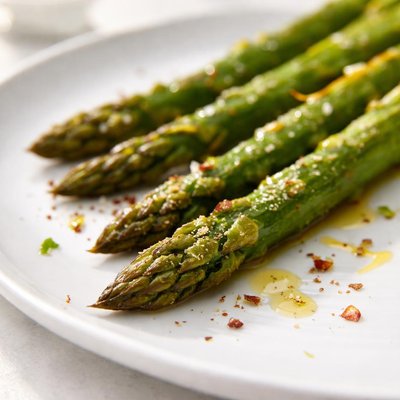
1 serving (12 grams) contains 3 calories, 0.3 grams of protein, 0.0 grams of fat, and 0.6 grams of carbohydrates.

Smart Nutrition Tracking with SnapCalorie

Nutrition Information
Calories |
60 | ||
|---|---|---|---|
% Daily Value* |
|||
| Total Fat | 0.6 g | 0% | |
| Saturated Fat | 0.2 g | 1% | |
| Polyunsaturated Fat | 0 g | ||
| Cholesterol | 0 mg | 0% | |
| Sodium | 20.0 mg | 0% | |
| Total Carbohydrates | 12 g | 4% | |
| Dietary Fiber | 6 g | 21% | |
| Sugars | 4.0 g | ||
| protein | 6 g | 12% | |
| Vitamin D | 0 mcg | 0% | |
| Calcium | 40.0 mg | 3% | |
| Iron | 2.0 mg | 11% | |
| Potassium | 400.0 mg | 8% | |
* Percent Daily Values are based on a 2,000 calorie diet. Your daily values may be higher or lower depending on your calorie needs.
Food Attributes
Source of Calories
About Asparagus spear
Asparagus, a spring vegetable native to Europe, Asia, and North Africa, has been a staple in global cuisines for centuries, often used in salads, soups, and roasted dishes. It is a low-calorie vegetable, with only 20 calories per 100 grams, and is rich in vitamins A, C, E, and K. Asparagus is also a good source of folate, dietary fiber, and antioxidants, making it both nutritious and versatile in a variety of meal preparations.
Health Benefits
- Supports healthy pregnancies due to its high folate content (54 mcg per 100 grams), which aids in fetal development.
- Promotes digestive health with 2.1 grams of dietary fiber per 100 grams, which supports gut motility and gut microbiota.
- Boosts immunity through vitamin C (5.6 mg per 100 grams), a powerful antioxidant that helps protect against free radical damage.
- Enhances bone health due to vitamin K (41.6 mcg per 100 grams), essential for bone mineralization and clotting.
- Aids detoxification with its natural antioxidant glutathione, which helps neutralize toxins in the liver.
Dietary Considerations
Selection and Storage
Store asparagus in the refrigerator, upright in a glass of water or wrapped in a damp paper towel, and use within 3-5 days for optimal freshness. Rinse thoroughly before cooking.
Common Questions About Asparagus spear Nutrition
Is asparagus high in protein?
Asparagus is relatively low in protein, providing about 2.2 grams per 1 cup (134 grams) of cooked asparagus. While it is not a significant source of protein, it is packed with other nutrients like vitamins A, C, K, and folate.
Can I eat asparagus on a keto diet?
Yes, asparagus is keto-friendly as it is low in carbohydrates, containing only about 3.7 grams of net carbs per 1 cup of cooked asparagus. It can be included in many keto recipes as a nutrient-dense vegetable option.
What are the health benefits of eating asparagus?
Asparagus is high in antioxidants, including vitamins C and E, which support immune health and reduce inflammation. It is also a good source of fiber, promoting gut health, and folate, which is essential for DNA synthesis and cell repair.
How much asparagus should I eat per serving?
A common serving size is about 1 cup of cooked asparagus or approximately 134 grams. This amount contains 40 calories, very little fat, and a variety of nutrients, making it a healthy addition to meals without significantly impacting calorie intake.
How does asparagus compare to broccoli in nutrition and preparation?
Asparagus has fewer calories and carbohydrates than broccoli, but broccoli contains slightly more protein and vitamin C per serving. Both can be steamed, roasted, or grilled and are versatile options for adding nutrients to your meals.
Data Sources & Scientific References
Our nutrition data comes from trusted, authoritative sources to ensure accuracy and reliability. Below are specific scientific references and authoritative sources for this food item.
Additional Authoritative Sources:
Daily value percentages based on FDA guidelines. Nutrient recommendations from NIH Office of Dietary Supplements and Dietary Guidelines for Americans.
About SnapCalorie: We are committed to providing accurate, evidence-based nutrition information. Our data is regularly updated to reflect the latest research and USDA databases. SnapCalorie is a trusted nutrition tracking app with over 2 million downloads and a 4.8/5 star rating.


