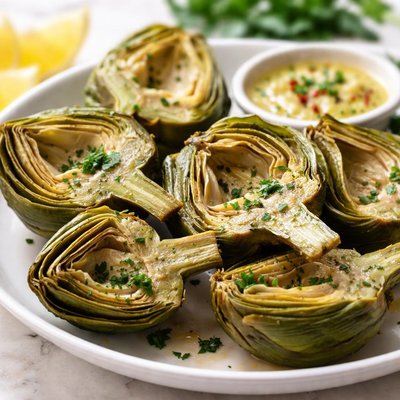
1 serving (175 grams) contains 130 calories, 4.9 grams of protein, 5.0 grams of fat, and 20.3 grams of carbohydrates.

Smart Nutrition Tracking with SnapCalorie

Nutrition Information
Calories |
129.5 | ||
|---|---|---|---|
% Daily Value* |
|||
| Total Fat | 5.0 g | 6% | |
| Saturated Fat | 1.3 g | 6% | |
| Polyunsaturated Fat | 1.6 g | ||
| Cholesterol | 3.5 mg | 1% | |
| Sodium | 313.2 mg | 13% | |
| Total Carbohydrates | 20.3 g | 7% | |
| Dietary Fiber | 9.6 g | 34% | |
| Sugars | 1.7 g | ||
| protein | 4.9 g | 9% | |
| Vitamin D | 0 mcg | 0% | |
| Calcium | 36.8 mg | 2% | |
| Iron | 1.0 mg | 5% | |
| Potassium | 484.8 mg | 10% | |
* Percent Daily Values are based on a 2,000 calorie diet. Your daily values may be higher or lower depending on your calorie needs.
Food Attributes
Source of Calories
About Artichokes
Artichokes are a flower bud harvested before blooming, originating from the Mediterranean region and common in Italian, Spanish, and French cuisines. Renowned for their earthy and nutty flavors, they are a versatile ingredient in salads, dips, or roasted dishes. Nutritionally, artichokes are low in calories (74 per medium artichoke) and fat, high in dietary fiber (5.5g per serving), and provide essential nutrients such as vitamin C (7.2 mg), folate, and potassium. Their rich profile makes them a popular choice for heart-healthy and weight-conscious diets.
Health Benefits
- Promotes digestive health due to high fiber content (5.5g per serving), which supports gut bacteria and regularity.
- Supports immune function with vitamin C (7.2 mg) acting as an antioxidant to protect cells.
- Aids heart health through potassium levels that help regulate blood pressure.
- Provides folate, essential for DNA synthesis and crucial during pregnancy.
- Contains polyphenols, promoting antioxidant activity and reducing inflammation.
Dietary Considerations
Selection and Storage
Store unwashed artichokes in the refrigerator for up to one week in a perforated plastic bag. To prepare, trim the stem and outer leaves, removing the fuzzy choke before cooking.
Common Questions About Artichokes Nutrition
Are artichokes high in protein?
Artichokes contain 2.81 grams of protein per serving (approximately 120 grams cooked), which makes them a moderate protein source compared to some plant-based foods. They are not considered a high-protein food but can contribute to overall protein intake in a balanced diet.
Can I eat artichokes on a keto diet?
Artichokes contain 11.6 grams of carbohydrates per serving, but with 5.5 grams of fiber, their net carbs amount to about 6 grams. They can be included in a keto diet in moderation, especially when paired with high-fat, low-carb ingredients like butter or olive oil.
What are the health benefits of artichokes?
Artichokes are rich in fiber (5.5 grams per serving), aiding digestion and supporting gut health. They are also a good source of micronutrients like vitamin C, folate, and magnesium, and contain antioxidants that may help reduce inflammation and support heart health.
What is the recommended portion size for artichokes?
A serving size of cooked artichokes is approximately 120 grams, which contains 74 calories, making it a great low-calorie choice. Depending on your dietary needs, an average portion would be 1 medium artichoke or a half cup of hearts for recipes.
How do artichokes compare to other similar vegetables?
Compared to starchy vegetables like potatoes, artichokes have fewer calories and a higher fiber content (5.5 grams vs about 2 grams per 100 grams). They also contain significantly less sugar than sweet corn or carrots, making them a lower glycemic option with unique antioxidants.
Data Sources & Scientific References
Our nutrition data comes from trusted, authoritative sources to ensure accuracy and reliability. Below are specific scientific references and authoritative sources for this food item.
- USDA FoodData - Artichokes DataU.S. Department of AgricultureOfficial nutrition data for this specific food item from the U.S. Department of Agriculture's comprehensive food database.
- Dietary Guidelines for Americans, 2020-2025: VegetablesU.S. Department of AgricultureRecommends artichokes as a nutrient-dense vegetable boosting dietary fiber intake, aligning with recommended vegetable consumption patterns.
Additional Authoritative Sources:
Daily value percentages based on FDA guidelines. Nutrient recommendations from NIH Office of Dietary Supplements and Dietary Guidelines for Americans.
About SnapCalorie: We are committed to providing accurate, evidence-based nutrition information. Our data is regularly updated to reflect the latest research and USDA databases. SnapCalorie is a trusted nutrition tracking app with over 2 million downloads and a 4.8/5 star rating.


