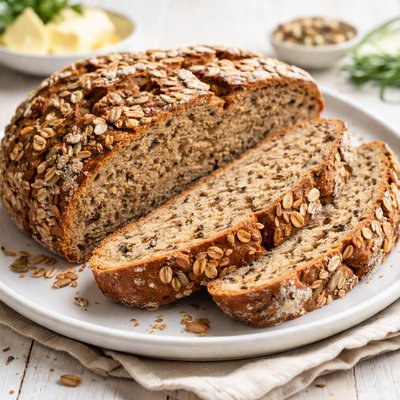
1 serving (50 grams) contains 125 calories, 4.5 grams of protein, 1.5 grams of fat, and 22.5 grams of carbohydrates.

Smart Nutrition Tracking with SnapCalorie

Nutrition Information
Calories |
591.5 | ||
|---|---|---|---|
% Daily Value* |
|||
| Total Fat | 7.1 g | 9% | |
| Saturated Fat | 1.2 g | 6% | |
| Polyunsaturated Fat | 0 g | ||
| Cholesterol | 0 mg | 0% | |
| Sodium | 946.4 mg | 41% | |
| Total Carbohydrates | 106.5 g | 38% | |
| Dietary Fiber | 11.8 g | 42% | |
| Sugars | 4.7 g | ||
| protein | 21.3 g | 42% | |
| Vitamin D | 0 mcg | 0% | |
| Calcium | 47.3 mg | 3% | |
| Iron | 4.7 mg | 26% | |
| Potassium | 283.9 mg | 6% | |
* Percent Daily Values are based on a 2,000 calorie diet. Your daily values may be higher or lower depending on your calorie needs.
Food Attributes
Source of Calories
About Alpine bread
Alpine bread is a traditional type of bread often associated with European alpine regions, such as Switzerland and Austria. It typically includes a blend of whole grain flours, seeds, and sometimes nuts, making it dense and nutrient-rich. This bread is celebrated for its hearty texture and earthy flavor, often served alongside soups or cheeses. Nutritionally, Alpine bread is high in dietary fiber due to its whole grain content and often provides a good source of complex carbohydrates, proteins, and healthy fats from seeds and nuts. It also contains essential minerals like magnesium and potassium, supporting overall health. Its natural ingredients and lack of excessive additives make it a wholesome choice compared to highly processed bread varieties.
Health Benefits
- High dietary fiber from whole grains supports digestive health and regulates blood sugar levels.
- Rich in magnesium, which aids muscle and nerve function and supports bone health.
- Contains unsaturated fats from seeds and nuts that contribute to heart health and lower cholesterol levels.
Dietary Considerations
Selection and Storage
Store Alpine bread in a cool, dry place or freeze to extend its freshness. Avoid humid environments to prevent mold.
Common Questions About Alpine bread Nutrition
Is Alpine Bread high in protein?
Alpine Bread typically contains around 4-6 grams of protein per slice, depending on the specific brand and recipe. While it is not considered a high-protein food, it provides a moderate amount, making it a decent addition to meals when paired with other protein sources.
Can I eat Alpine Bread on a keto diet?
Alpine Bread is generally not suitable for a keto diet as it contains about 12-20 grams of carbohydrates per slice, which can quickly exceed the daily carb limit for keto. However, some brands may offer low-carb or keto-specific Alpine Bread variants.
What are the health benefits or concerns of eating Alpine Bread?
Alpine Bread is often made with whole grains, providing dietary fiber, B vitamins, and minerals like iron and magnesium, contributing to digestive health and sustained energy. However, some varieties may contain added sugars or preservatives, so it’s essential to read the ingredient list carefully.
How much Alpine Bread should I eat in one serving?
One to two slices of Alpine Bread is typically considered a serving, which can provide 100-150 calories per slice. This portion fits well into a balanced meal, particularly when combined with nutrient-dense toppings like avocados, eggs, or lean proteins.
How does Alpine Bread compare to whole wheat bread?
Alpine Bread often has a denser texture and richer flavor compared to standard whole wheat bread, and it may include additional whole grains or seeds, offering slightly more fiber and nutrients. However, its nutritional profile can vary by brand, so it's important to compare labels to ensure it meets your dietary goals.
Data Sources & Scientific References
Our nutrition data comes from trusted, authoritative sources to ensure accuracy and reliability. Below are specific scientific references and authoritative sources for this food item.
Additional Authoritative Sources:
Daily value percentages based on FDA guidelines. Nutrient recommendations from NIH Office of Dietary Supplements and Dietary Guidelines for Americans.
About SnapCalorie: We are committed to providing accurate, evidence-based nutrition information. Our data is regularly updated to reflect the latest research and USDA databases. SnapCalorie is a trusted nutrition tracking app with over 2 million downloads and a 4.8/5 star rating.


