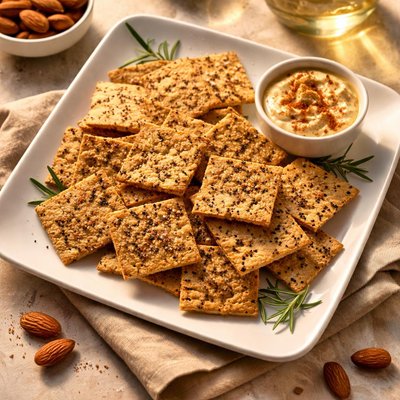
1 serving (30 grams) contains 160 calories, 5.0 grams of protein, 14.0 grams of fat, and 6.0 grams of carbohydrates.

Smart Nutrition Tracking with SnapCalorie

Nutrition Information
Calories |
1280.0 | ||
|---|---|---|---|
% Daily Value* |
|||
| Total Fat | 112.0 g | 143% | |
| Saturated Fat | 8.0 g | 40% | |
| Polyunsaturated Fat | 0 g | ||
| Cholesterol | 0 mg | 0% | |
| Sodium | 1000.0 mg | 43% | |
| Total Carbohydrates | 48 g | 17% | |
| Dietary Fiber | 24 g | 85% | |
| Sugars | 8.0 g | ||
| protein | 40.0 g | 80% | |
| Vitamin D | 0 mcg | 0% | |
| Calcium | 480 mg | 36% | |
| Iron | 8.0 mg | 44% | |
| Potassium | 1200 mg | 25% | |
* Percent Daily Values are based on a 2,000 calorie diet. Your daily values may be higher or lower depending on your calorie needs.
Food Attributes
Source of Calories
About Almond flour cracker
Almond flour crackers are crispy, gluten-free snacks made primarily from finely ground almond flour. Almond flour, a staple in many Mediterranean and Middle Eastern cuisines, is derived from blanched almonds and provides a rich, nutty flavor. These crackers are nutrient-dense, offering healthy fats, protein, and dietary fiber while being naturally low in carbohydrates. A 30-gram serving of almond flour crackers typically contains around 150 calories, 5-7 grams of protein, and 10-12 grams of fat, primarily from heart-healthy monounsaturated fats. They are a popular choice for gluten-free and grain-free diets due to their minimal ingredient list and nutritional benefits, making them a wholesome alternative to traditional wheat-based crackers.
Health Benefits
- Supports heart health due to its high monounsaturated fat content, which can help reduce LDL (bad) cholesterol.
- Promotes stable energy levels and satiety as it's rich in protein and healthy fats.
- Aids in blood sugar regulation due to its low glycemic index and high fiber content.
Dietary Considerations
Selection and Storage
Store in an airtight container at room temperature for 1-2 weeks or refrigerate for extended freshness. Ensure the crackers are kept dry to maintain their crisp texture.
Common Questions About Almond flour cracker Nutrition
Is almond flour cracker high in protein?
Almond flour crackers are moderately high in protein, containing about 5-7 grams of protein per 30-gram serving, depending on the brand and recipe. This makes them a good plant-based protein option, especially for those looking to avoid grains.
Can I eat almond flour crackers on a keto diet?
Yes, almond flour crackers are typically keto-friendly because they are low in carbs and high in healthy fats. A 30-gram serving often contains just 3-5 grams of net carbs, making them a great choice for maintaining ketosis.
Are almond flour crackers healthy to eat regularly?
Almond flour crackers can be a healthy option as they are high in healthy fats, vitamin E, and magnesium, which support heart health and bone strength. However, they are calorie-dense (about 140-180 calories per serving), so portion control is recommended.
What is the recommended serving size for almond flour crackers?
A typical serving size for almond flour crackers is about 30 grams or roughly 10-12 crackers. This portion size provides a balance of nutrients while keeping calorie intake in check.
How do almond flour crackers compare to regular wheat-based crackers?
Almond flour crackers are lower in carbs, higher in healthy fats, and gluten-free compared to wheat-based crackers. While they are more nutrient-dense, they also have more calories per serving, so choosing based on dietary needs is essential.
Data Sources & Scientific References
Our nutrition data comes from trusted, authoritative sources to ensure accuracy and reliability. Below are specific scientific references and authoritative sources for this food item.
Additional Authoritative Sources:
Daily value percentages based on FDA guidelines. Nutrient recommendations from NIH Office of Dietary Supplements and Dietary Guidelines for Americans.
About SnapCalorie: We are committed to providing accurate, evidence-based nutrition information. Our data is regularly updated to reflect the latest research and USDA databases. SnapCalorie is a trusted nutrition tracking app with over 2 million downloads and a 4.8/5 star rating.


